The specific function of adding brood combs is to act as a biological reinforcement mechanism that rapidly increases the adult bee population in weaker colonies. By transferring combs containing developing larvae and pupae from strong colonies, you accelerate the growth cycle of the recipient colony, effectively bypassing the time required for the queen to lay and nurture new eggs.
Adding brood combs injects a "future workforce" into a struggling colony. However, the success of this method relies entirely on balancing the influx of new brood with the colony's existing capacity to keep those combs warm.
The Biological Mechanism of Reinforcement
Transferring Future Population
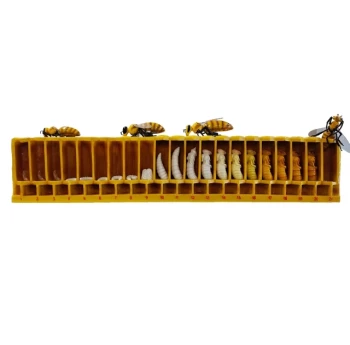
The core function of this process is the transfer of biological capital. You are moving combs that already contain larvae and pupae—bees in the developmental stages—from a strong donor colony to a weaker recipient.
Accelerating Colony Growth
This intervention drastically shortens the recovery time for a weak colony. Instead of waiting weeks for the queen to lay eggs and for those eggs to mature, the colony receives a population boost that will emerge as adult bees relatively quickly.
Critical Constraint: Thermoregulation
The Temperature Requirement
For this process to work, the recipient colony must maintain a necessary constant temperature within the hive. This stable environment is non-negotiable for the proper development of the transferred larvae and pupae.
Managing Colony Capacity
The quantity of added combs is the most critical variable. Beekeepers must carefully manage how many combs are introduced to ensure they do not exceed the colony's thermoregulation capacity.
Understanding the Trade-offs
The Risk of Thermal Overload
If you add more brood combs than the existing population of adult bees can cover and warm, the reinforcement will fail. The weak colony will be unable to generate the required heat, potentially leading to the death or malformation of the introduced brood.
Balancing Strength and Weakness
This method is a resource reallocation strategy. While it helps the weak colony, it removes resources from the strong one. The goal is to stabilize the weak colony without compromising the donor's ability to maintain its own temperature and productivity.
Making the Right Choice for Your Goal
- If your primary focus is rapid population recovery: Prioritize adding combs with pupae (capped brood), as they require less care than larvae and will emerge as adult bees sooner.
- If your primary focus is colony survival: Ensure you never add more brood surface area than the current adult bees in the weak colony can physically cover to maintain the correct temperature.
Biological reinforcement is a powerful tool, but it is limited by the physics of heat conservation within the hive.
Summary Table:
| Key Aspect | Function & Consideration |
|---|---|
| Primary Function | Rapidly increases adult bee population by bypassing egg-laying time. |
| Biological Capital | Transfers larvae and pupae (future workforce) from strong to weak colonies. |
| Growth Driver | Drastically shortens colony recovery time through immediate population boosts. |
| Critical Constraint | Must not exceed the recipient colony's ability to maintain hive temperature. |
| Best Practice | Use capped brood (pupae) for faster emergence and lower care requirements. |
Supercharge Your Apiary with HONESTBEE
At HONESTBEE, we understand that successful colony reinforcement requires the right tools and a deep understanding of bee biology. Whether you are a commercial apiary scaling up or a distributor looking to supply the best in the industry, we provide the comprehensive wholesale solutions you need.
From advanced hive-making machinery and precision honey-filling equipment to high-quality hardware and essential industry consumables, our portfolio is designed to maximize your productivity. Let us help you optimize your beekeeping operations with professional-grade gear and specialized support.
Ready to scale your honey production?
Contact HONESTBEE Today to explore our wholesale equipment and specialized machinery!
References
- Daniel de Freitas Brasil, Breno Magalhães Freitas. Internal ambience of bee colonies submitted to strengthening management by adding broods. DOI: 10.1590/s0100-69162013000500002
This article is also based on technical information from HonestBee Knowledge Base .
Related Products
- Wooden Bee Brush with Double-Row Horsehair Bristles
- Heavy Duty Stainless Steel Honeycomb Cutter
- Professional Bent Tine Honey Uncapping Fork with Ergonomic Grip
- Honey Bee Lifecycle Model: A Detailed Honeycomb Display of Bee Development
People Also Ask
- Why is a bee brush necessary when extracting honeybee hive frames that contain larvae? Protect Your Brood and Colony
- What is the correct way to use a bee brush and what actions should be avoided? Master Gentle Hive Management
- What are the specific functions of the bee brush and the sealed sampling bottle? Optimize Your Parasite Sampling.
- What is a bee brush and what is it used for? Master Precision Bee Removal with Gentle Sweeping Techniques
- What is a bee brush used for in beekeeping? Essential Tool for Safe Hive Inspections & Honey Harvesting