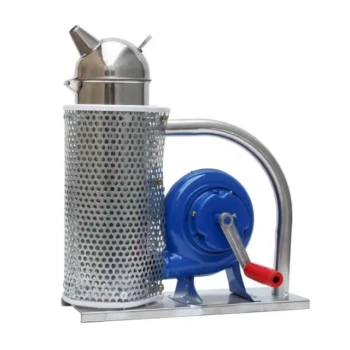
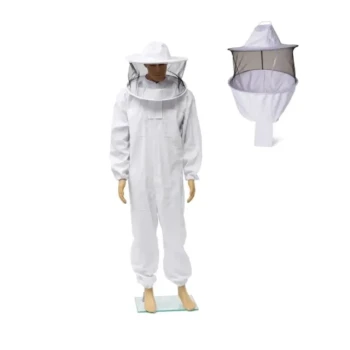
Managing highly defensive apiaries requires a dual-layered approach to safety that relies on both physical isolation and chemical disruption. Professional bee suits establish an impenetrable barrier against the intense stinging behavior of species like the East African honey bee (Apis mellifera scutellata), while smokers neutralize the colony's ability to coordinate a mass attack.
Core Takeaway Success with defensive bee species depends on transforming a high-risk environment into a controlled workspace. By masking alarm pheromones with smoke and shielding the operator with specialized gear, beekeepers can shift from dangerous night harvesting to precise, efficient daylight operations.
The Mechanics of Control and Safety
Disrupting Chemical Communication
The primary danger of defensive bees is their ability to signal a collective attack. High-efficiency smokers function by generating cool smoke from decayed wood.
This smoke does not merely distract the bees; it interferes with alarm pheromones. By masking these chemical signals, the smoker suppresses the colony's defensive instincts, effectively "blinding" the bees' communication network and preventing a localized threat from becoming a hive-wide swarm.
The Necessity of Physical Barriers
For species like A. m. scutellata, standard clothing is insufficient. Professional bee suits, often reinforced and paired with sting-resistant gloves and veils, provide a critical physical buffer.
This equipment ensures life safety for the beekeeper. It allows personnel to remain in the apiary during moments of high aggression without risk of injury, ensuring operational continuity even when the colony is agitated.
Operational Impact on Workflow
Enabling Daylight Maintenance
Historically, harvesting aggressive colonies was often performed at night to mitigate defensive behavior, a practice fraught with operational risks.
With the protection of professional suits and the pheromone-masking capability of smokers, beekeepers can now operate during daylight hours. This visibility allows for precise tasks such as colony splitting, inspections, and damage assessment that are impossible in the dark.
Increasing Efficiency Through Focus
The psychological impact of proper equipment is as important as the physical protection. When the risk of stings is mitigated by a durable barrier, the beekeeper can maintain task focus.
Instead of reacting to threats or rushing to avoid injury, the operator can perform complex maintenance thoroughly. This leads to higher harvesting efficiency and better overall hive management.
Understanding the Limitations
Smoke is Temporary
It is critical to understand that smoke creates a temporary window of opportunity, not a permanent state of docility. It masks pheromones rather than eliminating the bee's defensive nature; once the smoke dissipates, communication is restored.
External Stressors Overpowering Calm
While equipment mitigates risk, environmental factors can escalate aggression beyond normal levels. Stressors such as loud noise, explosions, or vibrations can trigger defense mechanisms that require the full reliance on PPE, as smoke alone may not suppress the heightened attack tendencies in these scenarios.
Making the Right Choice for Your Apiary
## Strategic Application for High-Risk Colonies
- If your primary focus is Safety: Prioritize reinforced, industrial-grade suits and gloves to create a fail-safe barrier against the intense stinging potential of defensive species.
- If your primary focus is Efficiency: Utilize high-efficiency smokers to enable daylight inspections, allowing for faster and more precise workflow compared to night harvesting.
Reliable equipment is not merely a precaution; it is the fundamental enabler that turns a hazardous biological encounter into a manageable agricultural process.
Summary Table:
| Equipment Component | Primary Function | Operational Benefit | Key Impact for Defensive Species |
|---|---|---|---|
| High-Efficiency Smoker | Masks alarm pheromones | Disrupts colony communication | Prevents mass swarm attacks & allows daylight work |
| Professional Bee Suit | Physical sting barrier | Ensures operator life safety | Maintains worker focus during high aggression |
| Sting-Resistant Gloves | Hand & wrist protection | Enables precision handling | Allows for complex maintenance and inspections |
| Reinforced Veils | Facial & ocular shielding | Protects sensitive areas | Provides confidence to operate in high-risk zones |
Elevate Your Apiary Safety with HONESTBEE
Managing defensive bee species requires equipment you can trust. HONESTBEE provides commercial apiaries and distributors with premium, industrial-grade beekeeping tools designed for maximum protection and efficiency. From reinforced protective suits to high-output smokers and advanced hive-making machinery, our comprehensive wholesale portfolio ensures your team stays safe while optimizing honey production.
Ready to scale your operations with professional gear? Contact HONESTBEE Today to explore our full range of essential equipment and cultural merchandise.
References
- Alayu Tarekegn. Traditional Forest Beekeeping and Its Challenge in Benishangul Gumuz Regional State, Ethiopia. DOI: 10.51458/bstd.2022.25
This article is also based on technical information from HonestBee Knowledge Base .
Related Products
- Professional Bee Smoker with Elongated Spout and Durable Bellows for Beekeeping
- Premium Traditional Copper Bee Smoker with Bellows
- Miniature Stainless Steel Bee Smoker for Beekeeping
- Stainless Steel Honey Bee Smoker Hive and Honeycomb Smoker for Beekeeping
- Heavy-Duty Bee Smoker with Durable Plastic Bellows for Beekeeping
People Also Ask
- What roles do bee smokers and precision tools play in honey harvesting? Master Safety and Quality Control
- Why is a professional bee smoker considered an essential tool for hive management and safety? Master Colony Control.
- Why is the use of professional bee smokers and specialized fuel essential? Protect Honey Purity & Colony Safety
- Why is a professional bee smoker essential for hive maintenance? Master Colony Control & Safety
- Why is a professional Smoker essential during routine apiary inspections? Enhance Safety and Operational Efficiency