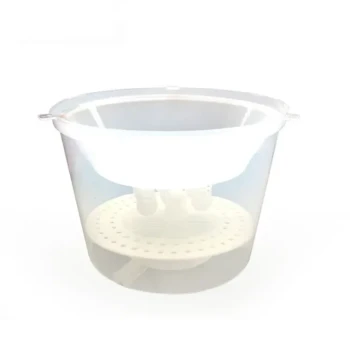
Professional pollen traps are the foundational hardware for converting raw floral resources into scalable commercial products. These devices, installed at hive entrances, utilize precise grid structures to mechanically strip and collect pollen pellets from returning worker bees without causing injury. By automating the harvest, they allow beekeepers to efficiently transform abundant local flora into high-purity nutritional commodities.
The Core Insight Professional traps do more than catch pollen; they standardize the harvesting process to ensure purity and scalability. However, their high efficiency creates a direct nutritional deficit for the hive, requiring a sophisticated management strategy that balances commercial yield with colony health.
The Mechanism of High-Efficiency Harvesting
Precision Mechanical Separation
Professional traps employ specific aperture grids designed to match the physical dimensions of worker bees.
As foraging bees pass through these barriers to enter the hive, the grid gently strips the pollen pellets carried on their hind legs. This process is purely mechanical, ensuring the collection is continuous and automated without requiring manual intervention during the bee's flight.
Ensuring Raw Material Purity
Commercial production demands a product free from hive debris and contaminants.
The design of professional traps provides immediate physical filtration. By separating the pollen from the bees at the entrance and directing it into a dedicated container, the system minimizes the introduction of impurities common in internal hive collection.
Preservation of Biochemical Activity
Quality control in pollen production begins the moment the pellet is detached.
Advanced traps often feature dry collection trays designed to reduce the impact of environmental humidity. This prevents microbial contamination and preserves the biochemical activity of the pollen by shielding it from excessive moisture and degradation.
Strategic Value for Commercial Operations
Leveraging Diverse Floral Resources
Different regions offer distinct botanical resources, such as sesame, maize, or sunflowers.
Professional traps allow beekeepers to quantify and capture yields from these specific sources during their respective blooming periods. This capability turns a region's diverse plant life into a catalog of distinct, marketable nutritional products.
Business Model Diversification
Relying solely on honey production limits an apiary's revenue potential.
Implementing high-efficiency traps serves as the gateway to a diversified production model. It empowers apiaries to enter high-margin health and nutrition markets with products like bee pollen and propolis, rather than depending exclusively on the fluctuating honey market.
Understanding the Trade-offs
The Nutritional Deficit
It is critical to understand that pollen traps intercept the colony’s primary source of protein.
The pollen collected for commerce is the same resource required to feed developing larvae. Heavy reliance on traps removes a significant portion of the natural nutrition necessary for brood rearing and population maintenance.
The Necessity of Substitutes
To utilize professional traps sustainable, you must compensate for the loss.
Beekeepers must provide artificial pollen substitutes to maintain colony vitality. Without this intervention, the hive risks protein deficiency, which can lead to a decline in population and overall health failure.
Making the Right Choice for Your Operation
- If your primary focus is high-volume production: Prioritize traps with precise aperture grids and dry collection trays to maximize yield and prevent spoilage during heavy flows.
- If your primary focus is sustainable colony management: Implement a strict rotation schedule where traps are removed periodically, or aggressively supplement with high-quality protein feed to offset the harvest.
Success in commercial pollen production lies in the ability to aggressively harvest external resources while artificially stabilizing the internal nutritional balance of the hive.
Summary Table:
| Feature | Benefit for Commercial Operations |
|---|---|
| Precision Aperture Grids | Ensures high-efficiency pollen stripping without injuring worker bees. |
| Integrated Filtration | Minimizes debris and hive contaminants for a high-purity raw product. |
| Dry Collection Trays | Prevents moisture-driven microbial growth and preserves biochemical activity. |
| Scalable Design | Enables quantification of yields from diverse floral sources like sesame and sunflower. |
Partner with HONESTBEE for Professional-Grade Beekeeping Excellence
Transitioning from simple honey production to a high-margin, diversified apiary model requires the right hardware and expertise. HONESTBEE is dedicated to supporting commercial apiaries and distributors with our comprehensive wholesale range. From precision-engineered pollen traps and hive-making machinery to advanced honey-filling systems, we provide the full spectrum of equipment and consumables needed to scale your operations.
Why choose HONESTBEE?
- Comprehensive Catalog: Access everything from specialized hardware to honey-themed cultural merchandise.
- Commercial Scale: We specialize in high-volume supply chains for global distributors and large-scale bee farms.
- Industry Expertise: We help you balance aggressive harvesting with colony health to ensure long-term profitability.
Ready to elevate your production and explore our wholesale offerings? Contact HONESTBEE today and let us supply the tools for your success!
References
- Fazlı Öztürk, Erdal Öğün. Van İli Peyzaj Bitkilerinin Arıcılık Açısından Değerlendirilmesi. DOI: 10.29133/yyutbd.316240
This article is also based on technical information from HonestBee Knowledge Base .
Related Products
- Removable Plastic Pollen Trap With Ventilated Tray for Bees Pollen Collector
- 30 cm Plastic Entrance Hole Bee Pollen Trap and Collector
- Plastic Bee Pollen Trap Strips Comb Catcher Collector
- Professional Multi-Component Bucket Wasp Trap
- Professional Bucket Style Wasp and Moth Pheromone Trap
People Also Ask
- What are the design principles and advantages of pollen traps in the collection of bee pollen? Boost Your Apiary Yield
- What is the function of professional pollen traps in evaluating honey plants? Quantifying Pollination and Crop Potential
- What functions do pollen traps serve for bee bread production? Optimize Your Raw Material Collection
- What maintenance and pest prevention measures should be taken for pollen traps? Protect Your Hive and Harvest Quality
- How does the use of pollen traps in honeybee hives enhance crop fertilization? Boost Your Yield Through Induced Activity