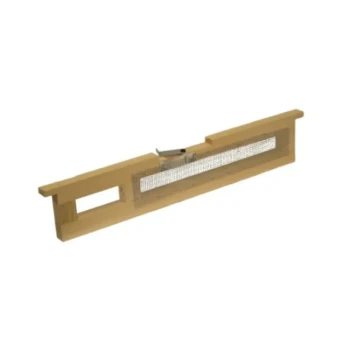
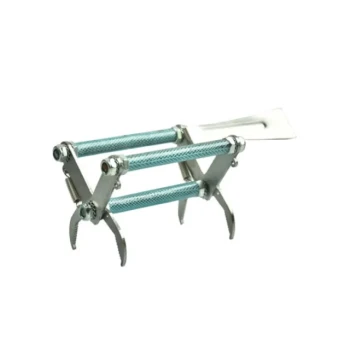
Specialized queen rearing frames utilize three-layer crossbars to fundamentally optimize the internal volume of a standard hive frame, allowing for the high-density production of queen cells. This tiered design enables beekeepers to graft and raise dozens of larvae simultaneously while ensuring that worker bees can evenly distribute heat and nutritional support to every developing queen.
The three-layer design transforms a standard frame into a high-capacity nursery, balancing the need for mass production with the biological requirement for uniform care and royal jelly distribution.
Optimizing Hive Resources
Maximizing Vertical Space
Standard brood frames are generally designed for comb building, which is inefficient for the specific geometry of queen cells.
The three-layer crossbar system utilizes the vertical height of the frame. This allows technicians to stack rows of artificial cups, tripling the potential output of a single frame compared to single-bar methods.
Facilitating Large-Scale Propagation
For commercial operations or large-scale genetic improvements, volume is critical.
This structural design supports the batch placement of dozens of queen cell cups. It is the hardware foundation that makes industrial colony replacement and splitting operations viable.
Ensuring Biological Quality
Uniform Nutritional Support
Quantity cannot come at the expense of quality. The spacing of the three layers is calculated to allow nurse bees free access to every cell.
This accessibility ensures that nurse bees can deposit abundant royal jelly into every artificial cup. Consequently, the resulting virgin queens receive sufficient nutrition to develop superior egg-laying capacities.
Consistent Thermal Regulation
Queen larvae are highly sensitive to temperature fluctuations.
The open structure of the crossbars promotes airflow and heat distribution. This ensures that larvae on the bottom bar receive the same thermal support as those on the top, preventing developmental stunting due to cold spots.
Operational Efficiency and Modularity
Modular Management
One of the most significant advantages of the crossbar design is modularity.
The horizontal bars are typically removable. This allows technicians to insert or withdraw specific rows of larvae without dismantling the entire frame or disturbing the rest of the colony.
Minimizing Disturbance
Frequent inspections can stress a colony and lower acceptance rates.
Because individual bars can be managed independently, technicians can classify, observe, and track different batches with minimal physical interference. This leads to a calmer "builder" colony and higher overall survival rates for the grafted larvae.
Understanding the Trade-offs
The Risk of Overloading
While the frame physically accommodates three layers, the biological colony has limits.
If the "builder" colony does not have an overwhelming population of nurse bees, filling all three bars can lead to resource dilution. This results in "scrub" queens—fully formed but smaller and less fertile due to insufficient royal jelly per larva.
Height-Based Neglect
In weaker colonies, bees naturally cluster toward the top of the frame for warmth.
There is a risk that larvae on the lowest crossbar may be neglected if the colony population drops or if the weather turns suddenly cold. Successful use of the third (bottom) layer requires a very strong, congested colony.
Making the Right Choice for Your Goal
To effectively utilize three-layer rearing frames, assess your colony strength and production targets:
- If your primary focus is maximum production volume: Utilize all three layers only in exceptionally strong, overflowing "starter-finisher" colonies to ensure every cup is accepted.
- If your primary focus is maximum individual quality: Limit the frame to the top two crossbars to guarantee that the finite supply of royal jelly is concentrated on fewer larvae, resulting in larger queens.
The three-layer crossbar frame is the industry standard for converting a biological process into a scalable, manageable production workflow.
Summary Table:
| Feature | Benefit for Queen Rearing |
|---|---|
| Three-Layer Design | Triples production capacity per frame compared to single-bar methods. |
| Vertical Spacing | Ensures nurse bees have 360° access to every cell for royal jelly delivery. |
| Open Crossbars | Promotes uniform airflow and heat distribution for consistent larval growth. |
| Removable Bars | Allows modular management and minimal colony disturbance during grafting. |
| Structural Density | Optimized for high-volume commercial queen propagation and genetic improvement. |
Scale Your Apiary Success with HONESTBEE
Are you looking to enhance your queen production and streamline your commercial operations? At HONESTBEE, we specialize in supporting commercial apiaries and distributors with premium, industry-grade beekeeping equipment. From high-capacity queen rearing frames to advanced honey-filling machinery and specialized hive-making tools, our comprehensive wholesale offering is designed to grow your business.
Partner with us to access:
- Professional-grade beekeeping hardware and machinery.
- High-quality essential industry consumables.
- Specialized solutions for large-scale colony management.
Contact HONESTBEE today to discuss your wholesale needs!
References
- Nazlı CANVERDİ, Belgin Günbey. The effects of altitude and rearing period on some characteristics of honey bee queens, Apis mellifera caucasica Gorbachev, 1916 (Hymenoptera: Apidae). DOI: 10.16970/entoted.1207868
This article is also based on technical information from HonestBee Knowledge Base .
Related Products
- JZBZ Langstroth Queen Rearing Frame for Beekeeping
- Professional Wooden Requeening Frame for Beekeeping
- Premium Nicot Style Cell Bar Holder and Queen Cell Cup Holder System
- Professional 3-Bar Frame Grip with Integrated Hive Tool
- Wooden Bee Hive Frames for Beekeeping and Wholesale
People Also Ask
- Why use finishing colonies for queen cell capping? Secrets to Superior Queen Quality and Performance
- How do queen rearing frames and grafting needles function together? Master the Doolittle Method for High-Quality Queens
- What is the purpose of queen rearing frames? Master Controlled Queen Production for Your Apiary
- What are the functions of queen rearing frames and artificial queen cells? Master Bee Genetic Improvement
- What roles do professional queen rearing frames and artificial queen cells play? Scaling Your Queen Bee Production