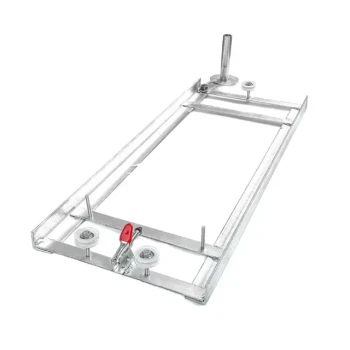
Bolted connections are preferred for critical drawbar components because they prioritize serviceability and component isolation without sacrificing structural integrity. By using high-strength bolts at high-stress interfaces—specifically the ball-bearing turntable base and the towing tip—designers ensure these parts can be easily removed and replaced. This design choice prevents localized wear from becoming a systemic failure.
While welding creates a permanent, fused joint, it makes individual part replacement nearly impossible without destructive cutting. The strategic use of bolted connections allows for the modular replacement of components subject to high fatigue, significantly extending the operational lifespan of the entire beehive transport trailer.
The Engineering Logic Behind Bolted Joints
Facilitating Disassembly and Maintenance
In heavy transport applications, the ability to service a vehicle is as critical as its initial construction.
Designers utilize high-strength bolted connections at specific junctures, such as the ball-bearing turntable base and the towing tip.
These components are sophisticated mechanical interfaces that may require servicing or inspection. Bolting ensures that maintenance crews can disassemble these sections using standard tools, rather than requiring cutting torches or grinding equipment associated with removing welded parts.
Combatting Wear and Fatigue
The drawbar and its connection points endure significant stress cycles during transport.
Over time, components like the towing tip naturally suffer from material fatigue and physical wear.
If these parts were fully welded, a worn towing tip could necessitate replacing the entire drawbar assembly. Bolted connections allow operators to treat these high-wear items as replaceable consumables, preserving the main structural frame of the trailer.
Structural Integrity and Force Transmission
Handling Longitudinal Forces
A common misconception is that bolted joints are inherently weaker than welds.
However, in the context of beehive transport trailers, properly engineered bolted connections are highly effective at transmitting longitudinal forces.
By using high-strength hardware, the design maintains the rigidity required to pull the load safely while retaining the flexibility of modular assembly.
Understanding the Trade-offs
The Requirement for High-Strength Hardware
While bolting offers maintenance advantages, it introduces specific engineering requirements that welding does not.
You cannot rely on standard hardware for these critical connection points.
The design explicitly demands high-strength bolts to match the load-bearing capacity of the steel components. Using inferior hardware at the turntable base or towing tip would compromise the safety of the connection, failing to transmit the necessary forces effectively.
Optimizing Trailer Design for Longevity
To maximize the service life of a beehive transport trailer, the connection method must align with the component's lifecycle.
- If your primary focus is Ease of Maintenance: Prioritize bolted connections at the towing tip and turntable base to allow for rapid component swapping without specialized fabrication tools.
- If your primary focus is Asset Longevity: Utilize high-strength bolting to isolate high-fatigue parts, ensuring that localized wear does not condemn the entire trailer system.
By selecting the right connection method for the right component, you transform maintenance from a repair burden into a strategic advantage.
Summary Table:
| Feature | Bolted Connection (Drawbar) | Full Welding |
|---|---|---|
| Maintenance | Easy disassembly with standard tools | Requires destructive cutting/grinding |
| Part Replacement | Modular; swap worn tips/turntables | Often requires full assembly replacement |
| Fatigue Management | Isolates wear to replaceable hardware | Stress cycles affect the entire structure |
| Service Life | Extended through targeted component repair | Limited by the wear of non-replaceable parts |
| Required Materials | High-strength, specialized hardware | Standard welding consumables |
Maximize Your Fleet’s Efficiency with HONESTBEE
At HONESTBEE, we understand that downtime is not an option for commercial apiaries and beekeeping distributors. Our beehive transport solutions are engineered with the perfect balance of structural integrity and maintenance-friendly design, ensuring your operations remain mobile and profitable.
Beyond specialized trailers, we provide a full spectrum of beekeeping machinery—from hive-making and honey-filling machines to premium beekeeping tools and industry consumables. Partner with a supplier that values your long-term asset longevity as much as you do.
Ready to upgrade your apiary’s logistics and equipment? Contact us today to discuss our wholesale offerings and technical solutions!
References
- Eduardo Garzón Garzón, Pedro José Sánchez-Soto. Design of a Trailer Adapted for Accommodation and Transport of Beehives. DOI: 10.3390/designs8040082
This article is also based on technical information from HonestBee Knowledge Base .
Related Products
- Heavy Duty Ratchet Hive Strap
- Plastic Transporting Bee Packages and Nuc Boxes for Beekeeping
- Heavy Duty Adjustable Hive Connector
- Durable Plastic Interlocking Hive Connector for Beekeeping
- Professional Grade Foldable Beehive Handles
People Also Ask
- Why is the use of ratchet straps or high-strength ropes necessary for hive protection? Secure Your Colony Now
- What are the two styles of hive straps? Choose the Right Strap for Your Hive Security
- What maintenance do hive straps require? Keep Your Hives Secure with Simple Care Tips
- How should hive straps be stored? Prevent Tangles & Extend Strap Life
- What is the best choice for hive straps? Ratchet vs. Cam Buckle for Your Apiary