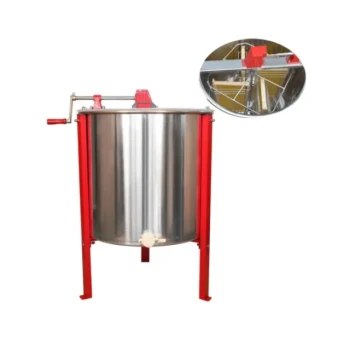
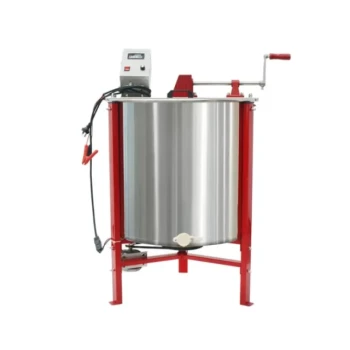
Industrial-grade stainless steel is the non-negotiable standard for honey processing because it offers superior corrosion resistance and sanitization capabilities. This specific material composition prevents the introduction of metal contamination and microbial impurities during weighing and processing. By neutralizing these external variables, the equipment ensures the stability of the honey's physicochemical properties—specifically total acidity, pH, and moisture—guaranteeing that subsequent analytical data is accurate and the final product is safe for consumption.
The integrity of your processing equipment directly correlates to the integrity of your data; stainless steel is essential to prevent chemical reactions that would alter the honey's natural composition and invalidate compliance testing.
The Material Science of Honey Processing
Combating Corrosion and Acidity
Honey is naturally acidic. Standard metals or lower-grade alloys can degrade when in constant contact with acidic substances, leading to equipment failure and product spoilage.
Industrial-grade stainless steel is chemically inert in this environment. It resists the corrosive nature of honey, ensuring the equipment remains durable and the product remains pure.
Eliminating Contamination Pathways
Microbial purity is a primary safety concern. The surface of industrial stainless steel is non-porous and designed for ease of cleaning, which prevents bacteria from colonizing the equipment.
Furthermore, this material prevents heavy metal leaching. Inferior materials can release metallic particles into the honey, which not only poses a health risk but also triggers failure in residue testing.
Ensuring Analytical Precision
Stabilizing Physicochemical Properties
For analysis to be meaningful, the sample must be stable. The primary reference highlights that stainless steel is critical for maintaining the stability of physicochemical properties such as pH values and total acidity.
If the processing equipment reacts with the honey, it chemically alters these baselines. This leads to skewed analytical data, making it impossible to accurately assess quality or process control.
Validating Organic Purity
Accurate data is the foundation of certification. To obtain organic certification, honey must be proven free of contaminants, including heavy metals and pesticide residues.
Processing equipment acts as the first line of defense. By ensuring no foreign substances are introduced during harvest and filtration, the equipment validates the organic production process and supports the data required for international export standards.
Common Pitfalls to Avoid
The Cost of Contamination
While industrial stainless steel represents a higher initial capital expense, the trade-off is the elimination of product rejection risks.
Using non-graded materials to save costs often leads to batch contamination. This results in financial losses that far exceed the cost of proper equipment, specifically when products fail export inspections or safety audits.
Misunderstanding "Clean"
Visual cleanliness does not equal chemical neutrality. A plastic or lower-grade metal container may look clean but can still harbor microscopic pathogens or leach chemicals.
Stainless steel allows for rigorous sterilization protocols that other materials cannot withstand, ensuring true sanitization rather than just surface-level cleanliness.
Making the Right Choice for Your Goal
To select the appropriate equipment strategy, consider your end-market objectives:
- If your primary focus is Organic Certification: Prioritize equipment with certified material traceability to prove that no heavy metals or contaminants were introduced during extraction.
- If your primary focus is Premium Market Positioning: Invest in high-grade stainless steel to ensure the physicochemical data you present to buyers is precise, stable, and unquestionable.
Your equipment is not just a tool for extraction; it is a critical instrument for quality assurance and brand protection.
Summary Table:
| Feature | Benefit of Industrial Stainless Steel | Impact on Honey Quality |
|---|---|---|
| Corrosion Resistance | Withstands honey's natural acidity without degrading | Prevents metallic taste and equipment failure |
| Non-Porous Surface | Prevents bacterial colonization and easy to sanitize | Ensures microbial purity and food safety |
| Chemical Inertness | No heavy metal leaching or chemical reactions | Maintains stable pH and total acidity levels |
| Durability | Long-lasting performance under rigorous sterilization | Protects organic certification and export status |
Elevate Your Apiary with HONESTBEE Quality
At HONESTBEE, we understand that the integrity of your honey harvest depends on the quality of your equipment. As a leading supplier for commercial apiaries and distributors, we provide a full spectrum of industrial-grade stainless steel tools and machinery—from high-capacity honey-filling machines to specialized hive-making equipment.
Our solutions are designed to eliminate contamination risks, stabilize your honey's physicochemical properties, and safeguard your brand's reputation in the premium market. Whether you need essential consumables or advanced honey-themed cultural merchandise, HONESTBEE delivers the wholesale reliability you need to succeed.
Ready to upgrade your processing standards? Contact us today to explore our comprehensive wholesale offerings!
References
- Samir Moura Kadri, Ricardo de Oliveira Orsi. Supering Apis mellifera (Hymenoptera, Apidae) beehives impairs honey production and biomarker genes. DOI: 10.1590/1678-992x-2020-0283
This article is also based on technical information from HonestBee Knowledge Base .
Related Products
- Heavy Duty Stainless Steel Honey Processing Machine Decrystallizing Tank
- Professional Stainless Steel Honey Filtering Machine with Water Bath Heating for Beekeeping
- Stainless Steel Manual Honey Press with Guard for Pressing Honey and Wax
- 10L Stainless Steel Electric Honey Press Machine
- Modern Stainless Steel Honey Dipper Stirrer
People Also Ask
- What are the features of the processing tanks offered? Engineered for Purity and Efficiency
- What types of stainless steel processing tanks are used for honey? Essential Equipment for Quality Honey Production
- What design options are available for honey processing tanks? Optimize Efficiency with Custom Geometries
- What types of stainless steel are used for honey processing? Ensure Food Safety with 304 & 316 Grade Equipment
- Why is professional honey de-crystallization equipment essential? Preserve Quality and Maximize Processing Efficiency