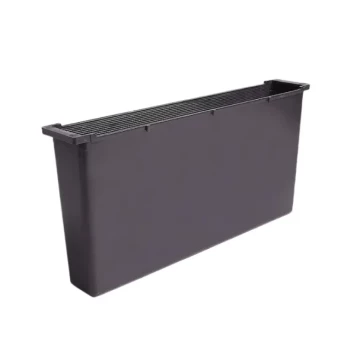
Internal hive feeding is the definitive choice for fall management because it mitigates the high risk of robbing. As natural nectar sources disappear, open feeding or entrance feeders create a scent trail that attracts aggressive wasps and neighboring honeybees, sparking fatal conflicts and resource depletion at the very moment your colony needs to conserve energy for winter.
By placing food sources exclusively inside the hive, you contain the scent of the syrup and force intruders to bypass the colony's defenses to reach it. This simple structural change transforms a vulnerability into a secure, controlled environment for resource accumulation.
The Dynamics of Fall Scarcity
The Trigger for Robbing
During the fall, the "dearth"—a lack of blooming flowers—makes sugar sources incredibly valuable.
If you utilize open feeding (leaving syrup pans outside) or entrance feeding, you are effectively broadcasting a signal to every insect in the area.
The Cost of Defense
When intruders locate an external or entrance food source, they do not stop there; they often attempt to enter the hive itself.
This forces your colony to engage in constant fighting at the entrance. Even if your bees win, the combat weakens the colony, kills off workers, and consumes the very energy reserves they are trying to build up.
Why Internal Feeders Are Superior
Security and Containment
Internal feeders, such as hive top feeders, division board feeders, or jar feeders, keep the supplemental food securely inside the hive body.
Because the syrup is not exposed to the outside air, it minimizes the scent trail. This prevents the feeding frenzy that typically attracts robbers.
Minimizing Colony Disturbance
Advanced internal options, specifically hive-top feeders, offer distinct operational advantages.
These designs allow you to refill the syrup without opening the main hive body or disrupting the internal atmosphere. This is crucial in cooler fall temperatures where retaining hive heat is vital.
Operational Safety
Using a hive-top design often means you can replenish supplies without needing full protective gear or veils.
This encourages more frequent monitoring and ensures the bees are not neglected due to the hassle of suiting up.
Understanding the Trade-offs
The Risk of Drowning
Not all internal feeders are created equal. Some internal designs can become death traps where bees fall into the syrup and drown.
However, modern hive-top designs specifically address this by incorporating safety mechanisms to prevent bees from drowning while they feed.
Equipment Compatibility
While entrance feeders are universally compatible, internal feeders require specific gear.
You must ensure your feeder choice fits your specific hive style. Fortunately, many modern top feeders are adaptable for both Warré and Langstroth style hives.
Making the Right Choice for Your Goal
To ensure your colony survives the winter with adequate stores, choose your equipment based on your specific operational needs.
- If your primary focus is colony security: Prioritize internal feeding only to eliminate the scent trails that invite robbing wasps and neighboring bees.
- If your primary focus is ease of maintenance: Utilize a hive-top feeder to allow for quick refills without disrupting the colony's internal temperature or requiring a bee suit.
- If your primary focus is bee safety: Select a feeder design explicitly engineered to prevent drowning, ensuring every drop of syrup contributes to survival rather than mortality.
The goal of fall feeding is not just to provide calories, but to do so without triggering a war at the hive entrance.
Summary Table:
| Feeder Type | Robbing Risk | Heat Retention | Ease of Refill | Best Use Case |
|---|---|---|---|---|
| Internal (Top/Division) | Low | High | Excellent | Fall management & winter prep |
| Entrance | High | Low | Good | Spring stimulation (limited use) |
| Open Feeding | Very High | N/A | Easy | Emergency large-scale apiary use |
Maximize Your Apiary's Winter Survival with HONESTBEE
At HONESTBEE, we understand that fall management is the most critical time for commercial apiaries and distributors. Our mission is to provide the professional-grade tools you need to safeguard your colonies.
We offer a comprehensive wholesale range of specialized beekeeping machinery, including advanced hive-making and honey-filling machines, alongside a full spectrum of high-quality internal feeders and essential consumables. Whether you are scaling your operation or supplying the industry, HONESTBEE delivers the hardware and cultural merchandise that drive success.
Ready to upgrade your equipment for the season? Contact us today to discuss our wholesale offerings and discover how our expertise can streamline your honey production.
Related Products
- Professional In-Hive Bee Feeder HONESTBEE Frame for Beekeeping
- In-Hive Dual Compartment Frame Bee Feeder for Targeted Colony Nutrition
- Professional Hive Front Entrance Bee Feeder
- HONESTBEE Professional Hive Top Bee Feeder Feeding Solution
- Stainless Steel Round Beehive Air Vents for Ventilation
People Also Ask
- When should beekeepers stop feeding their bees? Let Your Bees Tell You
- Why is the use of a beekeeping feeder for syrup supplementation important? Boost Colony Growth and Survival
- What are the common types of internal and external feeders used in beekeeping? Choose the Right Feeder for Your Hive
- What is a feeder in the context of beekeeping? Optimize Your Hive Nutrition and Growth
- How do specialized feeders contribute to effective artificial feeding? Scientific Apiary Management & Colony Health