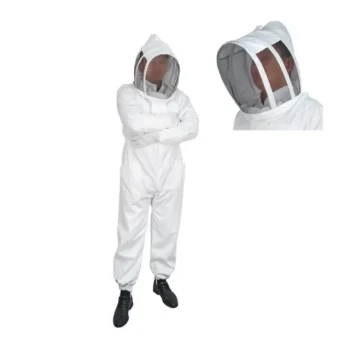
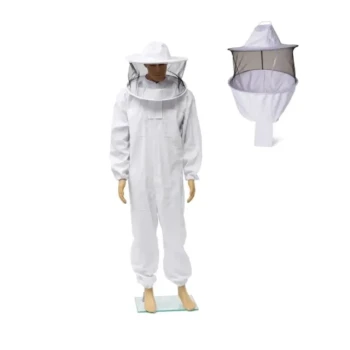
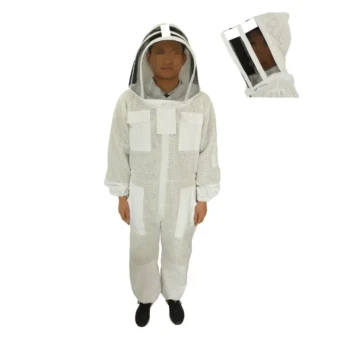
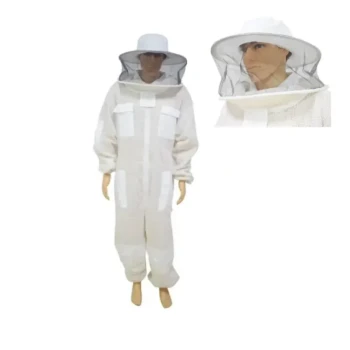
Selecting the correct size for a beekeeping suit is a critical safety decision, not merely a matter of comfort. A suit that fits poorly compromises the barrier between you and the bees. If the suit is too tight, the fabric presses against your skin, allowing stingers to penetrate; if too loose, it hampers mobility and creates safety gaps.
A well-fitted suit provides a vital "air gap" between the material and your body to neutralize stings while maintaining the mobility required to work hives effectively.
The Mechanics of Protection
The Importance of the "Air Gap"
The primary function of a beekeeping suit is to create a physical distance between the bee's stinger and your skin.
The fit creates this distance. When a suit fits correctly, the fabric floats above your skin, ensuring that a stinger cannot reach you even if it pierces the material.
The Danger of Tight Clothing
If a suit is too tight, that protective buffer disappears.
When the fabric is pulled taut against your body—especially across the back or shoulders—a bee can easily sting through the material directly into your skin. This renders even high-quality material ineffective.
Securing the Extremities
Proper sizing ensures that the elasticized cuffs and ankles sit correctly on your limbs.
If the suit is too short, these seals may ride up when you bend or reach, creating openings for bees to enter. If the suit is too long, the excess fabric at the ankles becomes a tripping hazard.
Comfort and Usability
Freedom of Movement
Beekeeping is an active pursuit that requires bending, lifting heavy boxes, and precise manipulation of frames.
A suit that restricts your range of motion will make these tasks difficult and tiring. You must be able to move freely to handle equipment safely and keep your focus on the bees rather than your clothing.
Managing Heat and Breathability
A properly sized suit facilitates air circulation.
While materials like cotton are chosen for breathability, a suit that is too tight restricts airflow, trapping heat against your body. A looser fit allows for better ventilation, keeping you cooler during extended periods of work.
Understanding the Trade-offs
The Risk of "Too Loose"
While a loose fit is generally safer than a tight one, there is a limit.
Excessively baggy suits can snag on hive tools, corners of boxes, or surrounding vegetation. This can cause you to stumble or drop equipment, potentially agitating the colony.
Accounting for Layers
A common mistake is measuring for the suit while wearing light clothing.
You must account for the clothing you intend to wear underneath the suit, such as jeans or a sweatshirt. If you do not factor in these layers, a suit that fits in the store may become dangerously tight in the field.
Making the Right Choice for Your Goal
When selecting your size, consider your specific environment and how you plan to work.
- If your primary focus is maximum protection: Prioritize a size up to ensure a consistent "air gap" exists even when you are bending over or stretching.
- If your primary focus is agility and precision: Select a size that minimizes bulk to prevent snagging, while strictly ensuring the cuffs and ankles remain sealed during movement.
The right size turns your suit into a tool that enhances your confidence rather than a hindrance that compromises your safety.
Summary Table:
| Sizing Factor | Impact of 'Too Tight' | Impact of 'Too Loose' | Ideal Fit Performance |
|---|---|---|---|
| Sting Protection | Fabric touches skin; stings penetrate easily. | Generally safe, but fabric may snag. | Creates a consistent 'air gap' buffer. |
| Mobility | Restricts movement; physically tiring. | Tripping hazard; prone to snagging. | Full range of motion for lifting boxes. |
| Safety Seals | Cuffs ride up, exposing wrists/ankles. | Excess fabric creates gaps/entry points. | Seals remain secure during bending/reaching. |
| Ventilation | Traps heat against the body. | Good airflow, but bulky. | Facilitates airflow and heat dissipation. |
Elevate Your Beekeeping Standards with HONESTBEE
At HONESTBEE, we understand that professional beekeeping requires equipment that balances uncompromising safety with operational efficiency. As a dedicated partner to commercial apiaries and distributors, we provide a comprehensive wholesale range of high-quality beekeeping suits, specialized hive-making machinery, and honey-themed cultural merchandise.
Whether you are scaling your commercial operations or stocking a distribution network, our expertise in beekeeping hardware and essential consumables ensures you receive tools designed for the rigors of the field.
Ready to secure premium equipment for your business?
Contact HONESTBEE Today to Explore Our Wholesale Catalog
Related Products
- Premium Cotton Beekeeper Suit with Reinforced Fencing Veil
- Professional Cotton Beekeeper Suit with Round Veil Design for Commercial Apiaries
- Professional Beekeeper Suit with Square Folding Cotton Veil
- Vented Beekeeping Jacket with Hood and Veil for Beekeepers
- White Cotton Beekeeping Jacket and Veil for Bee Keepers
People Also Ask
- What material and design specifications are recommended for a high-quality beekeeper suit? Top Gear Selection Guide
- How to Pre-treat Propolis Stains on Beekeeping Suits? Master Advanced Fabric Care and Soil Removal
- What features should be considered for sting protection in a beekeeping suit? Ensure Total Safety and Comfort
- What are the differences between full suits and jackets with veils in beekeeping? Choose Your Best Protection
- What features should be looked for in a beekeeping suit for maximum comfort? Prioritize Ventilation and Fit