Homogenizing and finely grinding bee-collected pollen is a critical prerequisite for manual honeycomb filling because it fundamentally alters the physical state of the raw material. This mechanical processing turns irregular pollen granules into a uniform, extremely fine powder, enabling the necessary compaction and biological interaction required for successful hive products.
By transforming raw pollen into a fine powder, you maximize the material's density within the honeycomb cell and significantly increase the surface area available for enzymatic reaction. This step is not merely aesthetic; it is the functional key to accelerating the conversion of raw pollen into high-quality beebread.
Optimizing Physical Structure
Creating a Uniform Powder
Raw bee-collected pollen consists of granules that are irregular in size and shape. Homogenization and grinding break these granules down into an extremely fine powder.
Achieving Maximum Density
The primary goal of this physical modification is to alter how the material settles. A fine powder eliminates the air gaps inherent in raw granules, allowing the pollen to compact tightly when filled into honeycomb cells.
Enhancing Biological Processing
Improving Substance Mixture
The conversion of pollen into beebread is a biological process that relies on interaction with bee secretions. The increased surface area of the fine powder facilitates a more thorough mixture with these secretions.
Accelerating Beebread Conversion
Because the secretions can permeate the fine powder more effectively than coarse granules, the natural processing stage is significantly more efficient. This preparation directly accelerates the conversion of the pollen mixture into high-quality beebread.
Common Pitfalls in Preparation
The Risk of Inadequate Grinding
If the pollen is not ground to a sufficient fineness, the material will fail to achieve the necessary density within the cell. Loose packing leads to wasted space and potential structural instability within the comb.
Compromised Fermentation
Coarse pollen resists the thorough integration of bee secretions. Without this homogeneous mixture, the biological conversion process slows down, potentially resulting in an inconsistent or lower-quality final beebread product.
Making the Right Choice for Your Goal
To ensure the success of your manual filling process, consider the following priorities:
- If your primary focus is maximizing yield: Ensure the pollen is ground to a fine dust to achieve the highest possible density per honeycomb cell.
- If your primary focus is product quality: Prioritize homogenization to ensure bee secretions can thoroughly penetrate the mixture for uniform fermentation.
Proper mechanical preparation is the defining factor that bridges the gap between raw collected pollen and a premium hive product.
Summary Table:
| Preparation Step | Physical Impact | Biological Benefit |
|---|---|---|
| Homogenization | Creates uniform powder consistency | Ensures consistent fermentation across the batch |
| Fine Grinding | Eliminates air gaps between granules | Increases surface area for enzymatic reactions |
| Compaction | Maximizes material density per cell | Improves structural stability of the honeycomb |
| Secretions Mixing | Facilitates thorough integration | Accelerates the conversion from pollen to beebread |
Scale Your Apiary Operations with HONESTBEE
Transitioning from raw pollen to premium beebread requires the right tools. At HONESTBEE, we specialize in supporting commercial apiaries and distributors with professional-grade solutions. Whether you need high-efficiency grinding machinery, honeycomb-making equipment, or specialized honey-filling tools, our comprehensive wholesale portfolio has you covered.
Our Value to You:
- Commercial Durability: Machinery designed for high-volume processing.
- Complete Supply Chain: From essential consumables to advanced hardware.
- Expert Support: Tailored advice for large-scale bee product manufacturing.
Ready to enhance your production efficiency? Contact HONESTBEE today to explore our full range of beekeeping equipment and industrial machinery!
References
- Nuru Adgaba, Yehya Alattal. Brood-Rearing Enhancing Potential of Manually Packed Pollen Feeding in Comparison with Pollen and Pollen Supplements in Patty Forms. DOI: 10.2478/jas-2020-0023
This article is also based on technical information from HonestBee Knowledge Base .
Related Products
- Heavy-Duty Ergonomic Grip Galvanized Pollen Shovel
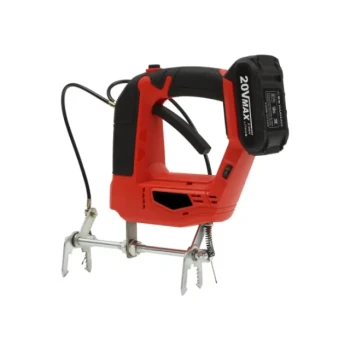
- High Performance Cordless Electric Bee Shaker for Beekeeping
- Plastic Bee Pollen Trap Strips Comb Catcher Collector
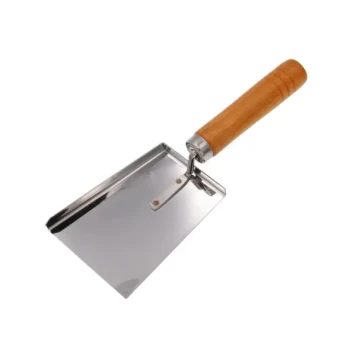
- Stainless Steel Pollen Shovel with Wooden Handle
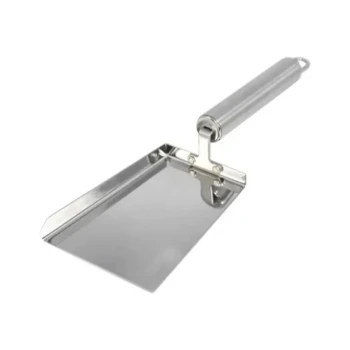
- Heavy-Duty Ergonomic Stainless Steel Pollen Shovel
People Also Ask
- For what reasons do beekeepers collect bee pollen? Boost Hive Health and Unlock New Revenue Streams
- Why should commercial apiaries focus on the collection of diversified bee products? Maximize Your Hive’s Profit Potential
- How do bee pollen collection tools affect the quality of bee pollen used in functional dairy ice cream production?
- How does a specialized pollen collector facilitate the harvesting of diverse bee products? Automate High-Value Yields
- What is the impact of pollen collectors and associated equipment on the cost structure of pollen production? Maximize ROI