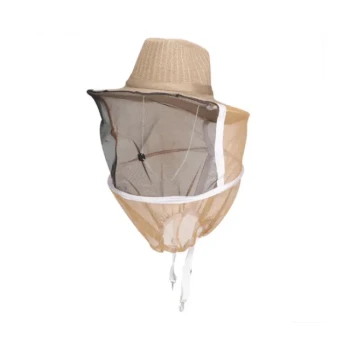
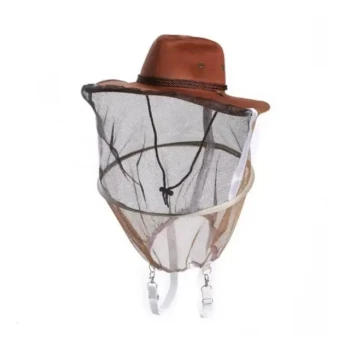
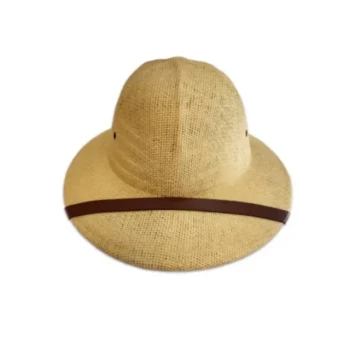
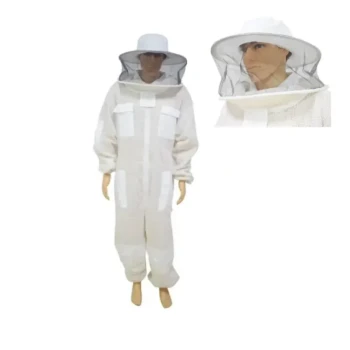
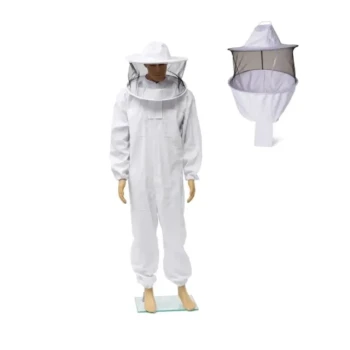
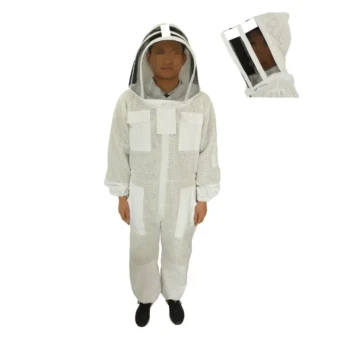
The absence of a stinger does not equate to a lack of defense. While stingless bees cannot inflict a venomous sting, they exhibit aggressive defensive behaviors when their colony is disturbed, specifically swarming and biting. A professional protective cap and veil are necessary to prevent these bees from crawling into the operator's ears, eyes, and hair, ensuring that the physical irritation does not disrupt the delicate process of hive management.
The primary function of the veil is not to block venom, but to maintain the operator's composure. By preventing bees from swarming the face and biting sensitive areas, the gear ensures the precision and focus required to harvest honey or split hives without damaging the colony.
The Nature of the Threat
Understanding Defensive Biting
Stingless bees are not passive. When a hive is opened for inspection or harvesting, the colony reacts to the intrusion.
Their primary defense mechanism involves swarming the intruder and using their mandibles to deliver persistent, irritating bites. While these bites are not toxic, a mass attack on soft skin is painful and highly distracting.
The Attraction to Carbon Dioxide
Bees are biologically programmed to detect threats. They are naturally attracted to the carbon dioxide in human breath.
This draws the swarm directly toward the operator's face. Without a physical barrier, the bees will concentrate their biting efforts around the nose, mouth, and eyes.
The Risk of Entanglement
Beyond biting, stingless bees have a tendency to crawl into small crevices.
Without a cap and veil, bees can easily enter the ear canals or become hopelessly entangled in the operator's hair. This behavior causes significant distress to the beekeeper and often results in the death of the bees involved.
Operational Efficiency and Safety
Preserving Psychological Comfort
Successful beekeeping requires a calm, steady hand. If an operator is constantly swatting away bees or flinching from bites, their psychological state shifts from focused to frantic.
Professional personal protective equipment (PPE) acts as a psychological buffer. It allows the operator to remain calm, knowing they are impervious to the swarm's irritation.
Preventing Human Error
Hive splitting and honey harvesting are precision tasks. A sudden jerk of the hand caused by a bee biting an eyelid can lead to crushed brood combs or a dropped hive.
The veil ensures that the operator's vision and dexterity remain uncompromised. This precision directly protects the colony from accidental damage caused by human reflex reactions.
Common Pitfalls to Avoid
The "Harmless" Misconception
A common mistake, particularly among beginners, is assuming that "stingless" means "defenseless."
Skipping the veil because of this misconception often leads to abandoned inspections. Once the biting begins, an unprotected operator may be forced to retreat hastily, leaving the hive open and vulnerable to pests or temperature fluctuations.
Neglecting the Seal
Simply wearing a hat is insufficient. The veil must be properly sealed against the body.
Stingless bees are small and persistent; they will find gaps in loose-fitting equipment. A partial barrier provides a false sense of security that evaporates the moment a bee breaches the veil.
Making the Right Choice for Your Goal
Whether you are a hobbyist or a professional, the equipment serves a dual purpose: protecting you and protecting the bees.
- If your primary focus is Personal Safety: The veil is essential to prevent painful bites to the face and to keep bees from entering your ears or tangling in your hair.
- If your primary focus is Colony Health: The gear is critical for maintaining the focus and steady hands needed to perform hive tasks without crushing bees or damaging the structure.
True expertise in beekeeping is demonstrated not by enduring pain, but by removing distractions so you can care for the colony with absolute precision.
Summary Table:
| Defense Issue | Stingless Bee Behavior | Purpose of Protective Cap & Veil |
|---|---|---|
| Biting | Target face/eyes with mandibles | Prevents physical irritation and painful bites to sensitive skin. |
| Swarming | Attracted to $CO_2$ from breath | Creates a barrier against swarms drawn to the operator's face. |
| Entanglement | Crawling into hair and ears | Keeps bees out of ear canals and prevents them from getting stuck in hair. |
| Human Reflex | Flinching from bites/irritation | Maintains operator focus to prevent accidental damage to the colony. |
Elevate Your Beekeeping Operations with HONESTBEE
At HONESTBEE, we understand that precision is the foundation of a productive apiary. Whether you are managing commercial stingless bee colonies or distributing professional-grade gear, we provide the high-quality protective equipment and specialized machinery you need to succeed. From durable veils to advanced honey-filling machines, our comprehensive wholesale offerings cater to the unique demands of global beekeeping businesses.
Partner with HONESTBEE to enhance your efficiency and colony safety.
References
- Ilmas Abdurofi, Amin Mahir Abdullah. Application of Cost-Benefit and Break-Even Analysis for the Development of Stingless Bees Farming in Malaysia. DOI: 10.33736/ijbs.3763.2021
This article is also based on technical information from HonestBee Knowledge Base .
Related Products
- Beekeeper Cowboy Hat and Veil for Beekeeping
- Premium Cowboy Beekeeper Hat with Visibility Veil Outdoor Professional Beekeeping Protective Gear
- White Cotton Beekeeping Jacket and Veil for Bee Keepers
- Beekeeping Jacket with Hood and Veil for Beekeepers
- Professional Square Folding Wire Mesh Beekeeping Veil
People Also Ask
- What is the correct way to wash a beekeeping hat and veil? Safe Hand-Washing Guide to Protect Your Gear
- What are the components and importance of a beekeeper's hat and veil? Essential Safety Gear for Apiary Success
- What are the differences between a separated and an attached beekeeping hat and veil? Security vs. Versatility
- What are the design specifications for an effective beekeeping hat and veil? Professional Standards for Protection
- What is the function of a beekeeping hat and veil? Essential Protection for Safe Hive Management