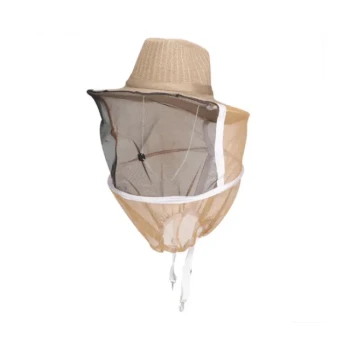
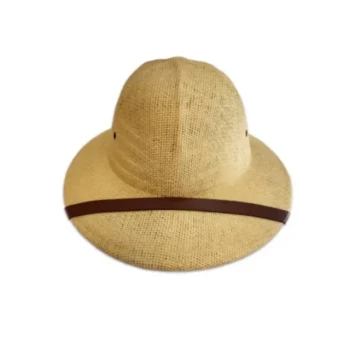
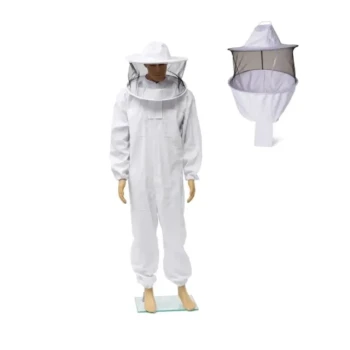
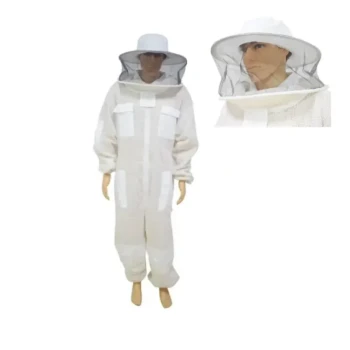
The beekeeper’s hat and veil act as the primary line of defense for the most vulnerable parts of your body. This essential equipment consists of a wide-brimmed hat or helmet that supports a layer of mesh netting, which drapes down to cover the face and neck, resting at the shoulders. It is designed to provide a secure barrier against stings during hive inspections, honey harvesting, and general colony maintenance.
Core Insight While a full body suit provides maximum coverage, the hat and veil are widely considered the most critical components of beekeeping gear. They specifically shield the face, eyes, and neck—areas where stings are not only most painful but potentially most dangerous—without compromising the visibility needed to work safely.
The Anatomy of the Gear
The Wide-Brimmed Hat
The foundation of this equipment is a hat or helmet with a stiff, wide brim. This design is functional, not just aesthetic; the brim acts as a scaffold to hold the veil away from the skin.
By keeping the mesh at a distance, the hat ensures that bees landing on the veil cannot reach your face to sting through the material.
The Protective Mesh Veil
Attached to the hat is a veil made of high-visibility, breathable mesh. This netting creates a seal around the head and extends down to rest on or over the shoulders.
The mesh is constructed to be see-through, allowing you to identify eggs, queens, and hive health indicators clearly. Simultaneously, it allows for airflow, which is critical for comfort during physical labor in warm weather.
Why This Equipment is Non-Negotiable
Protection of Sensitive Zones
The primary function of the hat and veil is to prevent stings to the head and neck. Stings in these areas—particularly around the eyes, nose, and lips—are significantly more painful than stings elsewhere.
Beyond pain, stings to the face can cause severe swelling that may obstruct vision or breathing. Consequently, experts recommend wearing this gear every time you interact with a hive, regardless of the task's duration.
Minimum Viable Safety
Even when a full bee suit is deemed unnecessary for a quick task, the hat and veil remain essential. They represent the minimum standard for safety.
Many experienced beekeepers may forgo a jacket or coveralls in specific situations, but they rarely work without protecting their face.
Understanding the Trade-offs
Incomplete Coverage
While the hat and veil protect vital areas, they do not protect the torso, arms, or legs. Reliance solely on headgear leaves the rest of the body exposed to defensive bees.
The Integrity of the Seal
The effectiveness of a veil is entirely dependent on how well it seals at the bottom. If the veil merely rests on the shoulders without being tucked in or secured to a jacket, bees can crawl underneath.
Always verify that zippers, ties, or elastic seals are secure. As noted in safety protocols, you must also carefully check folds in the gear for stray bees after you finish handling the colony.
Making the Right Choice for Your Goal
To select the right configuration for your apiary, consider your specific needs:
- If your primary focus is critical safety: Prioritize a hat and veil combination that attaches directly to a jacket or full suit to eliminate gaps at the neck.
- If your primary focus is visibility: Look for veils with black or dark-colored high-visibility mesh, which reduces glare compared to light-colored netting.
- If your primary focus is quick accessibility: A detached hat and veil allows for rapid deployment during brief inspections without the heat of a full suit.
The hat and veil are not just accessories; they are the fundamental barrier that allows you to work with confidence and focus.
Summary Table:
| Component | Function | Key Feature |
|---|---|---|
| Wide-Brimmed Hat | Structural Support | Keeps mesh away from skin to prevent stings through the material. |
| Mesh Veil | Visual Barrier | High-visibility, breathable netting that protects the face and neck. |
| Neck Seal | Perimeter Security | Elastic or zipper closures that prevent bees from crawling under the gear. |
| Dark Mesh | Optical Clarity | Reduces glare, making it easier to spot eggs and the queen bee. |
Elevate Your Apiary Safety with HONESTBEE
At HONESTBEE, we understand that professional beekeeping requires equipment that balances uncompromising safety with high-performance visibility. As a leading provider for commercial apiaries and distributors, we offer a comprehensive wholesale range including specialized protective gear, honey-filling machinery, and hive-making equipment.
Whether you are scaling your commercial operations or stocking a distribution network, our portfolio of beekeeping tools and industry consumables is designed to meet your specific needs. Contact us today to discuss our wholesale offerings and discover how our premium hardware can enhance your productivity and safety standards.
Related Products
- Beekeeper Cowboy Hat and Veil for Beekeeping
- Premium Cowboy Beekeeper Hat with Visibility Veil Outdoor Professional Beekeeping Protective Gear
- High-Definition Beekeeper Hat with Round Veil Mesh for Beekeeping
- Rigid Pith Style Beekeeper Hat for Square Folding Veils
- White Cotton Beekeeping Jacket and Veil for Bee Keepers
People Also Ask
- What is the correct way to wash a beekeeping hat and veil? Safe Hand-Washing Guide to Protect Your Gear
- What are the differences between a separated and an attached beekeeping hat and veil? Security vs. Versatility
- What are the design specifications for an effective beekeeping hat and veil? Professional Standards for Protection
- What is the function of a beekeeping hat and veil? Essential Protection for Safe Hive Management
- What are the key features of a beekeeping hat and veil? Choose the Right Protection for Your Apiary