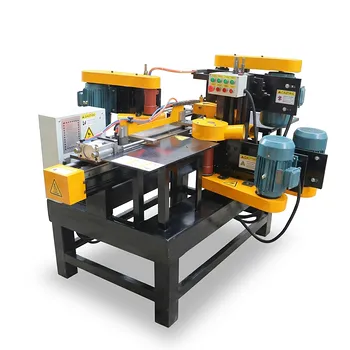
Precise bee space is essential because it determines whether a wooden beehive remains functional in operation. The clearance between frames, hive walls, covers, and other internal components must stay within the range appropriate for the bee species and hive standard, generally about 6 to 9 mm. Smaller gaps encourage propolis buildup, while larger gaps lead to burr or brace comb, making frames difficult to remove and inspections unnecessarily labor-intensive.
Bee space is a manufacturing tolerance, not a minor design detail. Maintaining it consistently keeps frames movable, prevents unwanted comb and propolis, protects comb structure, and ensures that hive components work together throughout repeated inspections and commercial apiary use.
Why Bee Space Controls Hive Function
It prevents frames from being glued in place
When the clearance between a frame and the hive wall is too narrow, bees commonly fill it with propolis, a sticky resin used to seal and stabilize the hive.
Over time, this can bond frames to the brood box, super, or inner cover. The beekeeper may then need excessive force to remove equipment, increasing the risk of damaged wood, broken comb, and crushed bees.
It prevents burr and bridge comb
When the gap exceeds the bees’ normal working clearance, they treat the extra space as an opportunity to build comb.
This burr comb or bridge comb can connect adjacent frames, join frames to hive walls, and obstruct covers or excluders. It creates a disorganized internal structure that complicates inspection and frame manipulation.
It preserves independent frame movement
A correctly dimensioned hive allows each frame to be lifted, inspected, rotated, and replaced without disturbing the surrounding equipment.
That independence is central to modern hive management. It enables beekeepers to examine brood patterns, monitor stores, identify disease, and harvest honey with less disruption to the colony.
Why Manufacturing Precision Matters
Small dimensional errors accumulate
Bee space is affected by more than one measurement. Frame width, top-bar dimensions, side clearances, box interior dimensions, rabbet depth, cover construction, and wood movement all contribute to the final working gap.
A component that is only slightly oversized can eliminate bee space in one location. Several small deviations across a hive stack can create binding, excessive clearance, or inconsistent spacing throughout the equipment.
Wood requires controlled production
Wood naturally varies with moisture content, grain direction, machining accuracy, and storage conditions.
Manufacturers therefore need consistent material preparation, accurate cutting and routing, controlled assembly, and inspection of finished dimensions. Quality control is especially important for components such as frame rests, side bars, top bars, bottom boards, and inner covers.
Interoperability depends on consistency
Commercial beekeepers often combine equipment purchased at different times or from different suppliers.
Consistent bee space helps hive bodies, frames, supers, covers, and related components remain modular and interchangeable. For distributors and wholesalers, this reduces compatibility complaints and gives customers greater confidence when expanding or replacing equipment.
Operational Benefits for Beekeepers and Resellers
Faster colony inspections
Frames that separate cleanly reduce the time required to open a hive and examine its contents.
This matters particularly in commercial apiaries, where a small handling delay multiplied across hundreds or thousands of colonies becomes a significant labor cost.
Lower risk of equipment and comb damage
Excessive force can split wooden components, deform frame rests, tear comb, or dislodge bees.
Correct bee space allows standard hive tools to be used effectively while reducing unnecessary damage during inspection, transport, and honey production.
More reliable product performance
A hive is a system of interacting components rather than a collection of isolated wooden parts.
A supplier that controls dimensional accuracy across a full product portfolio can provide more dependable results than one offering individual components without verifying how they function together.
Stronger commercial service
For B2B buyers, technical quality is only part of the purchasing decision. Reliable dimensional standards need to be supported by responsive communication, clear specifications, efficient order fulfillment, and dependable delivery.
These capabilities help distributors maintain stock, serve different apiary requirements, and resolve technical questions quickly.
Selecting the Correct Bee Space Standard
Treat the measurement as a range with a defined target
Bee space is commonly described as approximately 6 to 9 mm, or roughly 1/4 to 3/8 inch, but the correct production target depends on the hive design, bee species, and applicable equipment standard.
Manufacturers should define a specific target and tolerance for each product rather than treating the entire range as interchangeable.
Match frames to hive bodies
Frame dimensions must be evaluated together with the internal dimensions of the box.
A frame can be manufactured accurately in isolation and still produce incorrect clearances if the hive body, frame rest, or cover is made to a different specification.
Confirm regional and customer requirements
Different markets may use different hive formats, frame types, and measurement conventions.
Distributors and resellers should confirm the required standard before placing large orders, particularly when sourcing equipment for multiple regions or supplying replacement components for established apiaries.
Understanding the Trade-offs
Too little space creates binding
Clearances below the intended bee-space tolerance encourage propolis sealing and can create inaccessible, bonded joints.
They may also increase the chance of bees being crushed when tightly packed components are separated.
Too much space creates comb management problems
Clearances above the intended tolerance encourage burr or bridge comb.
The result is not simply a cosmetic defect. Excess comb can lock frames together, obstruct equipment, reduce inspection speed, and damage comb when the hive is opened.
Precision does not eliminate all maintenance
Even correctly manufactured equipment will accumulate some propolis and wax through normal colony activity.
The manufacturing objective is to establish the correct geometry from the start, so routine maintenance remains manageable rather than compensating for avoidable dimensional errors.
One specification cannot serve every application
Using a generic measurement without considering the intended hive system can create compatibility problems.
A professional supplier should document product dimensions, identify the relevant hive standard, and maintain quality checks that reflect the customer’s actual use case.
Making the Right Choice for Your Goal
The best sourcing decision combines accurate bee-space control with reliable supply and technical support.
- If your primary focus is colony management: Choose precisely dimensioned frames and hive bodies that preserve the specified bee space, allowing clean inspections and easy frame removal.
- If your primary focus is product quality: Work with manufacturers that control wood preparation, machining, assembly, and finished-component tolerances.
- If your primary focus is compatibility: Source hive bodies, frames, covers, and related parts from a supplier that can verify that the complete product range follows a coherent standard.
- If your primary focus is distribution efficiency: Select a one-stop supplier with broad product coverage, rapid response, dedicated service, and fast, dependable order fulfillment.
- If your primary focus is long-term commercial value: Prioritize equipment that minimizes frame binding, comb damage, inspection labor, and customer returns.
Maintaining precise bee space turns wooden hive components into a dependable working system that supports both healthy colony management and efficient commercial operations.
Summary Table:
| Benefit | Impact |
|---|---|
| Prevents propolis buildup | Frames remain movable, reducing inspection time and labor |
| Prevents burr comb | Maintains organized hive structure, reducing comb damage |
| Preserves frame independence | Enables easy inspection and honey extraction |
| Ensures component interchangeability | Allows mixing equipment from different batches or suppliers |
| Reduces equipment damage | Minimizes force needed during hive manipulation |
| Improves commercial efficiency | Lower labor costs and fewer customer complaints for resellers |
At HONESTBEE, we specialize in supplying high-precision beehive components for commercial apiaries and distributors. Our comprehensive range includes hive bodies, frames, and covers, all manufactured to strict tolerances to maintain optimal bee space. We ensure reliable dimensional consistency across our full product portfolio, backed by rapid response, dedicated service, and fast delivery. Whether you need OEM/ODM support, certifications, or a steady supply, we help you reduce returns and enhance profitability. Contact us today to discuss your requirements and experience a seamless sourcing partnership!
Related Products
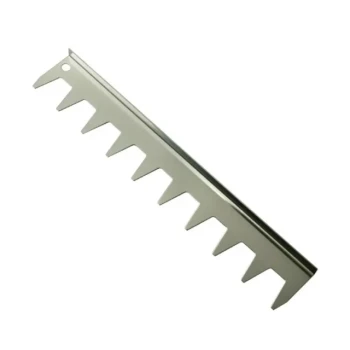
- Stainless Steel 9 Frame Hive Spacer Durable Precise for Commercial Beekeeping
- Durable Plastic Frame Spacer
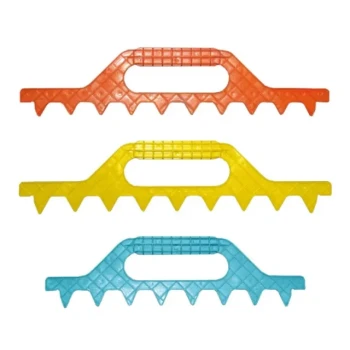
- Ergonomic Plastic Frame Spacer Tool for Rapid Hive Management Beekeeping
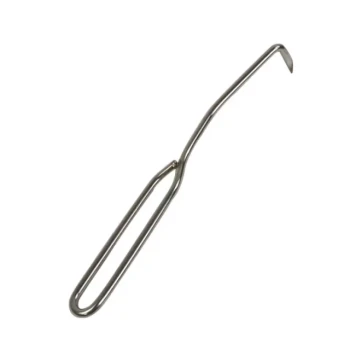
- Precision Stainless Steel Frame Cleaner for Hive Grooves and Corners
- Professional Bee Frame Machine for Side Bar Shaping
People Also Ask
- What is the function of Langstroth frames in comb foundation construction? Optimize Your Apiary's Structural Integrity
- What are the specific dimensions for the wooden parts of Langstroth beehive frames? Precision Guide for All Sizes
- How are Langstroth beehive frames assembled? A Step-by-Step Guide for a Durable Hive
- What is the purpose of Langstroth beehive frames in beekeeping? Key to Professional Hive Management & Scaling
- What is the purpose of Langstroth beehive frames? Unlock the Key to Modern Beekeeping