Sachet packaging is the preferred method for honey distribution in institutional nutrition programs because it solves the dual challenge of rigorous portion control and operational efficiency. By providing a pre-measured, sealed unit, institutions can guarantee exact nutritional intake while eliminating the sanitation risks and product waste associated with bulk handling.
Core Insight: In high-volume institutional settings, consistency is critical. Honey sachets bridge the gap between dietary requirements and logistical reality, ensuring that every serving is nutritionally precise, hygienically sealed, and easily tracked.
Ensuring Safety and Nutritional Compliance
Precise Nutritional Portioning
Institutional nutrition programs rely on strict dietary calculations. Sachet packaging ensures that every recipient receives a fixed, identical portion size. This eliminates the variability inherent in manual serving, guaranteeing adherence to specific caloric and sugar intake requirements.
Prevention of Secondary Contamination
Honey is a viscous liquid that is difficult to handle cleanly in bulk. Sachets effectively prevent secondary contamination, which is a significant risk when using communal jars or dispensers. By keeping the product sealed until the exact moment of consumption, facilities maintain the highest standards of food safety and hygiene.
Streamlining Operational Efficiency
Simplified Inventory Management
Managing stock in a large facility requires speed and accuracy. The standardized nature of sachets transforms honey from a bulk volume into a countable unit. This simplifies the tracking process for facility staff, making inventory audits and distribution logistics significantly more manageable.
Reduction of Product Loss
Portioning sticky liquids from bulk containers inevitably leads to waste. Residue is left in the container, and spills occur during transfer. Sachets eliminate this loss entirely by removing the need for manual portioning, ensuring that 100% of the purchased product is actually utilized.
Understanding the Trade-offs
Environmental Impact vs. Hygiene
While sachets offer superior hygiene, they generate more packaging waste per serving than bulk options. Institutions must balance the critical need for infection control against their sustainability goals regarding single-use plastics or foils.
Upfront Cost vs. Total Value
Pre-packaged portions generally carry a higher per-unit cost than bulk honey. However, this must be weighed against the "hidden" costs of bulk distribution, such as the labor required for portioning and the cost of wasted product.
Making the Right Choice for Your Goal
When deciding between bulk dispensing and sachet packaging, consider your institution's specific priorities:
- If your primary focus is patient safety and diet control: Choose sachets to guarantee precise nutrient intake and eliminate cross-contamination risks.
- If your primary focus is operational efficiency: Rely on sachets to reduce the labor burden on staff and streamline inventory counting.
Ultimately, sachet packaging converts a messy, variable ingredient into a standardized, safe, and manageable logistical asset.
Summary Table:
| Feature | Institutional Advantage | Impact on Operations |
|---|---|---|
| Portion Control | Guaranteed fixed serving size | Precise nutritional & caloric compliance |
| Hygiene | Sealed unit until consumption | Zero secondary contamination or mess |
| Inventory | Unit-based counting | Simplified tracking and auditing |
| Waste Reduction | No residue or spills | 100% product utilization and cost-effectiveness |
Scale Your Honey Distribution with HONESTBEE Quality
At HONESTBEE, we understand the rigorous demands of institutional supply chains and commercial honey distribution. We empower distributors and commercial apiaries with the professional tools needed to succeed, from high-precision honey-filling machines for custom sachet production to a full spectrum of beekeeping hardware and consumables.
Whether you are looking to streamline your facility's efficiency or expand your wholesale portfolio with specialized equipment, our team is ready to provide the expertise and machinery you need.
Contact HONESTBEE today to discuss your wholesale needs!
References
- Paulo Giovanni Giarola, Eduardo Giarola. CONSULTANCY AND ADVISORY IN PUBLIC MANAGEMENT: A CASE STUDY OF THE INSERTION OF HONEY IN SCHOOL MEALS IN THE MUNICIPALITY OF SÃO JOÃO DA PONTE/ MG. DOI: 10.22533/at.ed.2162172209095
This article is also based on technical information from HonestBee Knowledge Base .
Related Products
- Automatic Single-Dose Snap & Squeeze Honey Sachets Packing Machine
- Honey Stick Filler Vertical Paste Sachet Packing Machine for Honey Sachets
- Small Honey Filling Machine Sachet Packing Equipment Single Nozzle
- Double Nozzle Small Honey Filling Machine Honey Sachet Packing Packaging Equipment
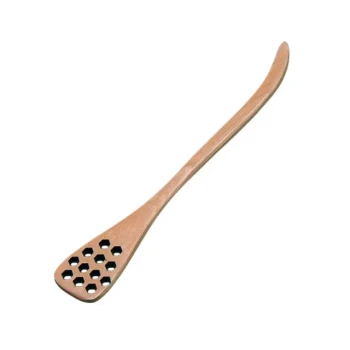
- Modern Honeycomb Pattern Wooden Honey Dipper for Stirring and Drizzling
People Also Ask
- What are the advantages of honey sachet packing machines? Boost Efficiency & Unlock New Markets
- What are the main functions of a honey sachet packing machine? Boost Efficiency with Automated Precision
- How does an industrial-grade honey sachet packaging machine assist beekeepers in accessing public institution markets?
- Why is automated packaging machinery essential for scaling industrial honey production? Drive Commercial Scalability
- Why is it advantageous for apiaries to be located near honey processing centers? Boost Quality and Market Reach