Standardized protective gear is a foundational requirement for commercial beekeeping growth. Professionally manufactured suits, veils, and gloves provide more reliable sting protection than improvised equipment, while improving comfort and mobility during hive inspections, extraction, and maintenance. This reduces worker stress, lowers sting-related incidents, and gives expanding operations a consistent safety standard across teams and apiary locations.
Commercial beekeeping cannot scale reliably when worker protection depends on homemade or inconsistent equipment. Standardized, full-coverage gear helps prevent stings, supports efficient hive work, and gives distributors and beekeepers a dependable foundation for safer, higher-frequency operations.
Why Protective Gear Becomes More Important as Operations Expand
More hives create more exposure
Commercial technicians may inspect colonies, manipulate frames, maintain equipment, and harvest honey repeatedly throughout the production cycle. Each hive-opening activity can disturb defensive bees and increase the likelihood of stings.
As the number of colonies and workers increases, relying on individual judgment or inconsistent clothing creates uneven safety performance. A standardized equipment program gives every operator an established minimum level of protection.
Scaling requires repeatable procedures
Expansion depends on repeatable workflows rather than improvised solutions. Protective suits, veils, and gloves that are selected and used consistently can become part of the apiary’s operating procedures, training, and purchasing system.
This is particularly important for distributors and B2B resellers serving multiple apiaries. A full product range makes it easier to supply complete protective kits instead of leaving customers to assemble incompatible items from different sources.
Protection supports labor continuity
A sting can cause pain, distraction, lost working time, or the need to stop a task. For workers with venom sensitivity, the consequences can be substantially more serious, including systemic allergic reactions and anaphylaxis.
Protective gear does not remove every occupational hazard, and it is not a substitute for medical planning or safe bee-handling practices. However, reducing sting exposure helps protect workforce availability during high-frequency commercial operations.
How Standardized Gear Improves Operational Performance
Full coverage protects vulnerable areas
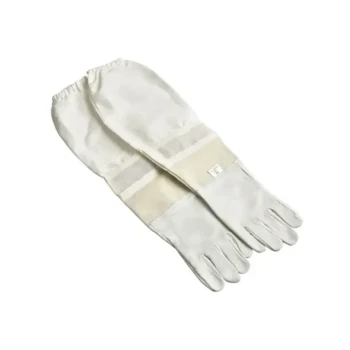
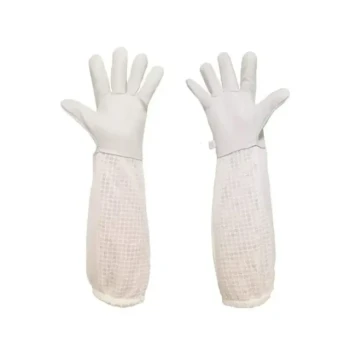
A professional suit or jacket, veil, and gloves work together as a physical barrier around areas commonly exposed during hive work. The value comes from the complete system: gaps between garments, exposed wrists, loose veils, or unsuitable gloves can undermine otherwise good protection.
Standardized kits help ensure that critical components are compatible and that workers are less likely to omit essential protection during routine tasks.
Comfort determines whether workers actually wear it
Improvised clothing may be difficult to move in, poorly ventilated, or vulnerable to gaps and penetration. When equipment is uncomfortable or unreliable, workers may remove it during extraction or other labor-intensive activities.
Professionally designed gear can combine sting-resistant construction with ventilation, mobility, and practical closures. Better comfort improves compliance, which is often more important than nominal protection that workers avoid using.
Confidence improves task focus
Fear of stings can cause hesitation and rushed movements around active colonies. Reliable protection allows technicians to concentrate on frame handling, inspection, queen rearing, and harvesting instead of constantly managing personal exposure.
That confidence supports calmer, more deliberate work. It can also help new employees enter the profession and help established operators adopt more systematic colony-management practices.
The Business Case for Distributors and B2B Buyers
One-stop sourcing reduces procurement complexity
Commercial customers need more than an individual suit. They may require multiple sizes, replacement gloves, spare veils, protective jackets, and complete kits for seasonal or newly hired workers.
A supplier with a full-spectrum portfolio can consolidate purchasing, simplify replenishment, and reduce the operational burden of coordinating several vendors.
Consistency strengthens customer relationships
Standardized products make it easier for resellers to recommend a defined solution across different customer segments. Apiaries can establish approved equipment specifications and replace worn items without repeatedly reassessing basic safety requirements.
For distributors, this creates a clearer product architecture: entry-level options, premium ventilated gear, replacement components, and larger workforce packages can be matched to specific operating needs.
Fulfillment speed matters during expansion
Protective equipment is often needed when a customer adds workers, opens new apiaries, or replaces gear before a production cycle. Delayed delivery can leave staff under-equipped or postpone planned work.
Rapid response, efficient order fulfillment, and dependable delivery therefore have direct operational value. They help B2B buyers maintain safety standards while responding to changing demand.
Understanding the Trade-offs
Protection must be balanced with heat and mobility
More coverage and heavier materials may improve resistance to stings but can increase heat retention, weight, or movement restrictions. The appropriate design should match the climate, workload, and duration of hive activities.
Ventilated construction and task-appropriate designs can help balance protection with comfort, but no garment should be treated as universally optimal for every condition.
Standardization does not mean one size fits all
A common safety standard should not eliminate the need for different sizes, garment styles, glove types, or climate-specific options. Poor fit can create gaps, restrict movement, and discourage regular use.
Standardize the required protection level and quality criteria, then provide enough product variety to fit the workforce and working environment.
Gear is only one layer of risk control
Protective clothing should be combined with training, appropriate hive-handling methods, emergency procedures, and medical preparedness for workers with known allergies. Equipment reduces the likelihood and consequences of stings, but it cannot guarantee zero incidents.
Suppliers and resellers should communicate this clearly rather than presenting protective gear as a complete substitute for safe operating procedures.
Quality and maintenance affect real-world performance
Even premium gear becomes less dependable when fabric, closures, gloves, or veils are damaged or poorly maintained. Regular inspection and timely replacement should be included in the apiary’s safety routine.
For commercial buyers, access to replacement components and responsive customer service is as important as the initial product sale.
How to Apply This to Your Operation
Protective gear should be treated as an operational system, not an optional accessory or one-time purchase.
- If your primary focus is worker safety: Require full-coverage suits or jackets, veils, and suitable gloves, supported by fit checks, inspections, training, and emergency procedures.
- If your primary focus is operational efficiency: Choose comfortable, ventilated gear that workers can wear consistently during inspections, extraction, and other labor-intensive tasks.
- If your primary focus is scaling an apiary: Create a standardized equipment specification for every worker and maintain spare sizes, replacement parts, and replenishment inventory.
- If your primary focus is distribution or resale: Offer a complete portfolio from one reliable source, with rapid response, dependable fulfillment, professional product guidance, and after-sales support.
- If your primary focus is customer retention: Build product packages around the full beekeeping workflow rather than selling isolated garments, and make replacement purchasing simple.
Standardized protective gear turns sting prevention from an individual choice into a repeatable commercial safety practice that supports healthier workers, more reliable operations, and sustainable apiary growth.
Summary Table:
| Key Benefit | Description | Impact on Operations |
|---|---|---|
| Consistent Safety | Uniform protection across teams and locations | Reduces sting incidents and worker stress |
| Improved Comfort | Ventilated, mobile designs encourage regular use | Higher compliance and task focus |
| Operational Efficiency | Repeatable procedures and training | Supports scaling and reduces downtime |
| Procurement Simplicity | One-stop sourcing for suits, gloves, veils | Lowers logistics complexity and costs |
| Labor Continuity | Fewer stings and distractions | Maintains workforce availability |
| Scalability | Standardized specs for new workers | Easier to expand apiary operations |
Equip your growing operation with standardized protective gear from HONESTBEE. As a one-stop supplier for commercial apiaries and distributors, we offer a full spectrum of beekeeping tools, machinery, and consumables, including high-quality protective suits, veils, and gloves. Benefit from premium trading services, rapid response, dedicated support, and ultra-fast delivery. For distributors, we provide OEM/ODM support, certifications, and reliable supply to boost your profit margins. Ready to scale safely? Contact us today for tailored solutions and bulk pricing.
Related Products
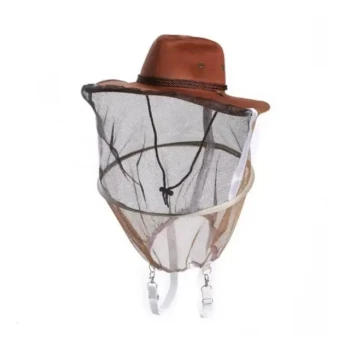
- Premium Cowboy Beekeeper Hat with Visibility Veil Outdoor Professional Beekeeping Protective Gear
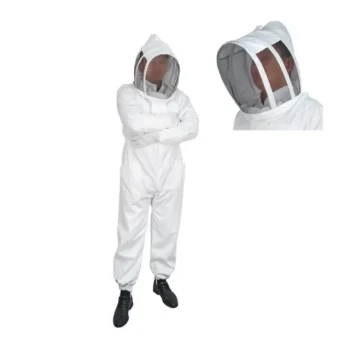
- Premium Cotton Beekeeper Suit with Reinforced Fencing Veil
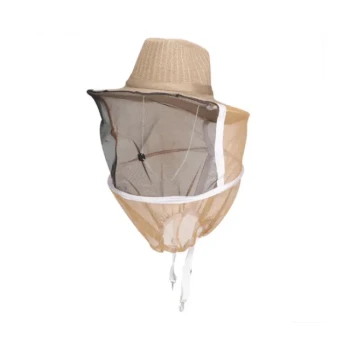
- Beekeeper Cowboy Hat and Veil for Beekeeping
- Beekeeping Gloves Goatskin Leather with Long Cotton Sleeve for Beekeepers
- White Cotton Beekeeping Jacket and Veil for Bee Keepers
People Also Ask
- What design features contribute to the stability and fit of the beekeeper hat? Key Features for Maximum Hive Safety
- How is the beekeeper hat designed for comfort and practicality? Explore Key Features for Enhanced Apiary Safety
- What is the general protective gear recommendation for new beekeepers? Your Essential Beginner's Safety Guide
- How does beekeeping protective gear facilitate the queen bee selection process? Enhancing Precision in Queen Breeding
- What should beekeepers consider when choosing protective gear? A Guide for Maximum Safety & Comfort