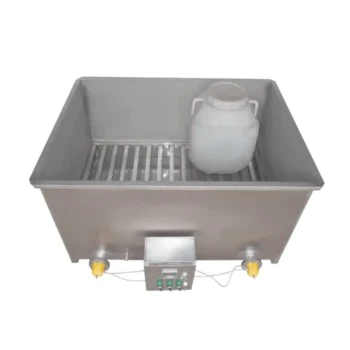
Standardization acts as the fundamental currency of trust in the honey industry. The use of standardized 20-liter containers is essential because it provides the uniform physical baseline required to accurately calculate conversion rates from raw comb to filtered honey. This consistency allows for precise inventory management, ensures fairness in commercial transactions, and enables the aggregation of reliable regional productivity statistics.
Adopting a uniform 20-liter vessel eliminates variability in volume measurement, serving as the scientific control for tracking production from the apiary to the marketplace.
Establishing a Scientific Basis for Commerce
Ensuring Fairness in Trade
In a commercial environment, ambiguity leads to disputes. Standardized containers ensure that every transaction is based on a fixed, known volume.
This uniformity guarantees that both the producer and the buyer are operating with identical definitions of quantity. It removes the variability inherent in using ad-hoc storage solutions, protecting all parties involved in the exchange.
Accuracy in Regional Statistics
To assess the health of the industry, data must be comparable across different producers and regions.
By mandating a specific 20-liter measurement, industry analysts can aggregate data effectively. This allows for accurate assessments of regional productivity and helps identify broader production trends without the noise of inconsistent reporting units.
Optimizing Inventory and Logistics
Calculating Conversion Rates
One of the most complex aspects of honey production is managing the transition from raw material to finished product.
Commercial producers must calculate how much filtered honey will result from a specific amount of comb honey. Standardized containers provide the scientific basis needed to establish reliable conversion rates, ensuring inventory predictions match actual output.
Streamlining Commercial Distribution
Efficiency in logistics relies on predictability.
Using a single container size simplifies storage, transport, and warehousing. It allows inventory managers to scale operations without recalculating spatial requirements for every batch of honey harvested.
Understanding the Trade-offs
The Disconnect Between Field and Factory
While standardized containers optimize the post-harvest phase, they do not solve pre-harvest estimation challenges.
Yield estimation in the field often relies on measuring cell depth (typically averaging 1 cm) and capped area to determine volume without extraction. There can be a disconnect between these non-destructive estimates and the final volume that actually fills a 20-liter container, potentially leading to inventory mismatches if conversion factors are not calibrated correctly.
Rigidity in Small-Scale Operations
Strict adherence to a 20-liter standard serves the macro-commercial market well but may lack flexibility for smaller operations.
Producers with yields falling between multiples of 20 liters may face logistical inefficiencies. The system favors larger, consistent batches over micro-harvests, potentially forcing smaller producers to aggregate yields in ways that complicate batch tracking.
Making the Right Choice for Your Goal
To maximize the benefits of standardization, align your operational protocols with these objectives:
- If your primary focus is Commercial Export: Adhere strictly to the 20-liter standard to ensure your product is compatible with regional distribution networks and trade agreements.
- If your primary focus is Inventory Management: Use the standardized volume to refine your comb-to-filtered conversion formulas, minimizing waste and predicting revenue more accurately.
Standardized measurement transforms honey production from a variable agricultural activity into a precise, scalable commercial enterprise.
Summary Table:
| Key Benefit | Impact on Commercial Operations |
|---|---|
| Trade Fairness | Establishes a fixed volume baseline, eliminating disputes between producers and buyers. |
| Data Accuracy | Enables reliable regional statistics and productivity trends across the industry. |
| Inventory Control | Provides a scientific basis for calculating precise comb-to-filtered honey conversion rates. |
| Logistics Efficiency | Streamlines storage and transport with uniform spatial requirements for scaling operations. |
Scale Your Honey Production with HONESTBEE
Transitioning to standardized commercial operations requires more than just containers; it requires the right infrastructure. HONESTBEE specializes in supporting commercial apiaries and distributors with a comprehensive wholesale portfolio designed for precision and scale.
Whether you need specialized hardware like honey-filling machines to match your 20-liter standards, industrial-grade hive-making machinery, or essential beekeeping consumables, we deliver the tools that turn variable harvests into predictable profits.
Ready to optimize your apiary’s efficiency? Contact us today to explore our full spectrum of professional beekeeping equipment and cultural merchandise tailored for your business growth.
References
- Philip F. Forboseh. Estimating benefits from beekeeping in the montane forests of north-western Cameroon. DOI: 10.1080/0005772x.2002.11099560
This article is also based on technical information from HonestBee Knowledge Base .
Related Products
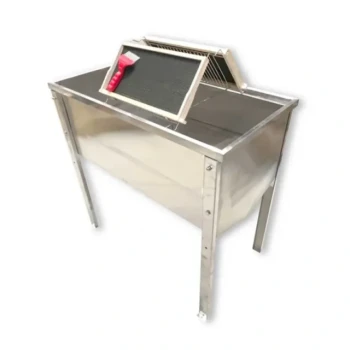
- Stainless Steel Honey Press Wax Press with Tank
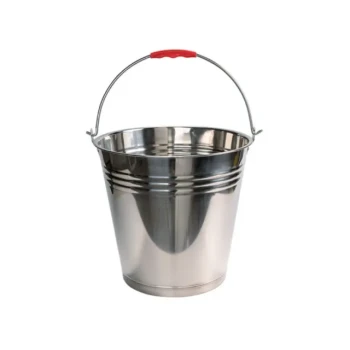
- Stainless Steel Pail Perch Bucket Bench
- Food Grade Plastic Honey Bucket Pail for Beekeeping
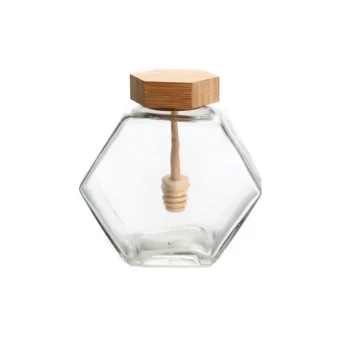
- Hexagonal Glass Honey Jar with Wooden Lid Integrated Dipper Elegant Functional Storage
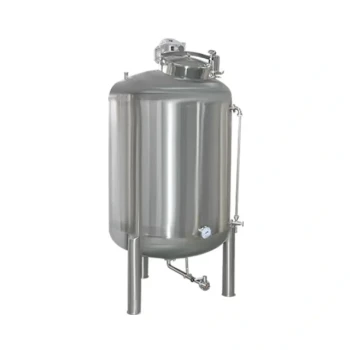
- Stainless Steel Honey Storage Tank with Lid for Honey
People Also Ask
- What is the procedure for pressing honey? A Simple, Low-Cost Method for Small-Scale Beekeepers
- What other functions can a honey press serve besides honey extraction? Discover Versatile Multi-Purpose Uses
- What are the fundamental differences between manual honey presses and centrifugal honey extractors? A Guide for Pros
- What features contribute to the portability of a honey press? Compact Designs for Mobile Beekeeping
- What is the procedure for extracting honey using a honey press? A Guide to Maximum Yield