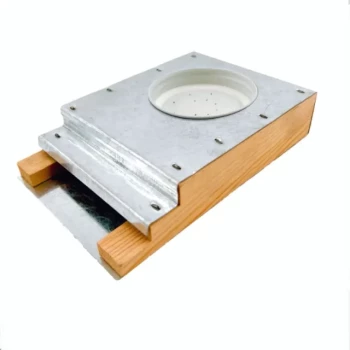
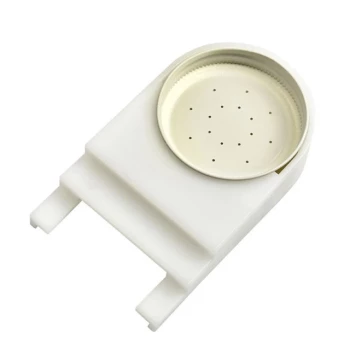
Standardized feeders are the fundamental tool required to achieve precise, uniform distribution of probiotic syrup within a honeybee colony. Without them, it is impossible to guarantee that the specific dosage—such as 50 ml per frame of bees—is delivered accurately. This mechanical consistency ensures that every individual in the colony receives the intended concentration of the probiotic preparation.
The Core Value of Standardization
In scientific research and advanced colony management, consistency is the prerequisite for validity. Standardized feeders transform probiotic administration from a variable guesswork exercise into a controlled process, ensuring data reproducibility and uniform colony health responses.
The Mechanics of Precision Dosing
Achieving Uniform Nutritional Intake
The primary function of a standardized feeder is to eliminate variability in how nutrients are delivered. By utilizing a specific dosing frequency, such as 50 ml of syrup per frame of bees, these feeders ensure a calculated nutritional intake.
This prevents scenarios where some bees consume excess probiotics while others receive none. Uniform distribution guarantees that the biological effects of the probiotic are realized across the entire population.
Ensuring Scientific Reproducibility
For researchers and data-driven beekeepers, the method of delivery is as important as the substance being delivered. Standardized feeders remove "method of administration" as a variable in your data.
When every colony receives the exact same volume and concentration via the same mechanism, the resulting data is reproducible. This consistency is critical for accurately measuring the colony's response to the probiotic treatment.
Optimizing Absorption and Stability
Direct Access for Workers and Larvae
Specific feeder designs, such as Doolittle-type feeders, are placed directly inside the beehive. This internal placement reduces the distance worker bees must travel to access the solution.
By centralizing the food source, the feeders facilitate efficient absorption of the additives. This ensures the probiotics are rapidly distributed to both adult workers and developing larvae.
Protection from Environmental Factors
Probiotics are often sensitive biological compounds that can degrade if exposed to harsh external conditions. Internal feeders protect the syrup solution from environmental interference.
This protection maintains the bio-activity of the probiotic until it is consumed. It ensures that the colony ingests the formulation as it was intended, rather than a degraded version.
Understanding the Trade-offs
Maintenance and Hygiene Requirements
While feeders provide precision, they introduce a piece of hardware that requires rigorous maintenance. If not cleaned and monitored, feeders can become reservoirs for mold or pathogens.
Labor Intensity
Implementing a standardized feeding protocol requires more physical intervention than open feeding methods. Each hive must be opened to access internal Doolittle-type feeders, increasing labor time per colony.
Making the Right Choice for Your Goal
To maximize the effectiveness of your probiotic regimen, match your feeding strategy to your specific objectives.
- If your primary focus is experimental validity: Use standardized feeders to strictly control dosage (e.g., 50 ml/frame) to ensure your data is reproducible and peer-review ready.
- If your primary focus is colony health optimization: prioritize internal feeders (like Doolittle models) to maximize absorption rates and protect the probiotic from environmental degradation.
Success in probiotic administration is not just about the quality of the supplement, but the precision of the delivery system.
Summary Table:
| Feature | Benefit of Standardized Feeders | Impact on Colony Health |
|---|---|---|
| Precision Dosing | Ensures exact volume (e.g., 50ml/frame) per bee | Prevents under/over-dosing of probiotics |
| Consistency | Eliminates delivery method as a variable | Guarantees scientific data reproducibility |
| Internal Placement | Minimizes travel distance for worker bees | Facilitates rapid absorption by workers and larvae |
| Environmental Protection | Shields syrup from external degradation | Maintains bio-activity of sensitive probiotics |
Elevate Your Beekeeping Operations with HONESTBEE
At HONESTBEE, we understand that precision is the backbone of commercial beekeeping success. Whether you are managing large-scale commercial apiaries or supplying the industry as a distributor, our comprehensive wholesale portfolio offers the specialized tools you need.
From high-precision standardized feeders and beekeeping machinery to honey-filling machines and essential consumables, we provide the hardware required to transform your colony management into a controlled, scientific process. Our solutions are designed to improve efficiency, ensure treatment accuracy, and maximize your output.
Ready to scale your apiary or restock your distribution line?
Contact us today to explore our full range of wholesale equipment!
References
- O. Yevtushenko, О. V. Desiatnykova. Factors of non-specific resistance of bee hemolymph when feeding probiotic drug ‘Bilakt’. DOI: 10.36016/jvmbbs-2022-8-3-4-2
This article is also based on technical information from HonestBee Knowledge Base .
Related Products
- Rapid Bee Feeder White Plastic 2L Round Top Feeder for 8 or 10-Frame Bee Hives
- HONESTBEE Entrance Bee Feeder Professional Hive Nutrition Solution for Beekeeping
- White Plastic 0.5L Beekeeping Entrance Feeder for Bees
- HONESTBEE Entrance Bee Feeder Efficient Hive Front Liquid Feeding Solution for Beekeeping
- HONESTBEE Professional Entrance Bee Feeder Hive Nutrition Solution
People Also Ask
- What should be done with feeders and equipment after feeding bees? Essential Steps for Apiary Health
- What should be done if feed in a feeder is not consumed by the bees? Prevent Hive Mold with Prompt Feed Management
- What is the necessity of specialized internal or entrance feeders? Secure Your Hive with Professional Feeding Tools
- How do bee feeders work to preserve colony health during nectar shortages? Essential Guide for Beekeepers
- How quickly does a medium to strong colony usually empty a feeder? A Beekeeper's Guide to Hive Health