A Single Crooked Label
Picture a single jar of golden honey on a store shelf. Its label is misaligned by just a few millimeters.
To a customer, this small imperfection might signal carelessness. To a commercial apiary producing thousands of jars an hour, that tiny error, multiplied, represents a systemic failure—a breakdown in the complex, high-speed dance of automation.
An automatic labeling machine isn't just a piece of equipment; it's a microcosm of industrial physics and operational philosophy. Understanding its components reveals the hidden forces that separate a premium product from a discounted one.
The Anatomy of a Two-Second Process
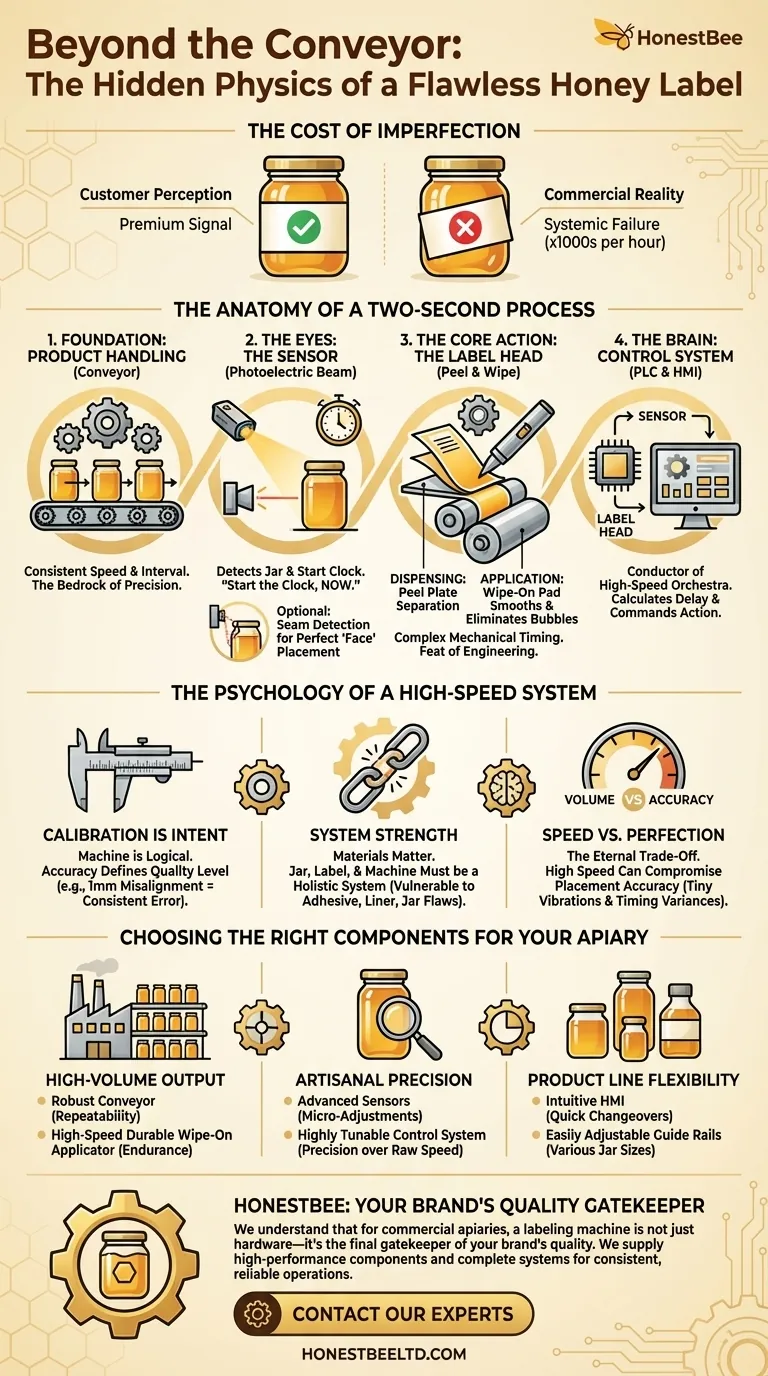
At its heart, an automatic labeling machine performs a sequence of events in a fraction of the time it takes to read this sentence. This orchestration is managed by four key players.
1. The Foundation: Product Handling
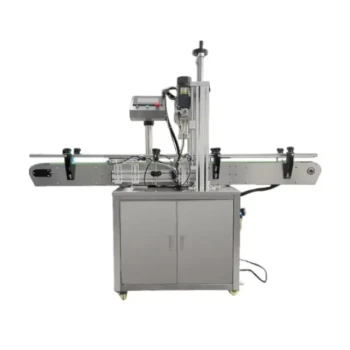
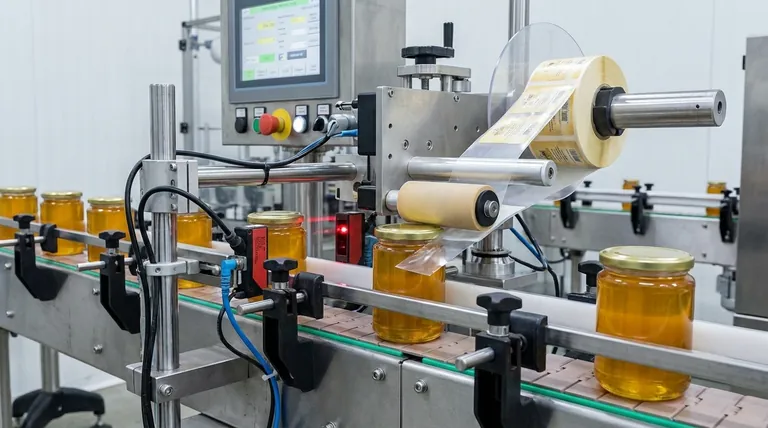
The journey starts on the conveyor. Its only job is to move jars into position at a perfectly consistent speed and interval.
This isn't a passive role. In automation, consistency is the bedrock upon which all precision is built. Any slight variation in speed or spacing creates a timing problem that cascades through the entire system, rendering accuracy impossible.
2. The Eyes: The Sensor
As the honey jar enters the labeling zone, it trips a sensor, usually a photoelectric beam. This is the machine's eye.
The sensor's signal is the starting gun. It doesn't just say "a jar is here"; it tells the control system "start the clock, now." For round containers like honey jars, a second sensor might be used to detect a seam or handle, ensuring the label is placed perfectly on the jar's "face."
3. The Core Action: The Label Head
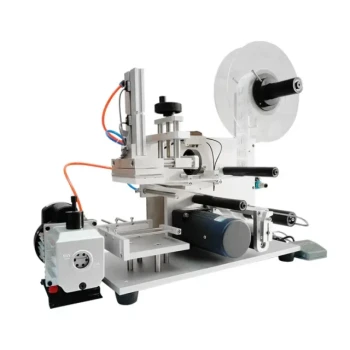
Triggered by the sensor, the label head springs to life. This is the most mechanically complex part of the system.
- Dispensing: It pulls the label's backing paper over a sharp "peel plate," causing the adhesive label to separate and project forward, ready for application.
- Application: As the jar continues to move, it typically rolls against a "wipe-on" applicator pad. This smooth, rolling contact presses the label firmly and evenly onto the curved surface, eliminating bubbles and ensuring a clean finish.
This entire peel-and-apply motion is a feat of mechanical timing, engineered to occur flawlessly thousands of times per hour.
4. The Brain: The Control System
The Programmable Logic Controller (PLC) is the conductor of this high-speed orchestra.
It receives the signal from the sensor, calculates the precise delay based on the conveyor's speed, and commands the label head to act at the exact millisecond required to meet the jar at the perfect spot. The operator interacts with this brain through a Human-Machine Interface (HMI), setting the parameters for the performance.
The Psychology of a High-Speed System
A machine is a reflection of the trade-offs its owner is willing to make. Its performance is governed by principles that are as much about psychology as they are about engineering.
Calibration is a Statement of Intent
A machine is perfectly logical. It does exactly what it's told. If a sensor is misaligned by a single millimeter, the machine will misplace every single label with relentless, perfect consistency. Calibration isn't a maintenance task; it's an operator's statement of intent, defining what level of quality is acceptable.
The System is Only as Strong as the Label
The machine assumes its materials are perfect. But what if the label adhesive is inconsistent due to humidity? Or the label liner is too fragile? Or the glass jars have slight dimensional variations? The machine will expose these flaws immediately through jams and failed applications. Success requires a holistic view where the jar, the label, and the machine are all considered one integrated system.
Speed vs. Perfection: The Eternal Trade-Off
Every system has a point where speed begins to compromise quality. Pushing a labeler to its maximum rated speed might increase throughput, but it can also introduce tiny vibrations and timing variances that reduce placement accuracy. Choosing the operating speed forces a conscious decision: are we in the business of volume, or the business of perfection?
Choosing the Right Components for Your Apiary
Understanding this system allows you to build or optimize a machine for your specific goals.
- For High-Volume Output: A robust conveyor and a high-speed, durable wipe-on applicator are paramount. The focus is on repeatability and endurance.
- For Artisanal Precision: Advanced sensors and a highly tunable control system become critical. The ability to make micro-adjustments is more important than raw speed.
- For Product Line Flexibility: A system with an intuitive HMI for quick changeovers and easily adjustable guide rails is essential for apiaries producing various jar sizes.
At HONESTBEE, we understand that for commercial apiaries, a labeling machine is not just hardware—it's the final gatekeeper of your brand's quality. We supply the high-performance components and complete systems built to handle the unique demands of honey jar labeling, from consistent conveyors to precision applicator heads. We provide the wholesale-focused solutions that turn a complex system into a reliable operational advantage.
To ensure every jar perfectly represents the quality within, you need a system where every component works in flawless harmony. Contact Our Experts
Visual Guide
Related Products
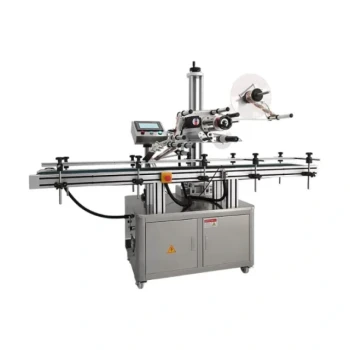
- Automatic In-Line Flat Surface Labeling Machine
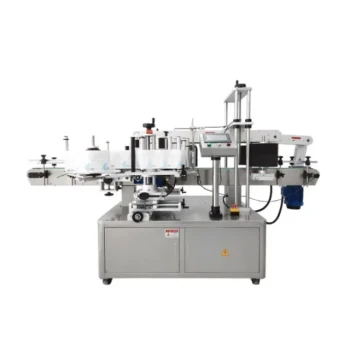
- Automatic Dual Sided In Line Labeling Machine
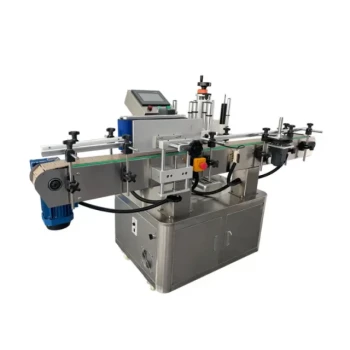
- Automatic In-Line Round Bottle Labeling Machine
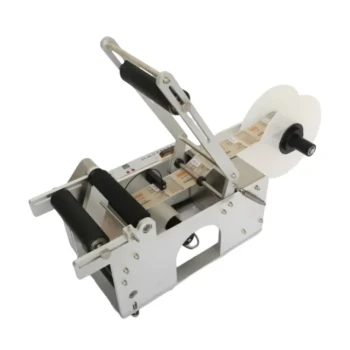
- Semi Automatic Round Bottle Labeling Machine
- HONESTBEE Pneumatic Flat Surface Labeling Machine