The Point of Failure is Never Where You Expect
A commercial apiary invests in a state-of-the-art embossing mill, a beautiful piece of precision engineering. Yet, their foundation sheets emerge brittle, cracked, and inconsistent. Production stalls. The expensive machine sits idle.
The problem isn't the mill. The problem is a cheap, homemade "hot-box" that can't hold a consistent temperature, or a bottle of discount dish soap that leaves a microscopic residue on the rollers.
This is a classic failure of systems thinking. We fixate on the most expensive component—the "hero" of the operation—and drastically underestimate the constellation of "miscellaneous" tools that support it. In foundation making, success is found not in the star machine, but on the margins of the process.
The Workflow as an Integrated System
Making foundation isn't a series of discrete tasks; it's a continuous flow of material through controlled states. Quality doesn't just happen at the embossing stage; it cascades. A failure in the first step permanently compromises the last.
Thinking of the process in terms of its critical control points, rather than a checklist of tools, reveals where the real leverage lies.
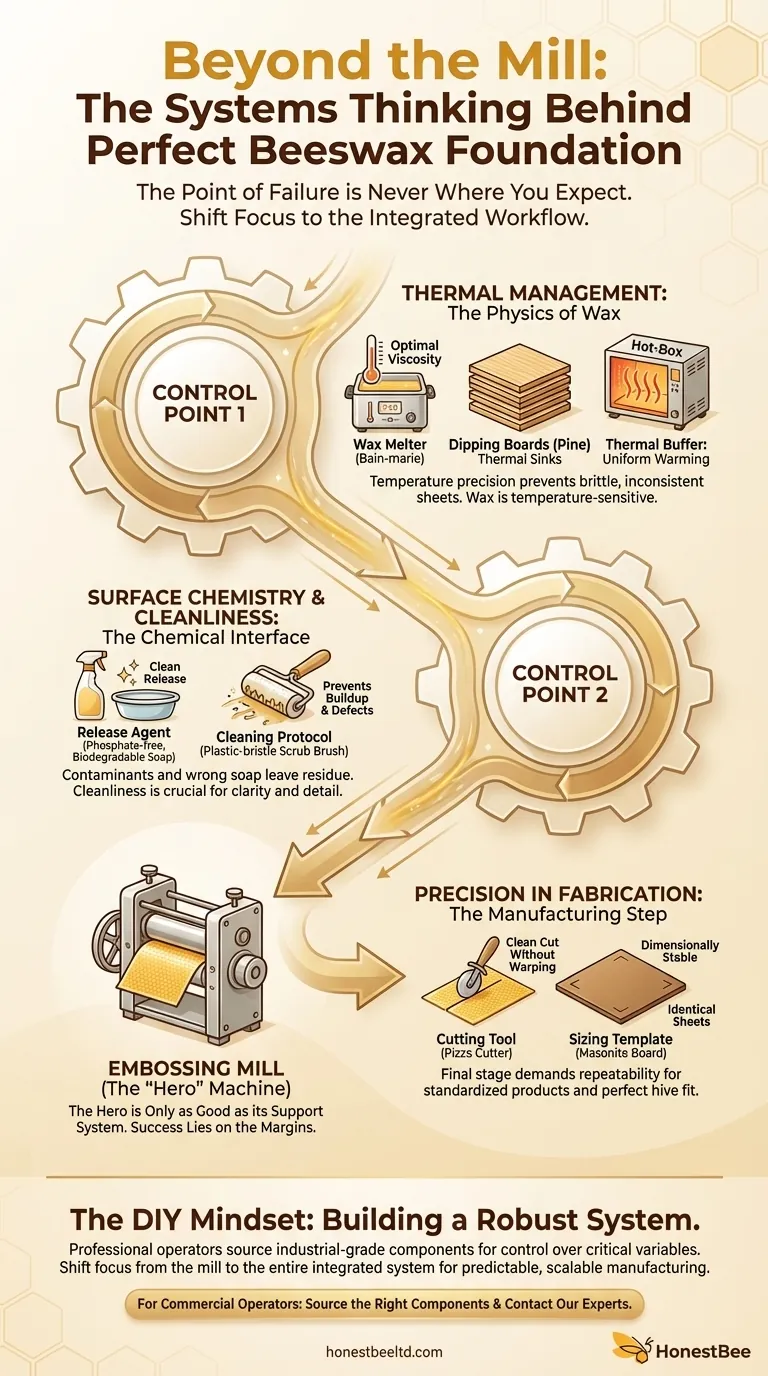
Control Point 1: Thermal Management
Beeswax is a physicist's material. Its properties—malleability, viscosity, brittleness—are exquisitely sensitive to temperature. A few degrees is the difference between a perfect sheet and a shattered one.
Your system must manage this with precision.
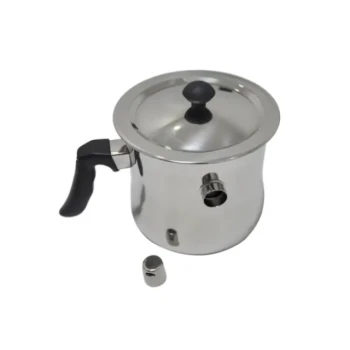
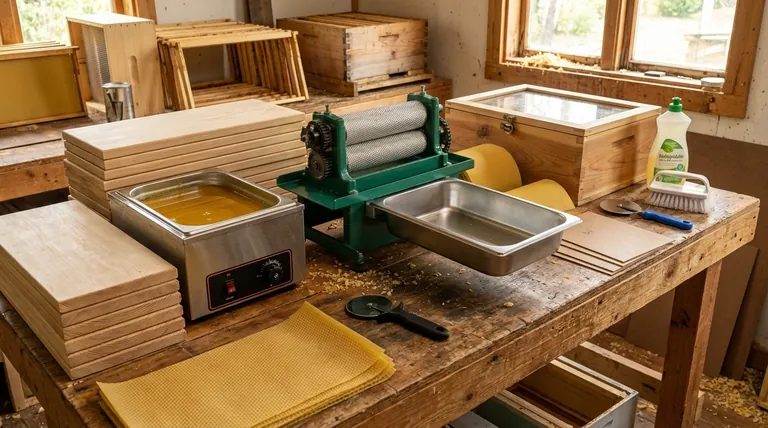
- The Wax Melter: A thermostatically controlled bain-marie is non-negotiable at a commercial scale. It's not just a pot; it's a thermal regulator that ensures your wax is held at the optimal viscosity for dipping.
- The Dipping Boards: Smooth pine boards act as thermal sinks. Their temperature and the wax temperature dictate the initial sheet thickness. Consistency here prevents problems later.
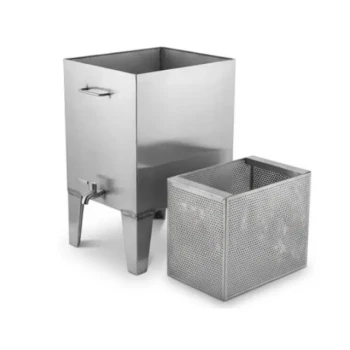
- The Hot-Box: This is the most common point of failure. A simple heated box is not enough. It must be a thermal buffer, gently and evenly warming the plain wax sheets to the perfect pliable state before they meet the mill. Cold wax will crack.
Control Point 2: Surface Chemistry and Cleanliness
The interface between the wax and your equipment is a chemical environment. Get it wrong, and you introduce invisible contaminants that cause visible defects.
- The Release Agent: Hot water mixed with phosphate-free, biodegradable dish soap is not just "soapy water." It's a surfactant engineered to create a clean release without transferring harmful chemicals into the wax. The wrong soap leaves a film that builds up on the mill, blurring the fine details of the hexagonal cells.
- The Cleaning Protocol: A simple plastic-bristle scrub brush is a precision instrument. It must be soft enough not to mar the delicate rollers but stiff enough to remove all wax and soap residue after a run. Any debris left on the mill will be permanently embedded in every subsequent sheet.
Control Point 3: Precision in Fabrication
The final stage is about converting an embossed sheet into a standardized, usable product. This is a manufacturing step that demands repeatability.
- The Cutting Tool: A pizza cutter isn't a clever kitchen hack; it's the ideal tool for the job. Unlike a knife that can drag and deform the cells, a rolling blade applies direct downward pressure, creating a clean cut without warping the pattern.
- The Sizing Template: Thin masonite boards are used because they are dimensionally stable—they don't warp with temperature or humidity changes. Cut to your exact frame dimensions, they ensure every single sheet of foundation is identical, eliminating fit issues in the hive.
The DIY Mindset: A Feature, Not a Bug
The scarcity of off-the-shelf foundation-making "kits" is not an oversight. It forces the operator to abandon a plug-and-play mentality and adopt the mindset of a process engineer.
You are not merely using tools; you are building a system tailored to your specific scale, climate, and workflow.
This is where the distinction between amateur and professional becomes clear. A professional doesn't build their own bain-marie from a turkey fryer and a prayer. They source reliable, industrial-grade components that guarantee control over the system's critical variables. They don't guess at temperatures; they measure and manage them.
At HONESTBEE, we supply the professional-grade components that form the backbone of these high-performance systems. Our wholesale focus is on providing commercial apiaries and distributors with the durable, reliable tools needed to build efficient and repeatable processes—from thermostatically controlled melters to the precise tools that ensure a perfect final product.
Shifting your focus from the embossing mill to the entire integrated system is the key. When every "miscellaneous" part is chosen for its role in controlling temperature, chemistry, and precision, you transform a challenging craft into a predictable, scalable manufacturing operation.
For commercial operators ready to build a truly robust foundation-making system, sourcing the right components is the critical first step. Contact Our Experts
Visual Guide
Related Products
- Beeswax Machine Press Embosser Wax Foundation Mold Printer Bee Hive Equipment Making Sheet
- Fully Automatic Beeswax Embossing Machine Foundation Mill
- Electric Flatting and Embossing Machine with Tray for Beekeeping
- Economy Manual Beeswax Embossing Mill Wax Foundation Machine Roller
- Manual Beeswax Comb Foundation Machine Wax Foundation Mill Embossing Machine
Related Articles
- Why Your In-House Beeswax Foundation is Failing Your Business—And How to Fix It
- Beyond the Embosser: The Systems Thinking Behind Perfect Beeswax Foundation
- How Beeswax Foundation Machines Transform Beekeeping Efficiency
- How Beeswax Foundation Machines and Smart Equipment Transform Beekeeping Efficiency
- Why Your Beeswax Foundation Fails: The Hidden Physics Behind Embossing