The Calculated Calm of a First Encounter
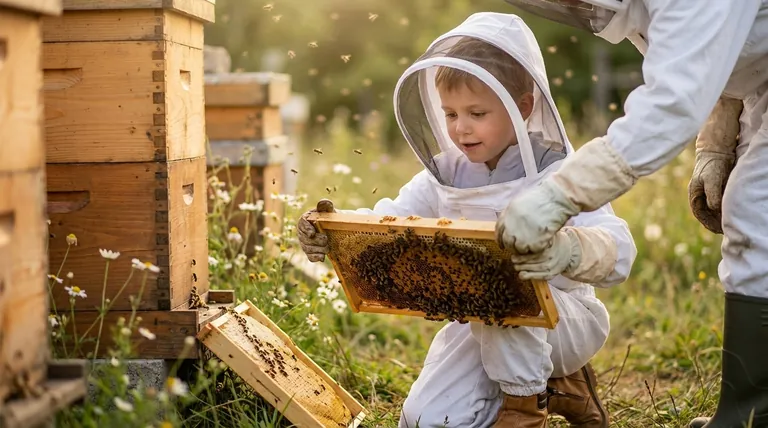
Picture a child standing a few feet from a beehive. The air hums with the energy of fifty thousand tiny, purposeful lives. It's a moment of profound awe mixed with a primal, understandable fear.
How that child experiences this moment—whether with fascination or terror—is determined almost entirely by a single piece of equipment.
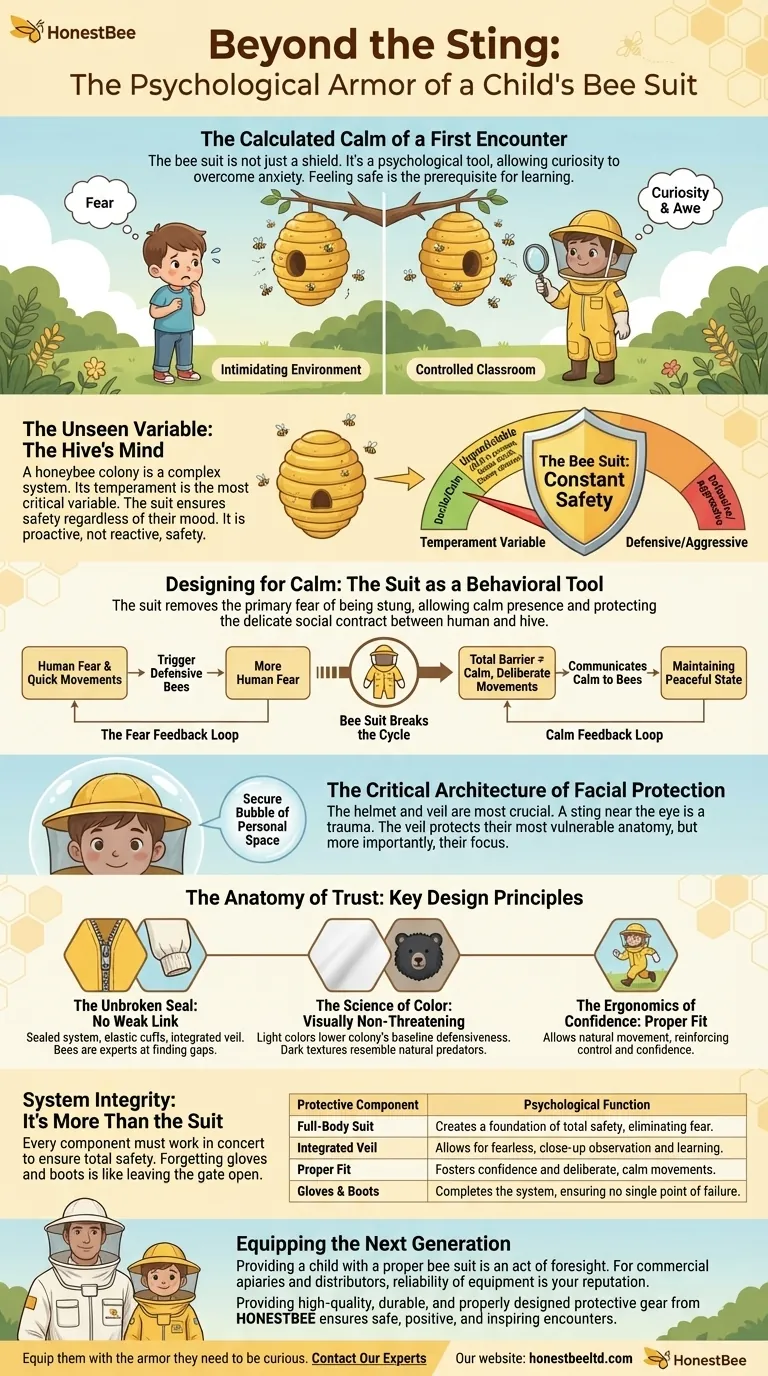
The bee suit is not just a shield. It's a psychological tool. It transforms a potentially intimidating environment into a controlled classroom, allowing curiosity to overcome anxiety. For a child, feeling safe is the prerequisite for learning.
The Unseen Variable: The Hive's Mind
In engineering, we design for known stresses and unpredictable variables. A honeybee colony is a complex system, and its temperament is the most critical variable.
Even the most placid hive can have a "bad day." A shift in barometric pressure, a dearth of nectar, or a clumsy observer can instantly change their collective mood from docile to defensive. Relying on a colony’s reputation for being "gentle" is a dangerous form of complacency.
The bee suit is the constant in this dynamic equation. It doesn't assume the bees will be calm; it ensures the child is safe regardless of their mood. It is proactive, not reactive, safety.
Designing for Calm: The Suit as a Behavioral Tool
Human psychology in high-stress situations often creates feedback loops. Fear leads to sudden, jerky movements. To a bee, a quick movement signals a threat, triggering a defensive response. This, in turn, creates more fear in the human.
A bee suit masterfully breaks this cycle.
The Fear Feedback Loop
By providing a complete, undeniable barrier, the suit removes the primary fear of being stung. This allows the child to remain calm, move deliberately, and listen to instructions. Their calm presence is then communicated to the bees, maintaining a peaceful state in the apiary.
The suit isn't just protecting the child; it's protecting the delicate social contract between the human and the hive.
The Critical Architecture of Facial Protection
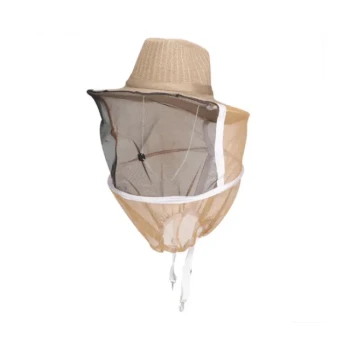
The helmet and veil are the most crucial components. A sting on the hand is a lesson; a sting near the eye is a trauma.
The veil creates a secure bubble of personal space. It allows the child to press in close, to watch a bee emerge from its cell or perform a waggle dance, without flinching. It protects their most vulnerable anatomy, but more importantly, it protects their focus.
The Anatomy of Trust: Key Design Principles
A child's trust in their equipment is paramount. That trust is built on specific, well-engineered features that work together as a complete system.
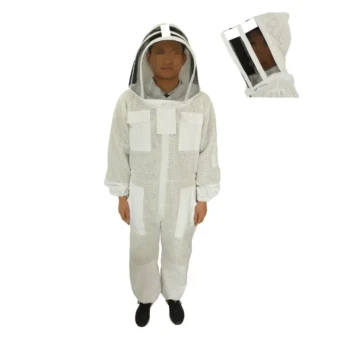
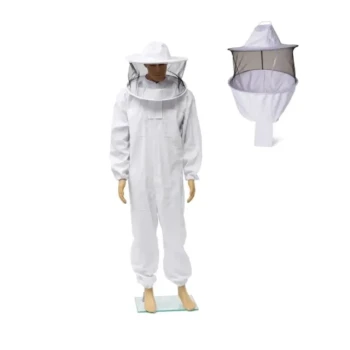
- The Unbroken Seal: Bees are experts at finding gaps. A quality suit is a sealed system. Elastic cuffs at the wrists and ankles, and an integrated veil that zips directly to the suit, eliminate any potential entry points. There can be no weak link.
- The Science of Color: Bee suits are light-colored for a reason rooted in bee psychology. Dark, fuzzy textures resemble natural predators like bears. The suit's smooth, white fabric is visually non-threatening, lowering the colony's baseline defensiveness. We are designing for their perception as much as our safety.
- The Ergonomics of Confidence: A suit must fit correctly. One that is too large is cumbersome and can snag. One that is too small pulls the fabric taut against the skin, compromising its protective distance. Proper fit allows a child to move naturally, reinforcing their sense of control and confidence.
System Integrity: It's More Than the Suit
The suit is the core of the protective system, but it's not the whole system. Gloves and closed-toed boots are non-negotiable extensions of this barrier. Forgetting them is like building a fortress but leaving the gate open. Every component must work in concert to ensure total safety.
| Protective Component | Psychological Function |
|---|---|
| Full-Body Suit | Creates a foundation of total safety, eliminating fear. |
| Integrated Veil | Allows for fearless, close-up observation and learning. |
| Proper Fit | Fosters confidence and deliberate, calm movements. |
| Gloves & Boots | Completes the system, ensuring no single point of failure. |
Equipping the Next Generation
Ultimately, providing a child with a proper bee suit is an act of foresight. It acknowledges the inherent risks of beekeeping while refusing to let them be a barrier to one of nature's most wondrous experiences.
For commercial apiaries and distributors who facilitate these vital educational moments, the reliability of your equipment is the foundation of your reputation. Providing high-quality, durable, and properly designed protective gear from HONESTBEE ensures that every encounter is safe, positive, and inspiring for the next generation of beekeepers.
Equip them with the armor they need to be curious. Contact Our Experts
Visual Guide
Related Products
- Professional Beekeeping Suit for Kids and Girls Childrens Bee Keeper Suit
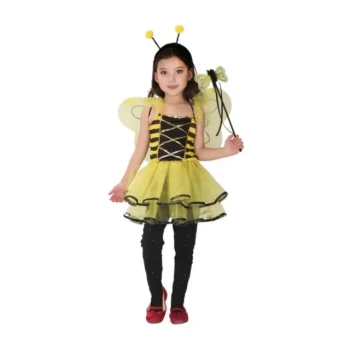
- Adorable Charming Playful Childs Bee Costume Set
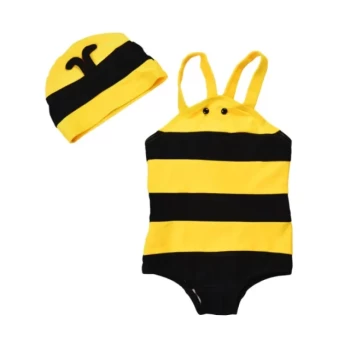
- Adorable Baby Toddler Bee Swimsuit and Cap Set
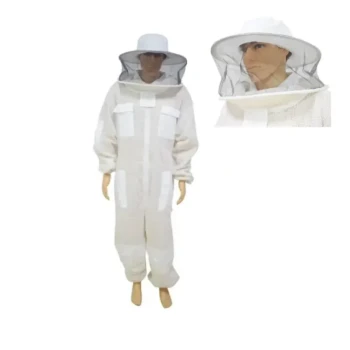
- Premium Three Layer Ventilated Bee Suit with Round Veil
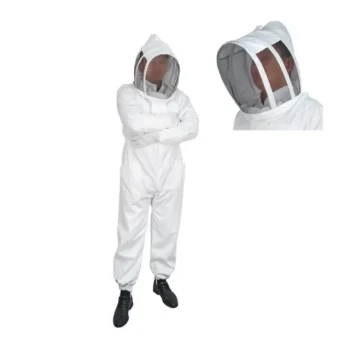
- Premium Cotton Beekeeper Suit with Reinforced Fencing Veil
Related Articles
- How to Choose a Safe and Comfortable Bee Suit for Kids: A Family Beekeeping Guide
- The Anatomy of Confidence: How a Child's Bee Suit is Engineered for Safety and Learning
- The Anatomy of Confidence: Engineering a Child's First Bee Suit
- How Beekeeping Suit Design Balances Protection, Comfort, and Durability
- How Pocket Design in Beekeeping Suits Enhances Safety and Inspection Efficiency