The Allure of the Unprotected
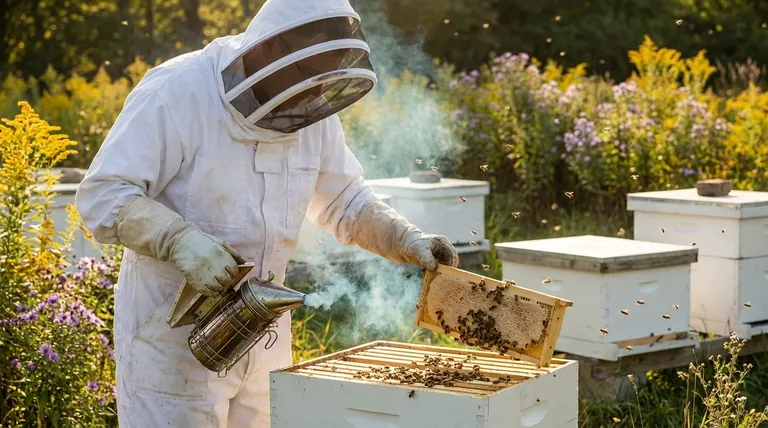
There's a powerful image in beekeeping: the calm naturalist, hands bare, working amongst a swirling cloud of bees. They move with a serene confidence, seemingly at one with the hive.
This image is not a lie, but it is deeply misleading. It represents the absolute pinnacle of experience, genetics, and environmental luck. It's the result of a hidden calculus, not the rejection of safety.
To mistake this exception for the rule is to misunderstand the fundamental nature of a bee colony.
The Hive as a Complex System
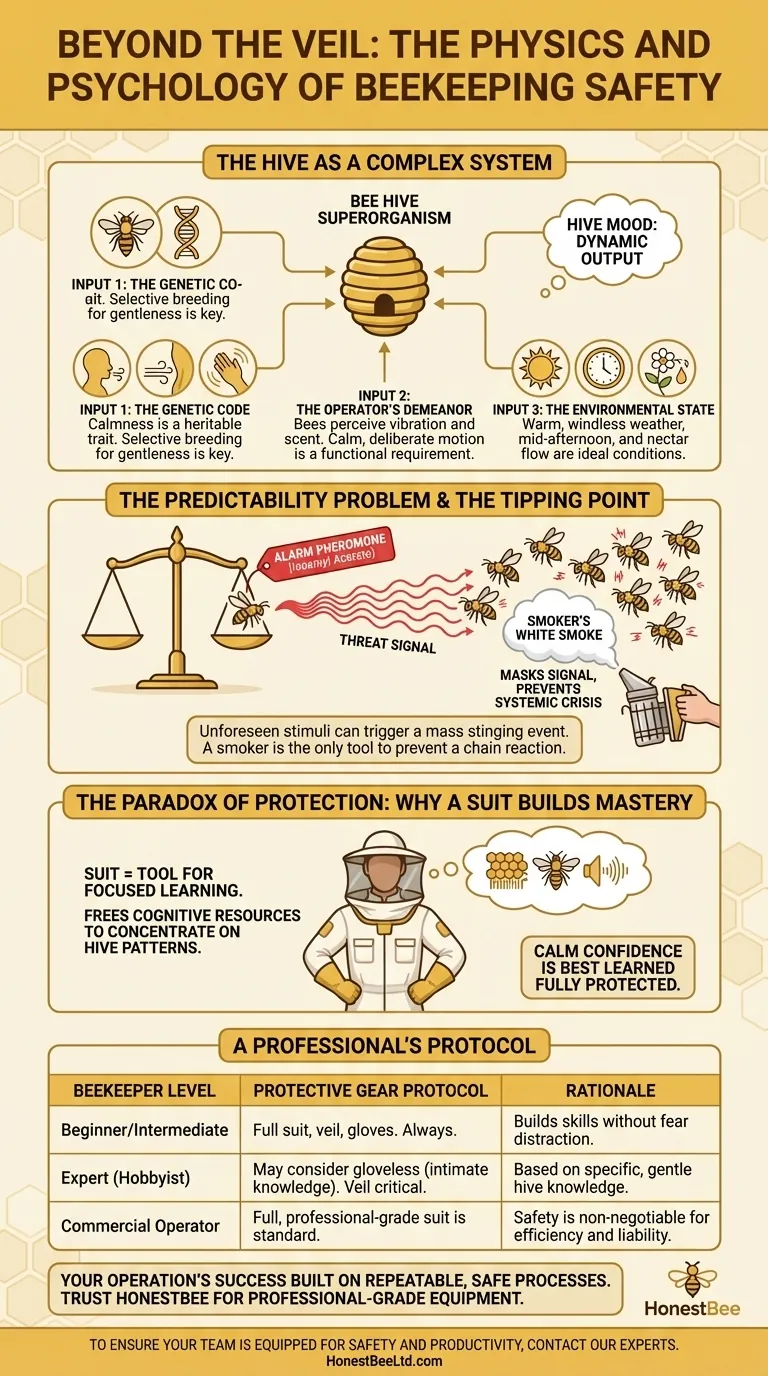
A beehive is not a pet to be tamed. It is a superorganism, a decentralized intelligence governed by millions of years of evolution. Its collective mood is a dynamic output based on a precise set of input variables.
Working without a suit is not about bravery; it's about an expert's ability to read and control these variables in real-time. For a professional, safety isn't a feeling—it's a protocol.
Input 1: The Genetic Code
The most critical variable is genetics. Calmness is a heritable trait. Experienced beekeepers spend generations selectively breeding queens to favor gentleness over defensiveness.
You cannot calm an aggressive hive with technique alone. Attempting to work with a genetically "hot" hive without protection is not a calculated risk; it's a certainty of failure.
Input 2: The Operator’s Demeanor
Bees are masters of sensory input. They perceive the world through vibration, scent, and chemistry.
A beekeeper's anxiety is not just a feeling; it's a physical signal. The sharp, quick movements of fear or the increased carbon dioxide from nervous breathing are direct threat indicators to the hive's guards. Calmness, therefore, is a functional requirement, demonstrated through slow, deliberate, and fluid motion.
Input 3: The Environmental State
The world outside the hive dictates the mood within. A successful suit-free inspection requires a perfect alignment of external conditions:
- Weather: A warm, clear, windless day is ideal.
- Time: Mid-afternoon, when the older, more experienced forager bees are out of the hive.
- Nectar Flow: During a period of abundance, the colony is busy and content. During a "dearth," they are protective and easily agitated.
An expert assesses these conditions not for comfort, but as crucial data points in their risk calculation.
The Predictability Problem
Even when all inputs seem perfect, a complex system can produce unpredictable outcomes. The hive's mood can pivot in an instant. A dropped tool, a shadow, a distant lawnmower—any unforeseen stimulus can change the equation.
This is the central problem: you can influence the odds, but you can never eliminate the risk of a cascade failure.
The Tipping Point: Alarm Pheromones
A single sting is a fire alarm. The bee releases an alarm pheromone (isoamyl acetate) that acts as a chemical signal to the rest of the guard bees. It screams "threat here!"
A smoker's cool, white smoke is not for calming bees, but for masking this signal. It scrambles their communication, preventing one sting from triggering a chain reaction. This is why even suit-less beekeepers almost always use a smoker. It is their only tool to prevent a localized problem from becoming a systemic crisis.
The Biological Cost of Miscalculation
Being caught in a mass stinging event is not just painful; it can be lethal, even for those without a known allergy.
Furthermore, bee venom allergies can develop at any time, after any number of stings. Each sting is a roll of the dice. For a commercial beekeeper, whose livelihood depends on thousands of hours spent with their hives, this is an unacceptable long-term risk to their health and career.
The Paradox of Protection: Why a Suit Builds Mastery
A bee suit is not a crutch; it is a tool for focused learning.
By removing the fear of being stung, a suit frees up a beekeeper's cognitive resources. Instead of flinching at every buzz, you can concentrate on the real language of the hive: the patterns on the comb, the sound of the colony, the health of the queen.
The calm confidence required to work without a suit is best learned while fully protected.
A Professional's Protocol
For commercial apiaries and wholesale distributors, safety cannot be a matter of personal preference. It must be a standardized, reliable protocol. The efficiency of your operation and the well-being of your staff depend on minimizing unpredictable variables.
| Beekeeper Level | Protective Gear Protocol | Rationale |
|---|---|---|
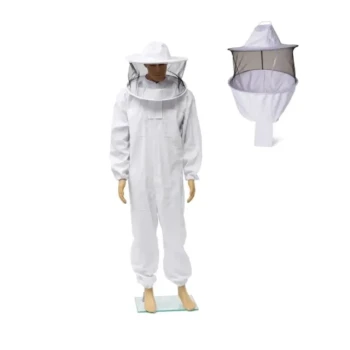
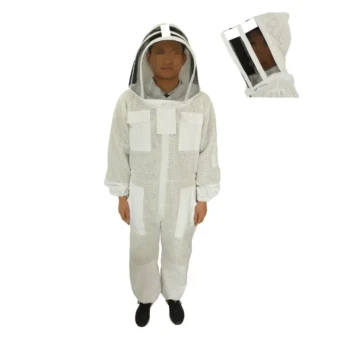
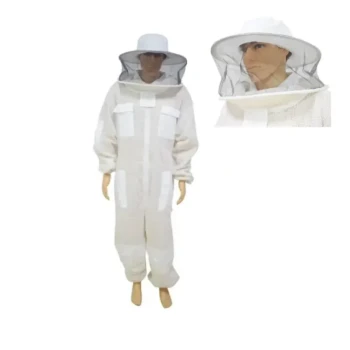
| Beginner/Intermediate | Full suit, veil, and gloves. Always. | Builds foundational skills and confidence without the distraction of fear. |
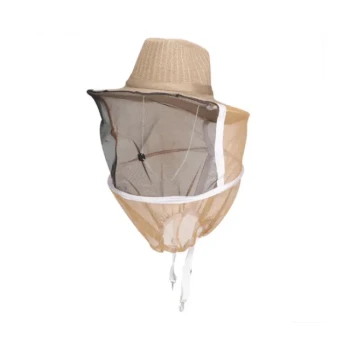
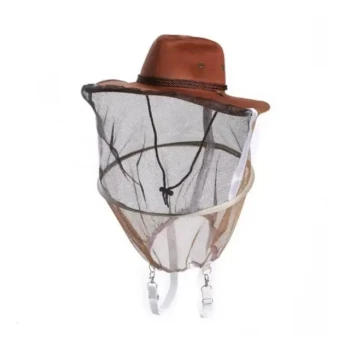
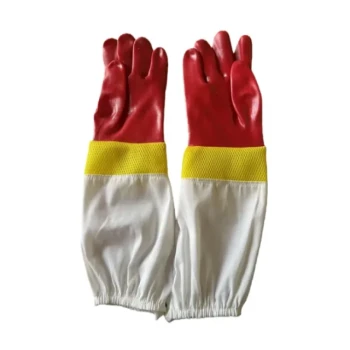
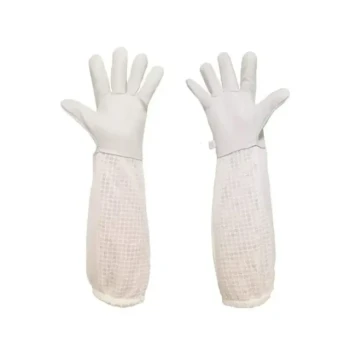
| Expert (Hobbyist) | May consider gloveless work for quick, ideal-condition tasks. | Based on intimate knowledge of a specific, gentle hive. Veil remains critical. |
| Commercial Operator | Full, professional-grade suit is the standard. | Safety is a non-negotiable operational requirement for efficiency and liability. |
Your operation's success is built on a foundation of repeatable, safe processes. This requires equipment that is as serious and reliable as you are. HONESTBEE provides the professional-grade beekeeping suits, veils, and equipment that large-scale apiaries and distributors trust to protect their most valuable assets: their people.
To ensure your team is equipped for maximum safety and productivity, Contact Our Experts.
Visual Guide
Related Products
- Premium Cotton Beekeeper Suit with Reinforced Fencing Veil
- Professional Cotton Beekeeper Suit with Round Veil Design for Commercial Apiaries
- Professional Beekeeper Suit with Square Folding Cotton Veil
- White Cotton Beekeeping Jacket and Veil for Bee Keepers
- Vented Beekeeping Jacket with Hood and Veil for Beekeepers
Related Articles
- How to Choose a Beekeeping Suit: Material, Safety, and Fit for Your Environment
- How Pocket Design in Beekeeping Suits Enhances Safety and Inspection Efficiency
- How Beekeeping Suit Design Balances Protection, Comfort, and Durability
- How to Wash a Beekeeping Suit: A Complete Guide to Safety and Durability
- How to Choose and Maintain Beekeeping Protective Gear Like a Pro