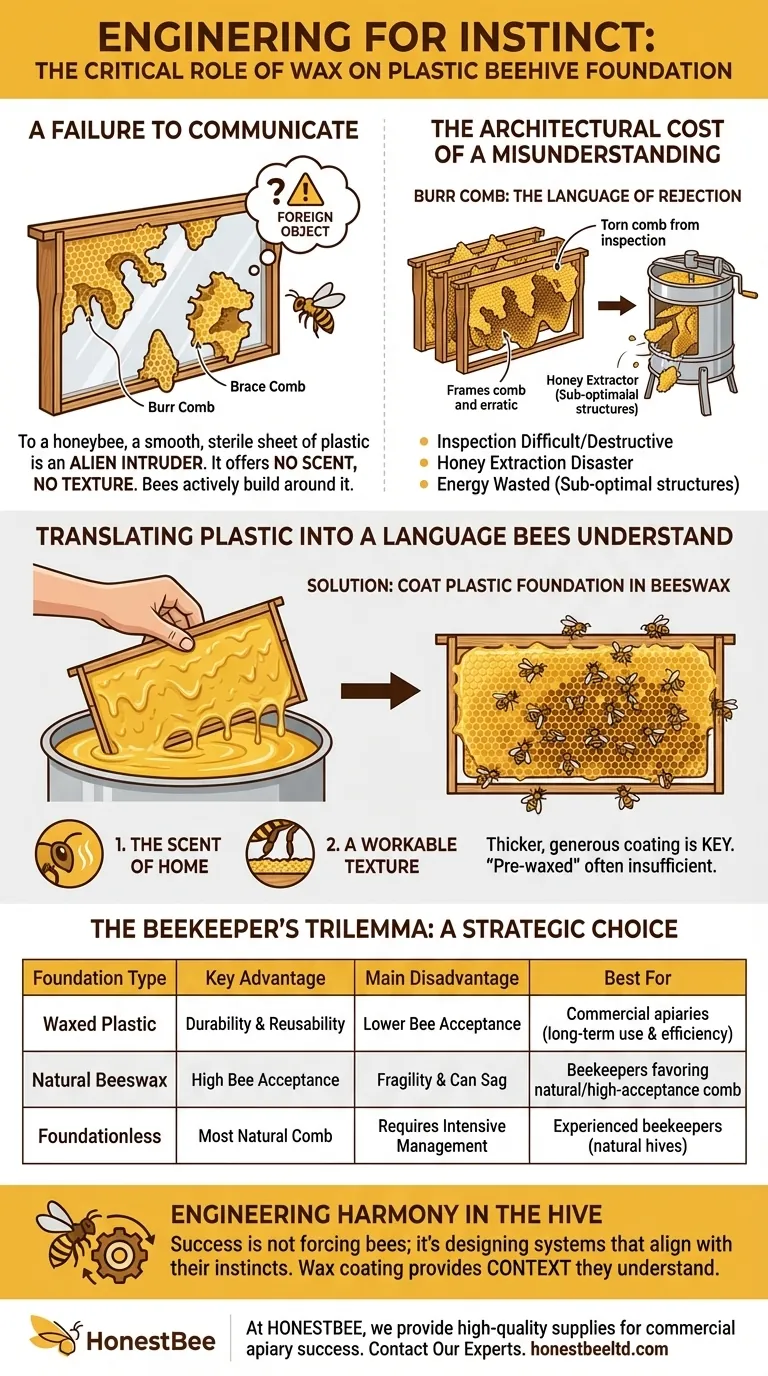
A Failure to Communicate
Imagine pulling a frame from a new hive, expecting to see the clean, geometric perfection of freshly drawn comb. Instead, you find chaos. Wild, unsupported structures of wax connect to the wood frame but studiously avoid the plastic foundation you so carefully installed.
This isn't a sign of defective bees. It's a failure of communication.
To a honeybee, the world is a landscape of scent and texture. Their construction projects are guided by millions of years of instinct, organized through the pheromones embedded in beeswax. A smooth, sterile sheet of plastic is a foreign object—an obstacle, not a blueprint. It offers no familiar cues, no scent to guide them, no texture to grip.
This is the central paradox of modern beekeeping: we value plastic for its durability, but the bees see it as an alien intruder.
The Architectural Cost of a Misunderstanding
When faced with an unwaxed plastic foundation, bees don't just ignore it; they actively build around it. Their instincts drive them to find a workable surface, which is often the wood of the frame itself.
Burr Comb: The Language of Rejection
This avoidance results in burr comb and brace comb—erratic, inefficient structures that create significant problems for any beekeeper, especially at a commercial scale.
- Inspection becomes difficult, if not destructive. Frames are fused together, and combs are torn apart during routine checks.
- Honey extraction is a disaster. The unsupported comb lacks the structural integrity to withstand the centrifugal force of an extractor.
- Energy is wasted. The bees expend valuable resources building sub-optimal structures instead of focusing on brood rearing and honey storage.
This isn't just an inconvenience; it's a direct hit to the productivity and efficiency of an apiary.
Translating Plastic into a Language Bees Understand
The solution is remarkably simple, yet profound. It lies in bridging the gap between a synthetic material and a biological imperative.
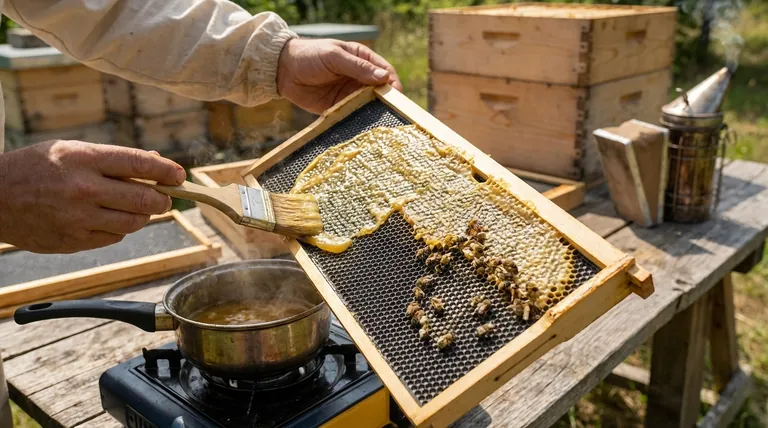
You must coat the plastic foundation in beeswax.
A heavy layer of melted beeswax acts as a translator. It masks the foreign nature of the plastic and provides the two things bees desperately need:
- The Scent of Home: The familiar aroma of beeswax signals that this is a safe, acceptable place to build.
- A Workable Texture: The wax provides a surface that bees can manipulate and build upon.
This simple act "tricks" the bees into treating the durable, reusable plastic sheet as a natural and integral part of their hive. It's a perfect fusion of human engineering and bee instinct. It's crucial to note that the thin "pre-waxed" layer on many commercial foundations is often insufficient. A thicker, more generous coating is key to consistent success.
The Beekeeper's Trilemma: A Strategic Choice
Choosing a foundation is a core strategic decision for any commercial apiary. It involves balancing durability, bee acceptance, and the intensity of management required. There is no single "best" material, only the right fit for your operational goals.
| Foundation Type | Key Advantage | Main Disadvantage | Best For |
|---|---|---|---|
| Waxed Plastic | Durability & Reusability | Lower Bee Acceptance | Commercial apiaries prioritizing long-term use & efficiency. |
| Natural Beeswax | High Bee Acceptance | Fragility & Can Sag | Beekeepers favoring natural, high-acceptance comb. |
| Foundationless | Most Natural Comb | Requires Intensive Management | Experienced beekeepers focused on natural hives. |
For most large-scale operations, the durability and longevity of plastic foundation are undeniable assets. It withstands the rigors of extraction and the heat of summer without sagging or blowing out. The key is recognizing that its primary weakness—bee acceptance—is not a permanent flaw but a solvable problem.
Engineering Harmony in the Hive
Success in beekeeping is not about forcing bees to conform to our systems. It's about designing systems that align with their powerful, ancient instincts. Plastic foundation is a testament to human ingenuity, but it only becomes truly effective when it's layered with an understanding of bee biology.
By providing a proper wax coating, you are not just adding a material; you are providing a context they understand. This ensures your investment in durable equipment pays off with strong, productive, and efficient hives. At HONESTBEE, we focus on providing commercial apiaries with the high-quality supplies that form the foundation of that success.
Choosing the right foundation is a critical operational decision, and ensuring it meets the biological needs of your bees is paramount for productivity. Contact Our Experts
Visual Guide
Related Products
- Beeswax Machine Press Embosser Wax Foundation Mold Printer Bee Hive Equipment Making Sheet
- Food Grade Plastic bee Foundation for Bee Frames
- Beeswax Foundation Sheets Beehive Foundation for Wholesale
- Assembled Wooden Bee Frames with Plastic Foundation for Durability and Convenience by HONESTBEE
- Notebook Style Beeswax Foundation Mould Wax Foundation Mold
Related Articles
- Why Your In-House Beeswax Foundation is Failing Your Business—And How to Fix It
- Beyond the Embosser: The Systems Thinking Behind Perfect Beeswax Foundation
- How Beeswax Foundation Machines Transform Beekeeping Efficiency
- How Beeswax Foundation Machines and Smart Equipment Transform Beekeeping Efficiency
- Why Your Beeswax Foundation Fails: The Hidden Physics Behind Embossing











