When automating honey production, selecting the right feeding mechanism—gravity or pump-driven—directly impacts viscosity handling, operational efficiency, and product consistency. This guide compares both systems through the lens of honey’s unique physical properties and production scale needs.
How Automated Honey Filling Machines Manage Viscous Fluids
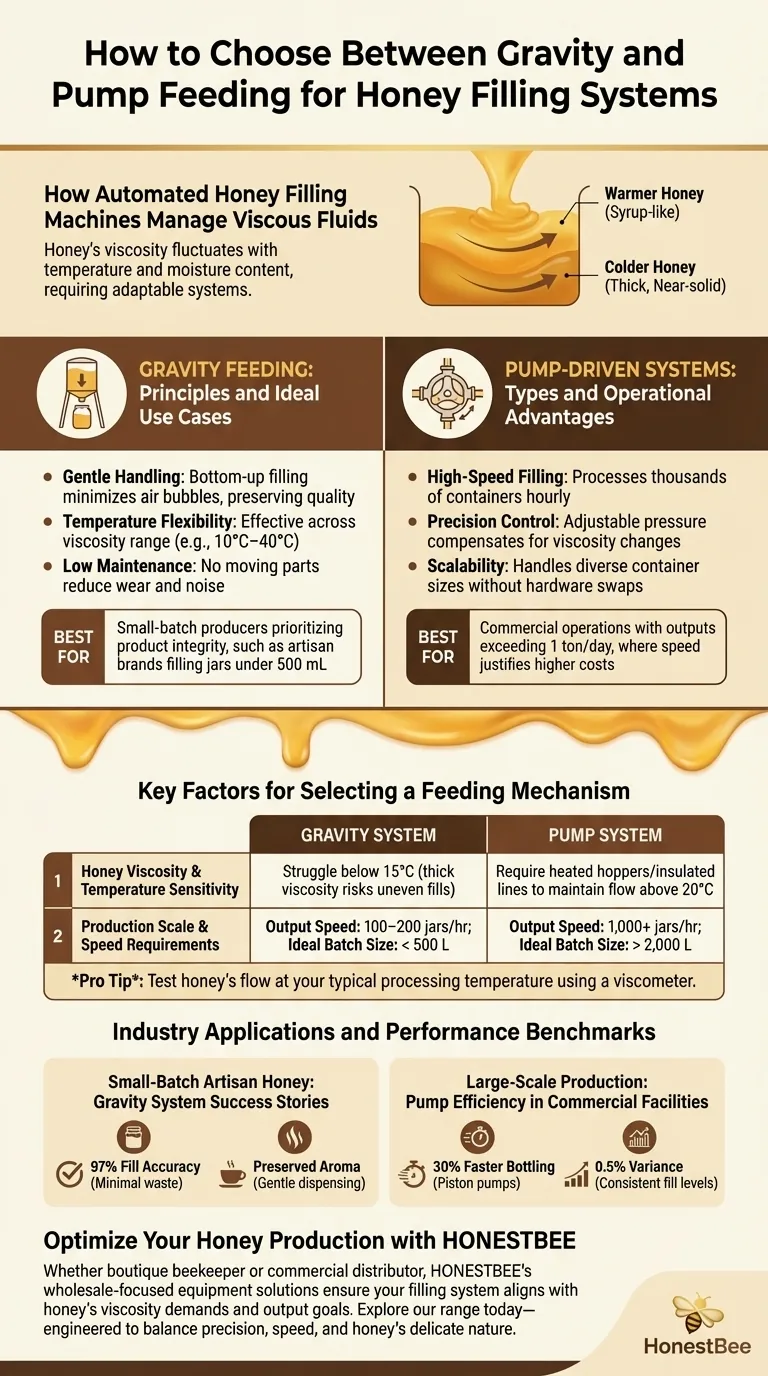
Honey’s viscosity fluctuates with temperature and moisture content, requiring filling systems to adapt dynamically. Warmer honey flows like syrup, while colder honey thickens to a near-solid state. Automated fillers address this through two primary mechanisms:
Gravity Feeding: Principles and Ideal Use Cases
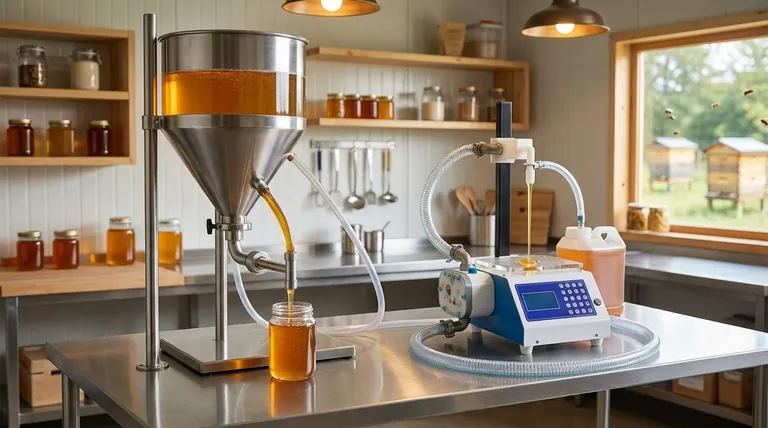
Gravity-fed systems rely on natural force to dispense honey from elevated tanks into containers. Key features include:
- Gentle Handling: Bottom-up filling minimizes air bubbles, preserving honey quality.
- Temperature Flexibility: Operates effectively across honey’s viscosity range (e.g., 10°C–40°C).
- Low Maintenance: No moving parts reduce wear and noise.
Best for: Small-batch producers prioritizing product integrity over speed, such as artisan brands filling jars under 500 mL.
Pump-Driven Systems: Types and Operational Advantages
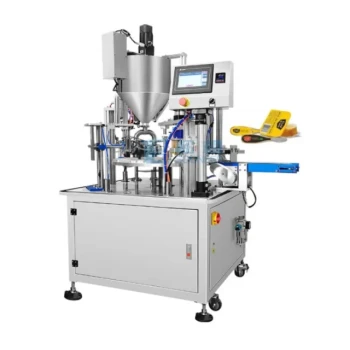
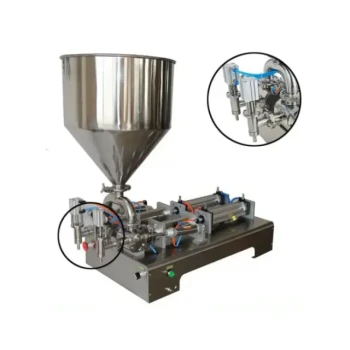
Pump systems (rotary or piston) use mechanical force to push honey through nozzles. Advantages include:
- High-Speed Filling: Processes thousands of containers hourly, ideal for large facilities.
- Precision Control: Adjustable pressure compensates for viscosity changes.
- Scalability: Handles diverse container sizes without hardware swaps.
Best for: Commercial operations with outputs exceeding 1 ton/day, where speed justifies higher upfront costs.
Key Factors for Selecting a Feeding Mechanism
1. Honey Viscosity and Temperature Sensitivity
- Gravity Systems: Struggle with honey below 15°C (thick viscosity risks uneven fills).
- Pump Systems: Require heated hoppers or insulated lines to maintain flow above 20°C.
Pro Tip: Test honey’s flow at your typical processing temperature using a viscometer.
2. Production Scale and Speed Requirements
| Metric | Gravity System | Pump System |
|---|---|---|
| Output Speed | 100–200 jars/hr | 1,000+ jars/hr |
| Ideal Batch Size | < 500 L | > 2,000 L |
Industry Applications and Performance Benchmarks
Small-Batch Artisan Honey: Gravity System Success Stories
Family-owned apiaries using gravity fillers report:
- 97% Fill Accuracy: Minimal product waste from over/underfills.
- Preserved Aroma: Gentle dispensing prevents heat-induced flavor degradation.
Large-Scale Production: Pump Efficiency in Commercial Facilities
A Midwest cooperative processing 50+ metric tons annually achieved:
- 30% Faster Bottling: Piston pumps with temperature-controlled nozzles.
- 0.5% Variance: Consistent fill levels despite honey grade variations.
Optimize Your Honey Production with HONESTBEE
Whether you’re a boutique beekeeper or a commercial distributor, HONESTBEE’s wholesale-focused equipment solutions ensure your filling system aligns with honey’s viscosity demands and your output goals.
Explore our range today—engineered to balance precision, speed, and honey’s delicate nature.
Visual Guide
Related Products
- Precision Durable Efficient HONESTBEE Rotary Honey Filling Machine
- Fully Automatic Honey Filling Packaging Machine for Processing Line
- Automatic Honey Filling and Filtering Machine for Beekeeping Bottle Filling
- Double Nozzle Small Honey Filling Machine Honey Sachet Packing Packaging Equipment
- Semi Automatic Small Honey Bottle Filling Machine Honey Filler
Related Articles
- How to Choose Between Semi-Automatic and Fully Automatic Honey Filling Machines
- The Bottleneck in a Bottle: Why Manual Honey Filling Limits Your Apiary's Growth
- The Viscosity Principle: How a Honey Filling Machine Masters More Than Just Honey
- The Sticky Truth: Why Your Honey Filling Fails and How to Fix It for Good
- The Mechanics of Trust: Why Your Honey Filling Process is Your Brand's First Handshake