Selecting the optimal bee smoker involves balancing hive capacity, fuel efficiency, and workflow compatibility. Whether you're managing backyard hives or commercial apiaries, the right smoker size directly impacts productivity and bee behavior management. This guide examines key decision factors through real-world scenarios and maintenance insights.
Choosing the Right Bee Smoker
Hive Quantity as the Primary Guideline
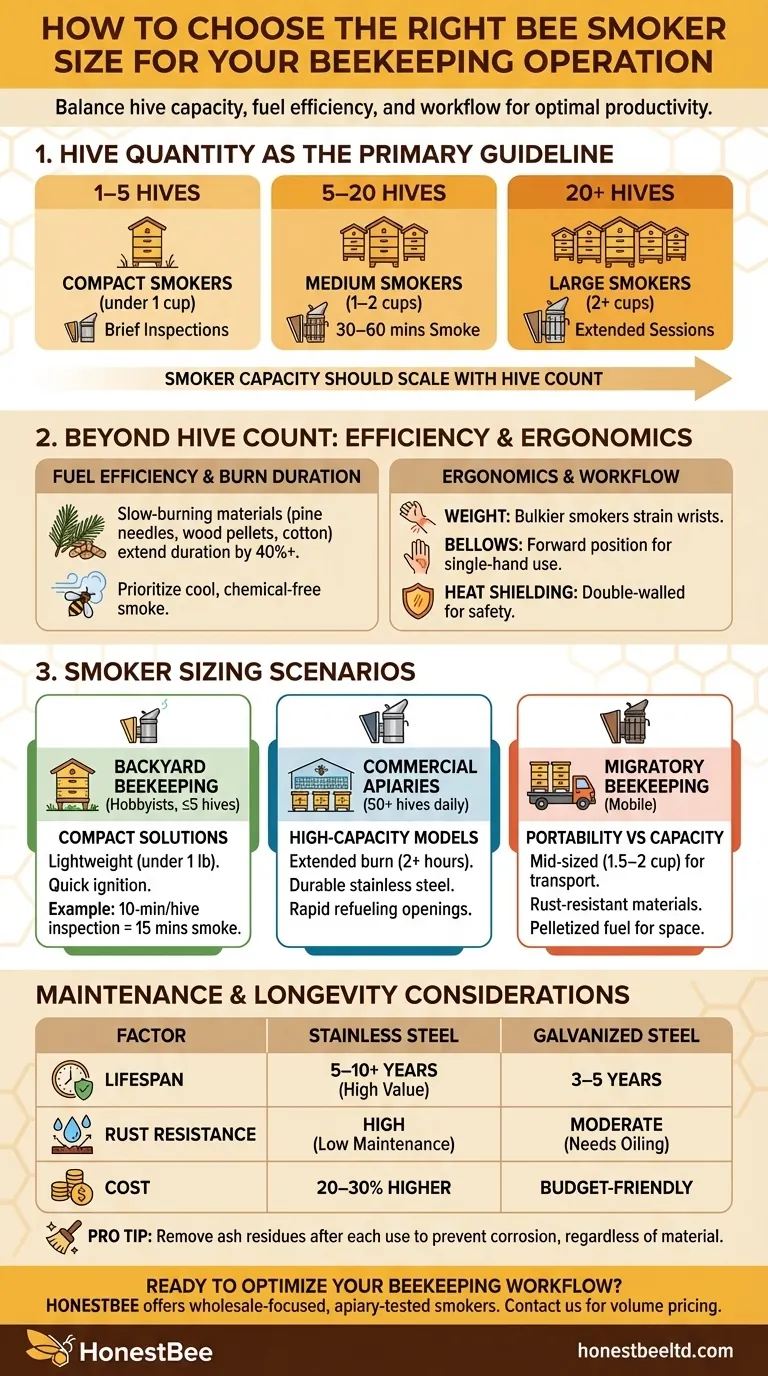
Research shows smoker capacity should scale with hive count:
- 1–5 hives: Compact smokers (fuel capacity under 1 cup) suffice for brief inspections.
- 5–20 hives: Medium-sized models (1–2 cups) maintain consistent smoke for 30–60 minutes.
- 20+ hives: Large smokers (2+ cups) prevent refueling interruptions during extended sessions.
Beyond Hive Count: Fuel Efficiency and Burn Duration
Fuel type affects performance more than smoker size alone. Slow-burning materials like:
- Pine needles
- Wood pellets
- Commercial cotton fiber
extend usable smoke duration by over 40% compared to fast-burning fuels. Prioritize cool, chemical-free smoke production to avoid harming bees.
Ergonomics and Beekeeper Workflow Compatibility
Consider:
- Weight distribution: Bulkier smokers strain wrists during repetitive use.
- Bellows placement: Forward-positioned pumps allow single-handed operation while holding frames.
- Heat shielding: Double-walled designs protect against accidental burns during transport.
Smoker Sizing Scenarios
Backyard Beekeeping: Compact Solutions
For hobbyists inspecting ≤5 hives weekly:
- Opt for lightweight stainless steel models (under 1 lb empty).
- Focus on quick ignition—smaller chambers heat faster.
- Example workflow: A 10-minute inspection per hive requires just 15 minutes of continuous smoke.
Commercial Apiaries: High-Capacity Models
Operations managing 50+ hives daily need:
- Extended burn times: 2+ hour capacity minimizes refueling stops.
- Durable construction: Stainless steel withstands frequent use despite higher upfront cost.
- Rapid refueling: Wide openings accommodate bulk fuel loading.
Migratory Beekeeping: Portability vs Capacity Tradeoffs
Mobile beekeepers should:
- Choose mid-sized smokers (1.5–2 cup capacity) for truck transport.
- Prioritize rust-resistant materials—galvanized steel requires protective oil coatings during humid transit.
- Use pelletized fuel for space efficiency in travel setups.
Maintenance and Longevity Considerations
Material choice impacts long-term value:
| Factor | Stainless Steel | Galvanized Steel |
|---|---|---|
| Lifespan | 5–10+ years | 3–5 years |
| Rust Resistance | High | Moderate (needs oiling) |
| Cost | 20–30% higher | Budget-friendly |
Pro tip: Remove ash residues after each use to prevent corrosion, regardless of material.
Ready to optimize your beekeeping workflow? HONESTBEE’s wholesale-focused inventory offers apiary-tested smokers that balance capacity, durability, and ergonomics—helping commercial beekeepers and distributors maximize efficiency. [Contact us] today for volume pricing on professional-grade equipment.
Visual Guide
Related Products
- Stainless Steel Honey Bee Smoker Hive and Honeycomb Smoker for Beekeeping
- Professional Bee Smoker with Elongated Spout and Durable Bellows for Beekeeping
- Premium Traditional Copper Bee Smoker with Bellows
- Heavy Duty Manual Bee Smoker Blower for Beekeeping
- European Stainless Steel Bee Smoker for Honey Bee Hive
Related Articles
- The End of 'Hot Hives': Why Your Bee Smoker Is More Important Than Your Suit
- Why Your Bee Smoker Might Be Making Your Hives More Aggressive—And How to Fix It
- Why Your Bee Smoker Keeps Going Out—And the 3-Layer Fix
- How to Operate a Bee Smoker Safely: Expert Techniques for Calmer Hives
- How to Choose the Right Beekeeping Smoker for Optimal Performance