The Center of the Storm
An apiary is a complex, dynamic system. Inside each hive, tens of thousands of individuals operate on a simple set of biological imperatives. The beekeeper who steps into this world is an outside variable, an intervention.
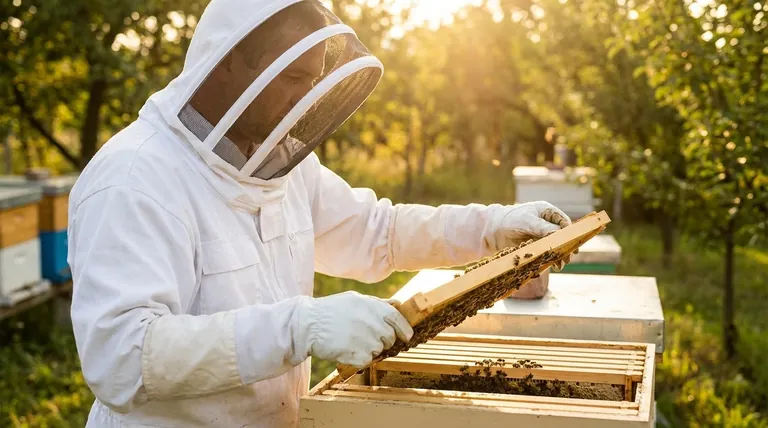
Success in this environment depends less on brute force and more on calm, deliberate action. And the single greatest instrument for maintaining that calm is not a smoker or a hive tool, but the simple mesh of a beekeeper's veil.
To understand why, we have to look past the obvious function of preventing stings and into the psychology of control.
The Biological Trigger
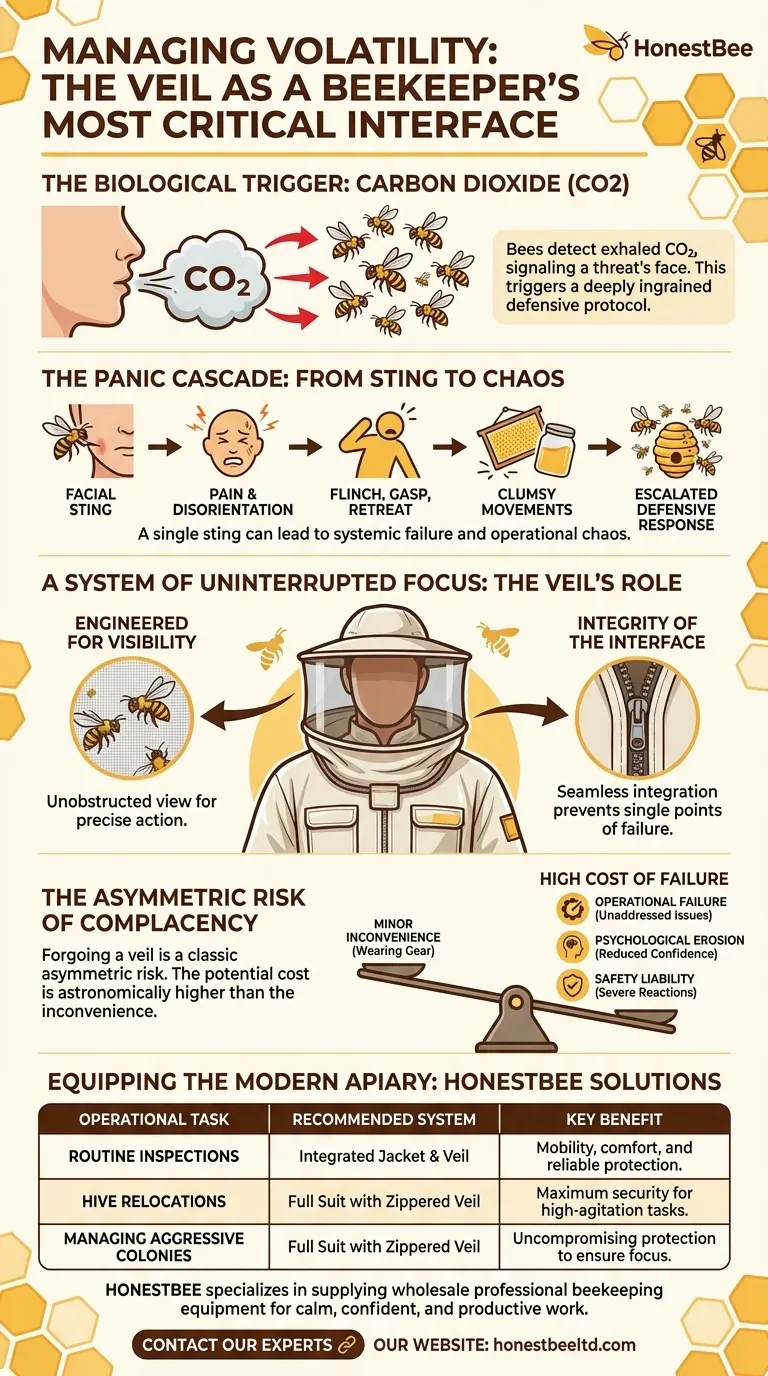
Bees, especially guard bees, are programmed to defend their colony from large predators. One of their most reliable cues for identifying a threat is something we can't control: our breath.
Carbon Dioxide: The Predator's Signature
The CO2 we exhale is a potent trigger. For a bee, a concentrated stream of it signals the close proximity of a mouth—the most dangerous part of a potential threat like a bear. This is why bees are instinctually drawn to the human face. It's not personal; it's a deeply ingrained defensive protocol.
The Panic Cascade
A sting to the hand is painful. A sting to the face is disorienting. The sudden, sharp pain near the eyes or mouth can trigger an involuntary flinch, a gasp, or a panicked retreat.
This is where a minor incident cascades into a systemic failure. Panic leads to clumsy movements—a dropped frame, a jarred hive. These actions are perceived by the colony as a larger attack, escalating their defensive response and turning a manageable situation into chaos. The veil doesn't just block a sting; it interrupts this entire feedback loop.
A System of Uninterrupted Focus
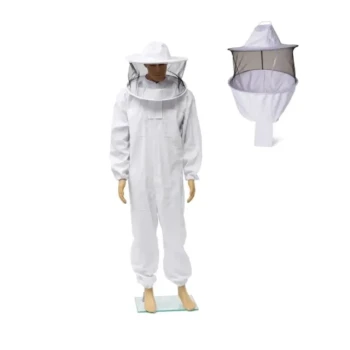
A professional doesn't just wear a veil; they integrate it into a complete system designed to eliminate distractions and maintain focus. The design of that system is critical.
Engineered for Visibility
The primary goal after protection is visibility. A high-quality veil, whether a structured fencing veil or a spacious round veil, should offer a clear, unobstructed view of the colony. Good visibility isn't a luxury; it's a core safety feature that allows the beekeeper to read the bees' behavior and work with precision.
The Integrity of the Interface
The most vulnerable point in any protective system is the connection point. A veil must seamlessly integrate with a jacket or full suit. A secure zipper is the difference between a sealed environment and an entry point for a single, trapped, and highly agitated bee against your neck. This single point of failure can compromise the entire system of calm.
The Asymmetric Risk of Complacency
Forgoing a veil, even for a "quick check" on a "gentle hive," represents a classic case of asymmetric risk. The potential cost of failure is astronomically higher than the minor inconvenience of putting on proper gear.
- Operational Failure: An inspection abandoned halfway due to stings can leave a colony exposed or a critical issue—like a pest infestation or queen failure—unaddressed.
- Psychological Erosion: For a commercial team, a single bad facial stinging incident can create lasting anxiety in a beekeeper, reducing their effectiveness and confidence on all future inspections.
- Safety Liability: The risk of severe swelling, impaired vision, or an unexpected allergic reaction makes facial stings an unacceptable liability in a professional operation.
Equipping the Modern Apiary
In a commercial setting, personal protective equipment is not a matter of preference; it is a matter of operational policy. The goal is to standardize safety and maximize the effectiveness of every beekeeper.
| Operational Task | Recommended System | Key Benefit |
|---|---|---|
| Routine Inspections | Integrated Jacket & Veil | Mobility, comfort, and reliable protection. |
| Hive Relocations | Full Suit with Zippered Veil | Maximum security for high-agitation tasks. |
| Managing Aggressive Colonies | Full Suit with Zippered Veil | Uncompromising protection to ensure focus. |
For commercial apiaries and equipment distributors, sourcing durable, reliable, and well-designed protective gear is a bottom-line decision. HONESTBEE specializes in supplying wholesale beekeeping equipment that meets the rigorous demands of professional use, ensuring every member of your team is equipped for calm, confident, and productive work.
The veil is the interface between the volatile, complex world of the hive and the focused mind of the beekeeper. Ensuring that interface is secure is the foundation of successful beekeeping.
If you're ready to equip your operation with the professional-grade gear it needs, Contact Our Experts.
Visual Guide
Related Products
- Beekeeper Cowboy Hat and Veil for Beekeeping
- White Cotton Beekeeping Jacket and Veil for Bee Keepers
- Professional Square Folding Wire Mesh Beekeeping Veil
- Premium Cotton Beekeeper Suit with Reinforced Fencing Veil
- Premium Cowboy Beekeeper Hat with Visibility Veil Outdoor Professional Beekeeping Protective Gear
Related Articles
- How to Choose the Best Beekeeping Headgear for Safety and Comfort
- The Beekeeper's Blind Spot: The Cognitive Ergonomics of a Veil
- How to Clean Beekeeping Veils Without Damaging Mesh or Visibility
- How to Choose a Beekeeping Veil: Safety and Comfort for Beginners
- Beyond the Apiary: The Beekeeping Veil as a Tool for Focus