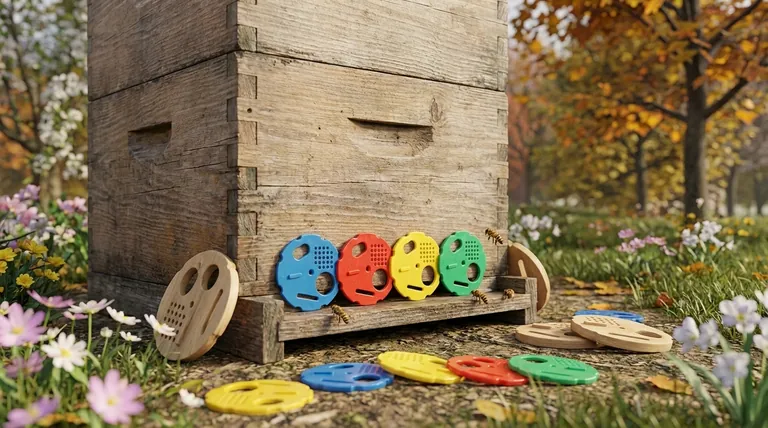
Beekeepers face a constant balancing act: protecting hives from pests and weather while ensuring optimal colony health. Entrance reducers—often overlooked as simple wooden or plastic strips—hold transformative potential when used strategically. This guide reveals how to adapt reducer usage across seasons, addressing threats like wasps, robber bees, and mice while supporting hive vitality.
Entrance Reducers 101
Anatomy and Functional Design
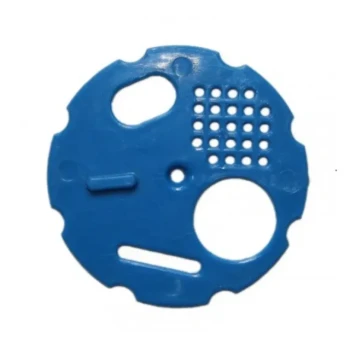
Entrance reducers are adjustable inserts that modify hive entry points. Typically featuring notches or slots, they allow beekeepers to:
- Restrict access during vulnerable periods (e.g., new colony establishment)
- Regulate internal temperature by controlling airflow
- Deter predators without impeding worker bee traffic
Core Benefits Beyond Basic Protection
Research shows properly managed reducers enhance hive resilience by:
- Swarm Prevention: Limiting exits during spring nectar flows discourages swarming impulses.
- Disease Control: Reduced entrances help weaker colonies defend against robbing bees carrying pathogens.
- Energy Efficiency: Winter configurations minimize heat loss—critical for cluster survival.
Seasonal Deployment Guide
Spring Setup for Swarm Prevention
As temperatures stabilize (when light sweaters suffice), transition from winter configurations:
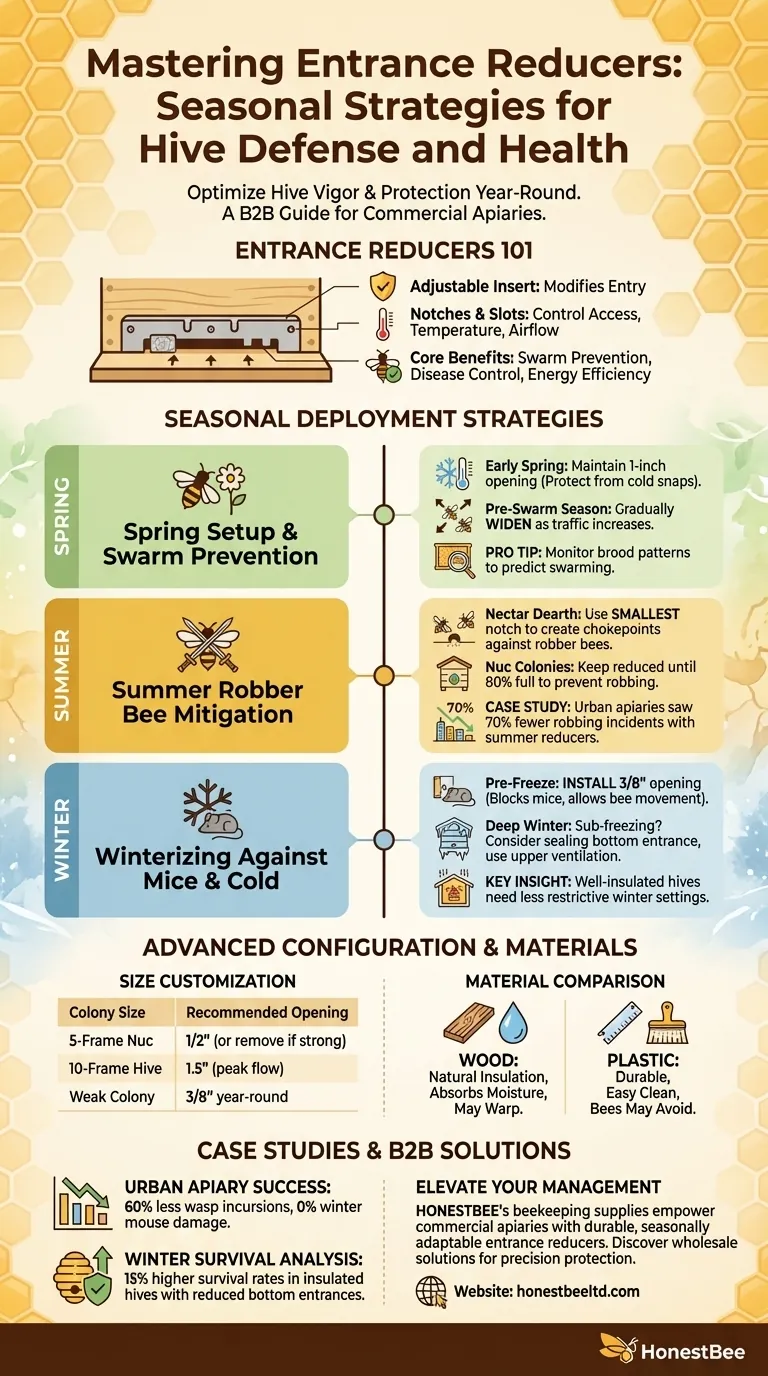
- Early Spring: Maintain a 1-inch opening to protect against lingering cold snaps.
-
Pre-Swarm Season: Gradually widen entrances to accommodate increased foraging traffic.
Pro Tip: Monitor brood patterns—overcrowding signals imminent swarming despite reducer use.
Summer Robber Bee Mitigation
During nectar dearths, reducers become frontline defenses:
- Standard Hives: Use the smallest notch to force robber bees through chokepoints guarded by resident workers.
-
Nuc Colonies: Keep reducers until colonies fill 80% of frames—vulnerable small hives attract robbing.
Case Study: Urban apiaries using summer reducers reported over 70% fewer robbing incidents.
Winterizing Against Mice and Cold
Two-phase winter prep maximizes survival:
- Pre-Freeze: Install reducers with 3/8" openings—small enough to block mice but permit bee movement.
-
Deep Winter: In sub-freezing climates, some beekeepers seal bottom entrances entirely, relying on upper ventilation.
Key Insight: Well-insulated hives often need less restrictive winter configurations than traditional setups.
Advanced Configuration
Size Customization for Colony Strength
Match openings to colony capacity:
| Colony Size | Recommended Opening |
|---|---|
| 5-Frame Nuc | 1/2" (or remove if strong) |
| 10-Frame Hive | 1.5" during peak flow |
| Weak Colony | 3/8" year-round |
Material Comparisons: Wood vs. Plastic
- Wood Reducers: Naturally insulate and absorb moisture, but may warp over time.
- Plastic Reducers: Durable and easy to clean, though some beekeepers report bees avoid chewing plastic propolis guides.
Case Studies
Urban Apiary Pest Control Success
A Chicago beekeeper using seasonal reducer protocols:
- Reduced wasp incursions by 60% via summer entrance restrictions
- Eliminated winter mouse damage through timed reducer installation
Winter Hive Survival Rate Analysis
Northern apiaries employing dynamic reducer strategies saw:
- 15% higher survival rates in insulated hives with reduced bottom entrances
- Fewer dysentery cases due to improved humidity control
Ready to Elevate Your Hive Management?
HONESTBEE’s beekeeping supplies empower commercial apiaries and distributors with durable, seasonally adaptable entrance reducers. Discover wholesale solutions designed to strengthen colony defenses while simplifying seasonal transitions—because thriving hives start with precision protection.
Visual Guide
Related Products
- Steel Round Disc Entrance Reducer for Flexzion Bee Hive Nuc Box Gate
- Beehive Entrance Reducer Guardian Metal Hive Entrance for Bees
- Professional Hive Front Entrance Bee Feeder
- HONESTBEE Entrance Bee Feeder Efficient Hive Front Liquid Feeding Solution for Beekeeping
- HONESTBEE Entrance Bee Feeder Professional Hive Nutrition Solution for Beekeeping
Related Articles
- Strategic Entrance Reducer Management: From Hive Defense to Colony Growth Optimization
- A Question of Access: Why the Hive Entrance is a Beekeeper's Most Critical Control Point
- Defensible Space: How a Simple Tool Reduces a Bee Colony's Collective Stress
- More Than a Block of Wood: How the Hive Entrance Reducer Governs a Colony's Fate
- Managing Vulnerability: The Strategic Trade-offs of a Hive Entrance Reducer