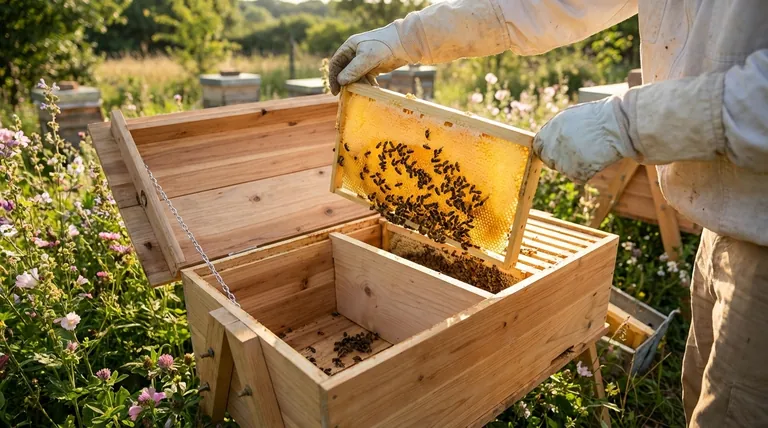
The Colony as a Living System
A beehive is more than a wooden box; it's the physical boundary for a single, intelligent superorganism. The colony breathes, grows, and makes calculated decisions based on one thing: its environment.
From the outside, we see thousands of individual bees. But from a psychological perspective, the colony operates with a unified consciousness. It assesses risk, allocates resources, and pursues two primary goals: expansion when resources are abundant, and survival when they are scarce.
The beekeeper’s job is not to command this system, but to steward its environment. The most powerful tool for this in a top bar hive isn't a feeder or a smoker—it's the movable wall known as the follower board.
The Follower Board: Throttle and Thermostat
The follower board is a simple piece of wood that defines the colony's usable living space. Its management, however, is a sophisticated act of communication with the hive. A weekly inspection is the cadence for this conversation.
The Throttle for Growth
During a spring nectar flow, the colony is an engine of expansion. The queen is laying over a thousand eggs a day, and foragers are bringing in a constant stream of resources. Their instinct is singular: grow.
Failing to provide adequate space is like putting a governor on an engine. When the queen senses she is running out of cells to lay in, a primal trigger is tripped. The colony begins preparations to swarm—a logical act of reproduction for them, but a catastrophic loss of workforce for the beekeeper.
By moving the follower board back one or two bars each week, you provide a clear signal: the territory is open, the resources are here, continue to expand. You are managing the colony’s primary incentive.
The Thermostat for Survival
When the seasons turn and the nectar flow ceases, the colony's entire psychology shifts from expansion to conservation. Its goal is no longer growth, but enduring the cold with finite resources.
A vast, half-empty hive in winter is a thermodynamic nightmare. The cluster of bees must burn through precious honey stores simply to generate the heat needed to keep the brood and queen alive in a cavernous space.
Sliding the follower board inward dramatically reduces this burden. It creates a smaller, insulated chamber that the colony can efficiently heat. It is the architectural equivalent of moving from a warehouse into a well-insulated room for the winter. This simple adjustment directly translates into a higher probability of survival.
The Psychology of Miscalculation
The weekly check is a balancing act. Both over- and under-providing space introduce inefficiencies and risks that can destabilize the colony.
-
Too Much Space: This creates "dead air." The colony must expend energy patrolling and warming an area that provides no value. It's a tax on their resources, slowing development and making them vulnerable.
-
Too Little Space: This is an existential threat from the colony's perspective. It signals that the current home has reached its maximum capacity, forcing the colony to divide itself through swarming to ensure the propagation of its genetics.
The Integrity of the Comb
During any inspection, remember that you are handling the colony’s nursery, pantry, and communications network all at once. The comb is a masterpiece of engineering, but it is fragile.
When you lift a top bar, always keep it perfectly vertical, like a picture in a frame. Tilting it invites gravity to shear the comb from the bar, destroying brood, spilling honey, and causing chaos within the hive. It is a moment that demands a surgeon's steadiness.
A Cadence for Management
Your goal as a beekeeper changes with the seasons, and so should your management of the hive's internal space.
| Season | Primary Goal | Follower Board Action |
|---|---|---|
| Spring / Summer | Encourage Expansion | Move outward weekly to open 1-2 empty bars |
| Fall / Winter | Conserve Heat & Energy | Move inward to create a compact cluster space |
This simple, consistent rhythm of observation and adjustment is the foundation of successful top bar beekeeping. It respects the colony's instincts and provides the architectural support it needs to thrive.
The right equipment makes this delicate management seamless and effective. HONESTBEE provides commercial apiaries and distributors with precision-crafted top bar hives and follower boards designed for easy, reliable adjustment. To ensure your colonies have the best possible environment to flourish. Contact Our Experts
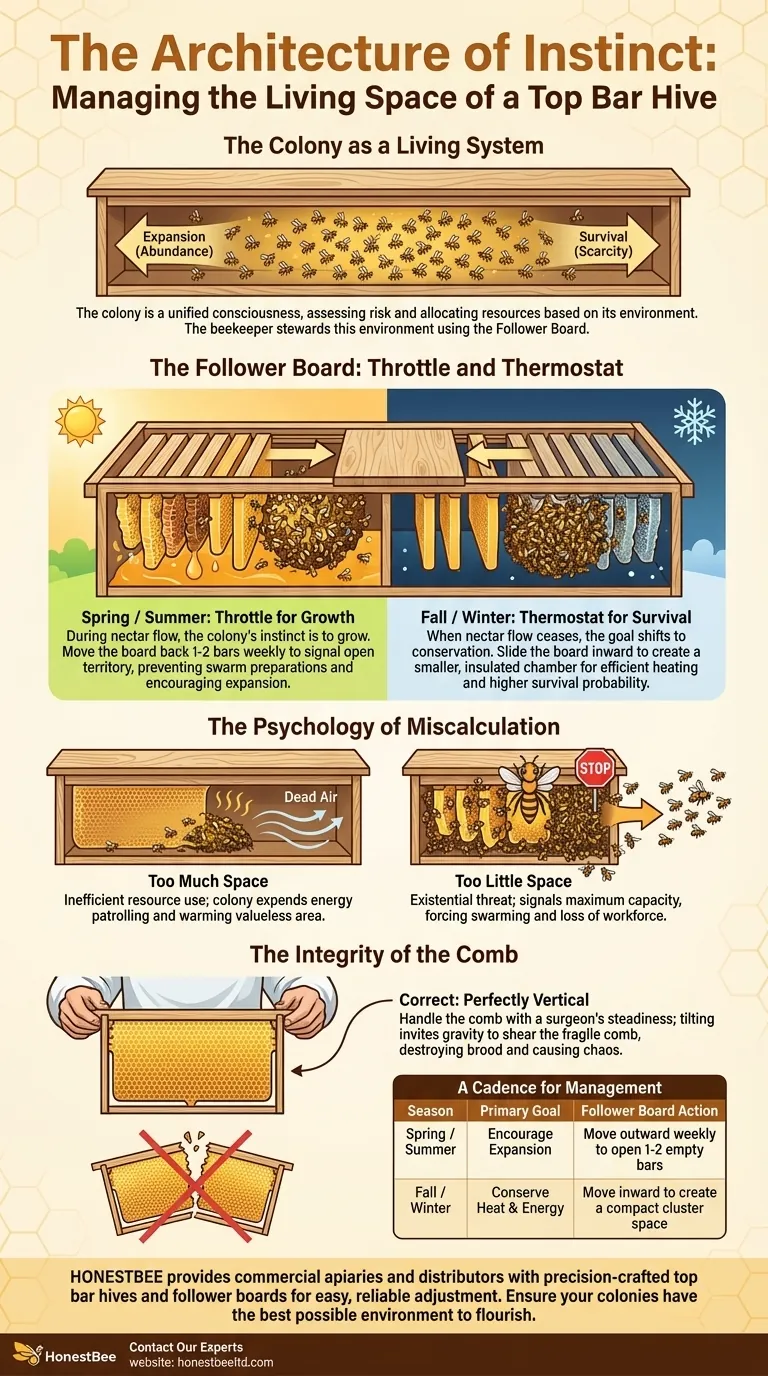
Visual Guide
Related Products
- Top Bar Beehive for Beekeeping Wholesales Kenya Top Bar Hive
- Long Langstroth Style Horizontal Top Bar Hive for Wholesale
- Solid Bottom Board Australian Pine Wood Langstroth Bottom Board for Wholesale
- Langstroth Solid Bottom Board for Beekeeping
- HONESTBEE Top Bar & Bottom Bar Forming Machine | Bee Frame Machine
Related Articles
- How to Inspect Top Bar Hives Without Damaging Comb: A Beekeeper’s Guide
- Beyond Pest Control: The Operational Logic of the Kenyan Top-Bar Hive
- How Top Bar Hives Naturally Boost Bee Health and Simplify Beekeeping
- How to Optimize Honey Storage in Top Bar Hives for Healthier Colonies
- Hive Architecture and the Winter Paradox: Why Heat Retention Isn't Enough








