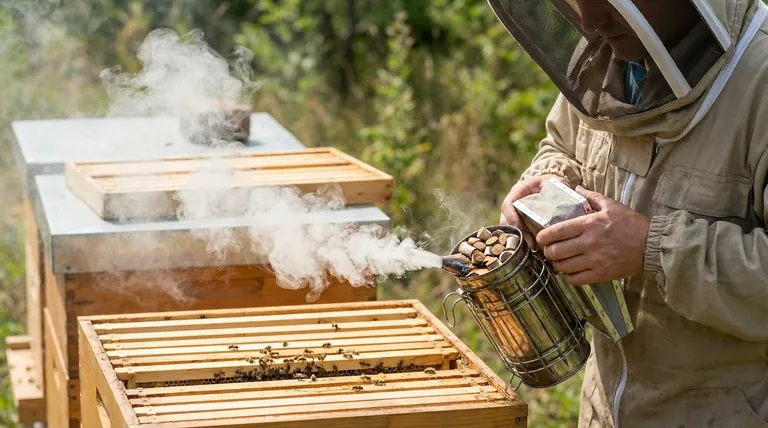
The Failed Conversation
Imagine the scene. A beekeeper approaches a hive, smoker in hand. The goal is a calm, routine inspection. But the smoke that puffs from the nozzle is thin, acrid, and hot. It sputters erratically. Instead of masking the bees' alarm pheromones, it acts as an alarm itself. The gentle hum of the colony rises to an aggressive roar. The inspection is cut short, a failure for both human and hive.
This scenario isn't a failure of courage or intent. It's a failure of engineering.
The beekeeper misunderstood their most essential tool. They saw the smoker as a device for making fire. But its true purpose is to facilitate a conversation. And the language of that conversation is cool, thick, gentle smoke.
Smoke is a Signal, Not a Weapon
In human psychology, we often mistake the tool for the task. We think the smoker's job is to "smoke out" the bees—an act of force. The reality is far more subtle.
The smoke's primary function is to interrupt chemical communication. It gently masks the alarm pheromones (like isopentyl acetate) that guard bees release when they perceive a threat. This interruption prevents panic from spreading, allowing the beekeeper to work.
But not all smoke sends the same signal.
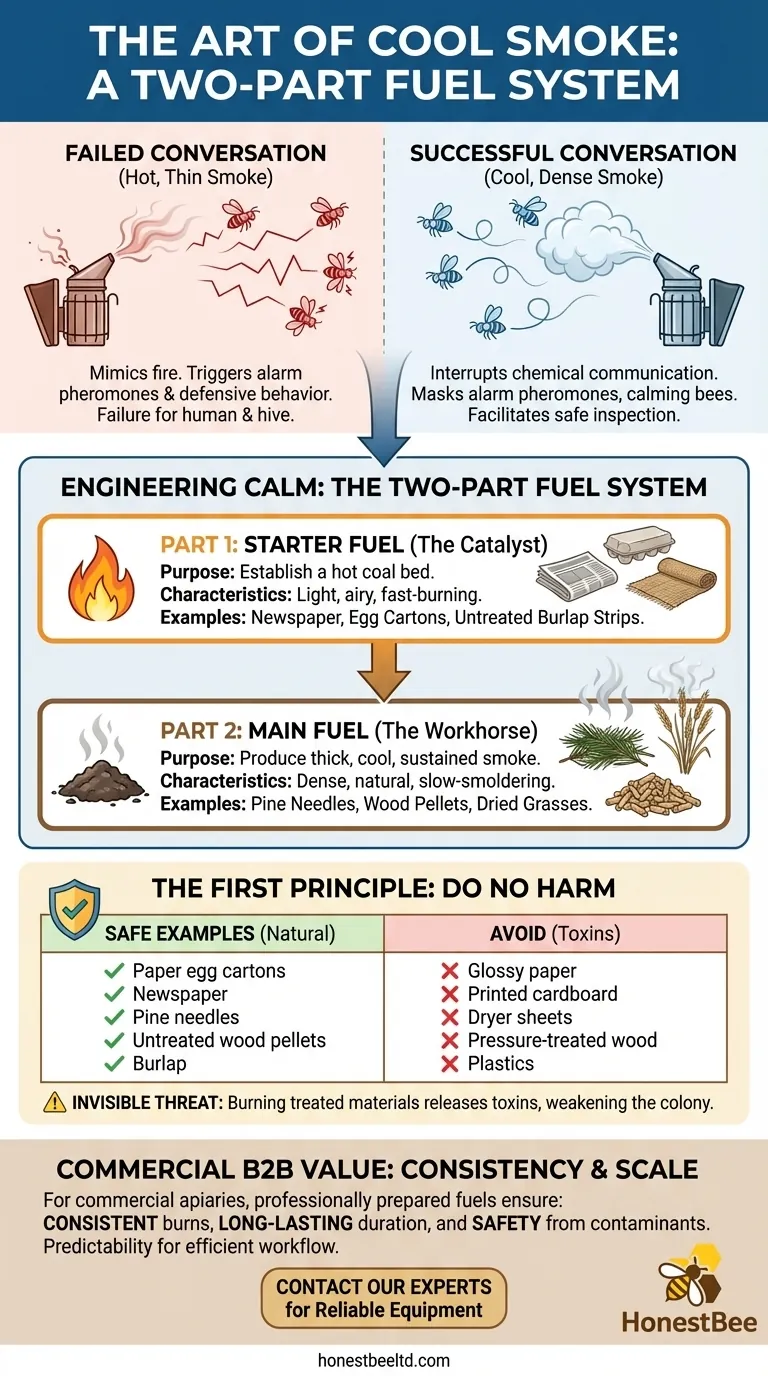
- Hot, thin smoke mimics a forest fire—a direct, immediate threat. It triggers defensive, agitated behavior.
- Cool, dense smoke is an environmental anomaly. It encourages bees to prepare for a potential hive move by consuming honey, which makes them more docile and less inclined to sting.
The difference lies entirely in the fuel you choose and how you use it. It's a two-part system designed for a specific outcome: calm.
Engineering Calm: The Two-Part Fuel System
A successful smoker fire isn't a single event; it's a managed process. Think of it like a controlled chemical reaction. You need an initial burst of energy to start it, followed by a long, slow, sustained release.
The Ignition Phase: The Starter Fuel
The starter is your catalyst. Its only job is to catch a flame easily and generate enough heat to ignite the main fuel source. It’s the sprint, not the marathon.
- Characteristics: Light, airy, and fast-burning.
- Examples: A small ball of newspaper, a piece of a paper egg carton, or untreated burlap strips.
You need just enough to establish a hot coal bed at the bottom of the smoker.
The Sustained Burn: The Main Fuel's Mission
This is the workhorse. Packed on top of the lit starter, the main fuel is what produces the desired effect. It must smolder, not burn, restricting oxygen to produce a thick, white, and cool smoke.
- Characteristics: Dense, natural, and slow-burning.
- Examples: Pine needles, untreated wood shavings or pellets, dried grasses, or commercially prepared compressed cotton fibers.
The quality of this fuel dictates the quality and duration of your calm working window.
The First Principle: Do No Harm
Choosing a fuel isn't just about performance; it's about responsibility. The health of the colony is paramount, and a surprising number of common materials can introduce toxins directly into the hive.
| Fuel Category | Purpose | Safe Examples | Materials to Absolutely Avoid |
|---|---|---|---|
| Starter Fuel | Quick ignition | Paper egg cartons, newspaper, dryer lint | Glossy paper, printed cardboard, dryer sheets |
| Main Fuel | Slow, cool smoke | Pine needles, untreated wood pellets, burlap | Pressure-treated wood, plastics, synthetic fabrics |
The Invisible Threat of Toxins
Burning materials like pressure-treated wood, glossy magazines, or synthetic twine releases a cocktail of chemicals. These toxins can weaken the colony's collective immune system, impact brood development, and in some cases, lead to a slow decline of the entire hive. When in doubt, leave it out.
The Physics of Failure
Beyond toxins, some fuels simply fail at the task.
- Hot, Fast-Burning Fuel: Using only starter material like newspaper creates a miniature bonfire. The resulting heat and embers will make bees aggressive, defeating the smoker's purpose.
- Wet or Green Fuel: Damp material is frustratingly difficult to light and keep smoldering. It produces a weak, steamy smoke that offers little value and often goes out mid-inspection.
Matching Fuel to Your Operational Philosophy
For a commercial apiary managing hundreds of hives, consistency isn't a luxury; it's a core operational requirement. The variability of foraged pine needles or the risk of running out is inefficient and costly. The goal is predictability, safety, and performance at scale.
This is where professionally prepared smoker fuels—like compressed cotton or specialized wood pellets—become essential. They are designed to be:
- Consistent: Every batch burns the same way.
- Long-Lasting: Providing a reliable smoke duration for multiple hive inspections.
- Safe: Free from any harmful treatments, glues, or chemicals.
Mastering the smoker is a foundational skill, but it relies on having dependable tools and materials. Just as you wouldn't compromise on the quality of your hive bodies or frames, the fuel you burn is a critical piece of your operational equipment. It’s a small input that has a disproportionate impact on your workflow, your safety, and the well-being of your colonies.
To ensure every hive inspection is calm, productive, and safe, start with the right foundation. HONESTBEE provides commercial apiaries with the reliable, high-quality beekeeping equipment they need to operate professionally and efficiently.
If you’re ready to equip your operation with supplies built for performance at scale, Contact Our Experts.
Visual Guide
Related Products
- 54-Piece Smoker Fuel Pellets for Beekeeping Beehive Smoker Fuel
- Stainless Steel Honey Bee Smoker Hive and Honeycomb Smoker for Beekeeping
- Premium Traditional Copper Bee Smoker with Bellows
- Stainless Steel Electric Beehive Smoker for Beekeeping and Bee Keeper Use
- Galvanized Beekeeping Smoker for Honey Bee and Apiculture
Related Articles
- The Art of Persuasion: Why Your Bee Smoker Fuel is a Dialogue with the Hive
- Is Your Bee Smoker Fuel Secretly Harming Your Hives? A Guide for Commercial Apiaries
- How to Choose and Prepare Optimal Bee Smoker Fuels for Healthier Hives
- How to Clean Your Beehive Smoker Safely: A Beekeeper’s Guide to Efficiency and Disease Prevention
- How to Choose the Right Beekeeping Smoker for Optimal Performance