The Allure of the Easy Option
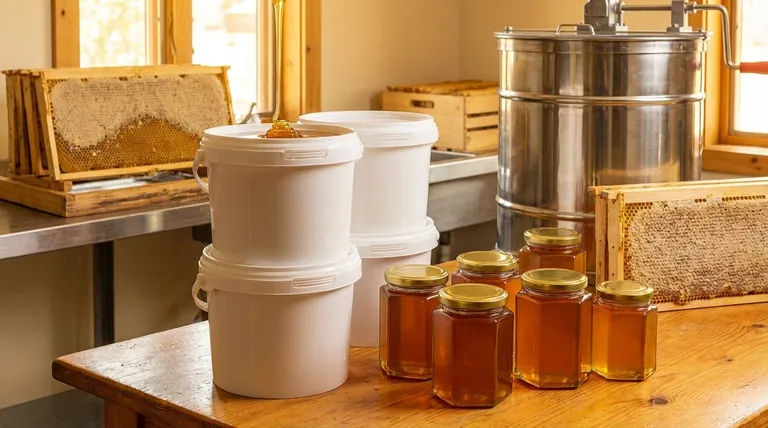
The harvest is done. Every frame is extracted, the air is thick with the sweet smell of success, and gallons of liquid gold sit waiting. You're tired. In the corner, a stack of generic 5-gallon buckets from the hardware store seems like the most logical, efficient solution.
This is a critical moment. It feels like a simple logistical choice, but it's not. This decision is the final act of stewardship for a product that took a million bees and an entire season to create. It's the last mile of quality control, and it's where a small oversight can silently undo everything.
The temptation to use any available container is a psychological trap rooted in efficiency. But the chemistry of honey storage rewards discipline, not convenience.
The Invisible Threat: The Chemistry of Containment
The difference between a food-grade bucket and a standard utility bucket isn't visible to the naked eye, but it's fundamental. It lies in the unseen world of molecular stability.
What "Food-Grade" Actually Means
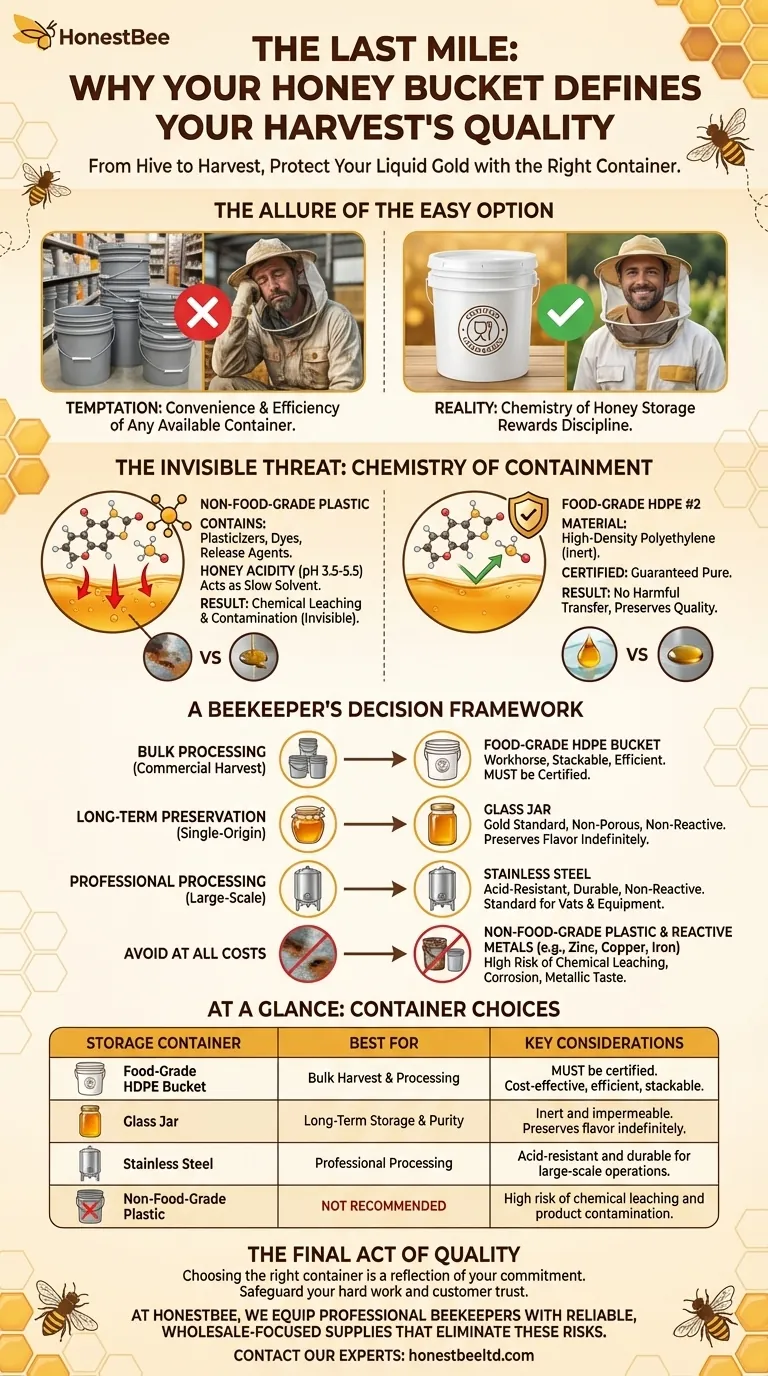
A container stamped "Food-Grade" is a guarantee. It certifies that the material—usually High-Density Polyethylene (HDPE), marked with a #2 recycling symbol—is inert. It will not transfer harmful chemicals, tastes, or odors to its contents.
Think of it as the difference between a drinking glass and a decorative lead-crystal vase. Both can hold water, but only one is designed for safe consumption. The material itself is engineered for purity.
The Silent Reaction: Honey's Acidity at Work
General-purpose buckets are not built for this standard. They often contain plasticizers, dyes, or release agents that are not meant for human consumption.
Honey is naturally acidic, with a pH between 3.5 and 5.5. Over weeks and months, this gentle acidity acts as a slow, persistent solvent. It can leach microscopic chemicals from a non-food-safe plastic, directly into your honey. This process, called leaching, is invisible and insidious. It compromises the safety and purity of your entire harvest without ever changing its appearance.
A Beekeeper's Decision Framework
Your storage strategy should be as deliberate as your beekeeping. The right container depends entirely on the task at hand. For commercial operators, this isn't just about best practices; it's about risk management.
For Bulk Processing: The Case for the Right Bucket
For handling the sheer volume of a commercial harvest, nothing beats the 5-gallon bucket. It's the workhorse of the apiary—stackable, durable, and efficient.
But professionals cannot afford the risk of contamination. This is where sourcing matters. Using certified food-grade equipment isn't an expense; it's an investment in product integrity and brand reputation. Operations built on quality rely on suppliers who understand that every component, down to the storage bucket, is a critical part of the production chain.
For Long-Term Preservation: The Purity of Glass
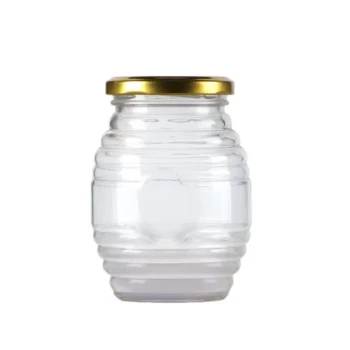
Glass is the gold standard for long-term, archival storage. It is completely non-porous and non-reactive. For preserving the unique terroir and delicate flavor profile of a single-origin honey for years, glass is the undisputed champion. It offers absolute purity.
The Material to Avoid: The Hazard of Reactive Metals
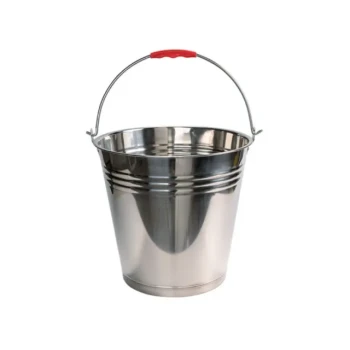
With one exception, metal is a poor choice for honey storage. The same acidity that leaches chemicals from plastic can react with and corrode metals like zinc, copper, or iron, imparting a sharp metallic taste and contaminating the honey. The only safe exception is stainless steel, whose non-reactive properties make it the standard for professional processing vats and equipment.
At a Glance: Container Choices
| Storage Container | Best For | Key Considerations |
|---|---|---|
| Food-Grade HDPE Bucket | Bulk Harvest & Processing | Must be certified. Cost-effective, efficient, stackable. |
| Glass Jar | Long-Term Storage & Purity | Inert and impermeable. Preserves flavor indefinitely. |
| Stainless Steel | Professional Processing | Acid-resistant and durable for large-scale operations. |
| Non-Food-Grade Plastic | Not Recommended | High risk of chemical leaching and product contamination. |
The Final Act of Quality
Choosing the right container is the final, defining step in your process. It’s a reflection of your commitment to quality, honoring the immense work of your bees and safeguarding the trust of your customers. For a commercial apiary, where consistency and safety are paramount, this choice is non-negotiable.
At HONESTBEE, we equip professional beekeepers with reliable, wholesale-focused supplies that eliminate these risks. We provide the tools you need to ensure the last mile of your harvest is as flawless as the first. To ensure your equipment matches your commitment to quality, Contact Our Experts.
Visual Guide
Related Products
- Food Grade Plastic Honey Bucket Pail for Beekeeping
- Premium Stainless Steel Honey Tank Bucket Pail with Reinforced Handle and Polished Finish
- Plastic Honey Gate Spout with Wing Nut for Beekeeping Honey Bucket
- Two-Stage Plastic Honey Filter for Buckets
- Stainless Steel Pail Perch Bucket Bench
Related Articles
- Why Honey Buckets Are So Hard to Open—And the Right Way to Do It
- Anatomy of Trust: The Engineering of a Proper Honey Pail
- More Than a Bucket: Why Your Choice of Honey Pail is a Critical Business Decision
- Containing Liquid Gold: The Silent Engineering Inside Every Honey Jar
- How to Choose Honey Storage Containers That Prevent Spoilage and Extend Shelf Life