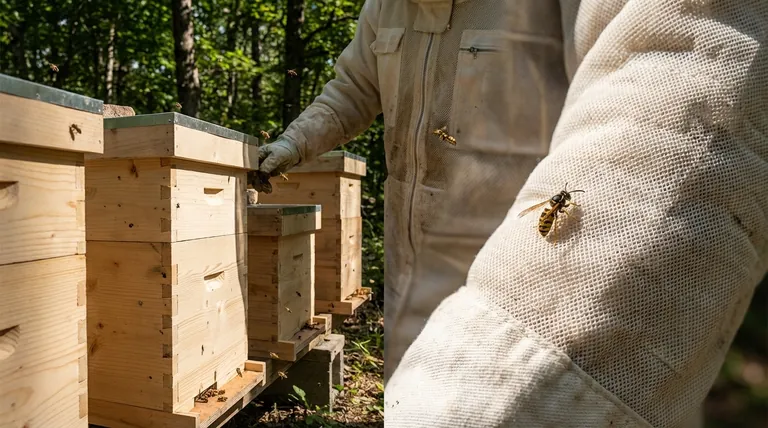
The Psychological Armor of a Bee Suit
There's a quiet confidence that comes from zipping up a bee suit. It feels like a shield. Inside, the world of buzzing insects is muffled, and the wearer feels a sense of separation—a barrier between them and a thousand tiny threats.
This feeling of security is a powerful psychological tool. But it can also become a liability.
We tend to mentally group stinging insects into a single category of risk. But a wasp is not a bee. The engineering challenge it presents is fundamentally different, and assuming your equipment is universally effective is the first and most critical mistake.
A Tale of Two Stingers: A Lesson in Mechanical Design
The core of the problem lies in the mechanical design of the stinger itself. The protective systems in a standard bee suit are designed around the specific threat a honeybee poses.
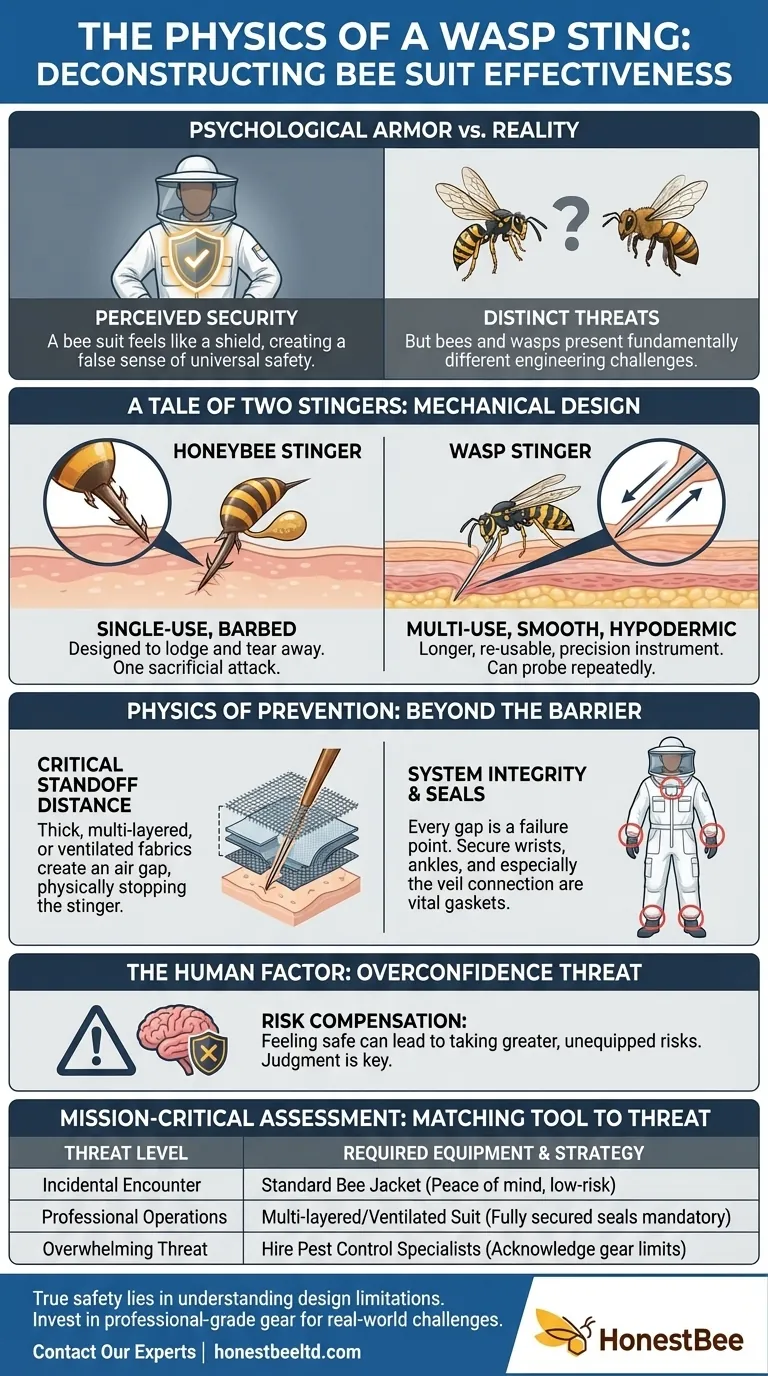
- The Honeybee: Employs a single-use, barbed stinger. It's designed to lodge in the target and tear away, delivering its payload of venom once.
- The Wasp: Wields a smooth, longer, hypodermic-like stinger. It can be used repeatedly, with precision and aggression, much like a fencer's foil.
A bee suit is built to withstand a single, sacrificial attack from any given bee. A wasp, however, can probe the same spot multiple times, testing the material's integrity relentlessly. This changes the entire safety equation.
The Physics of Prevention: Beyond a Simple Barrier
Because a wasp can strike repeatedly, a bee suit's effectiveness is not just a matter of coverage. It's a matter of physics and engineering, focused on two key principles: distance and integrity.
The Critical Role of Standoff Distance
The ultimate goal is to keep the tip of the stinger from reaching your skin. A thin layer of cotton might stop a bee's barbed sting, but a determined wasp can often penetrate it, especially where the fabric is pulled taut over a knee or elbow.
This is why material thickness is non-negotiable for wasp protection.
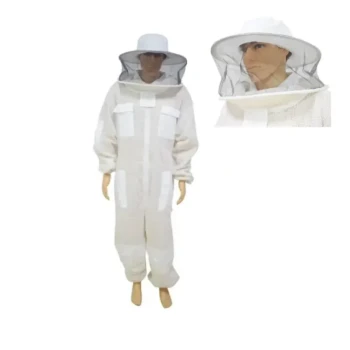
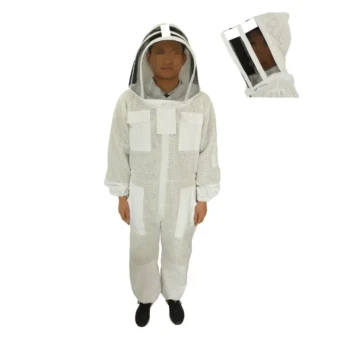
Professional-grade suits achieve this "standoff distance" through intelligent design. Multi-layered or ventilated suits are the pinnacle of this concept. By creating an air gap between mesh layers, they make it physically impossible for the wasp's stinger to bridge the distance to the skin. It’s an elegant solution to a sharp problem.
System Integrity: A Suit is Only as Strong as Its Seals
Wasps are masterful infiltrators. They will exploit any gap, no matter how small. This transforms the suit from a simple garment into an integrated system where every connection point is a potential failure point.
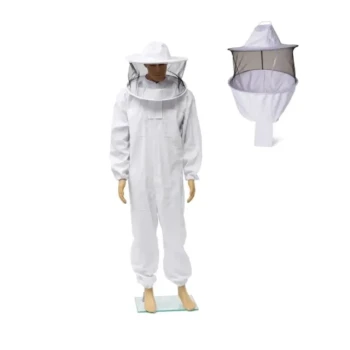
- Wrists and Ankles: Strong elastic or Velcro seals are not just for comfort; they are critical gaskets.
- The Veil Connection: The zipper connecting the veil to the suit is the most common point of failure. A small, unzipped section is an open door.
A single breach compromises the entire system. Once a wasp is inside, the suit becomes a trap, not a shield.
The Human Factor: Overconfidence is the Deadliest Threat
The most significant danger when facing wasps is not stinger penetration—it's the false sense of security the suit provides.
This cognitive bias, known as risk compensation, can lead us to take on challenges we are not equipped for. We feel safe, so we venture closer to a large nest or work with less caution than we otherwise would. The suit reduces our perceived risk, which can tragically increase our actual risk.
High-quality equipment is not a substitute for sound judgment. It is a tool that, when its limitations are understood, allows an expert to manage risk effectively.
Mission-Critical Assessment: Matching the Tool to the Threat
Choosing the right level of protection requires an honest assessment of the task at hand. For commercial apiaries where wasp encounters are a regular operational hazard, professional-grade equipment is the only responsible choice.
| Threat Level | Required Equipment & Strategy |
|---|---|
| Incidental Encounter | A standard bee jacket may offer peace of mind for casual, low-risk activity. |
| Professional Operations | A multi-layered or ventilated suit with fully secured seals is mandatory. |
| Overwhelming Threat | Acknowledging the limits of your gear and hiring pest control specialists is the safest choice. |
True safety isn't found in the suit alone, but in understanding its design intent and limitations. For operations that demand equipment engineered for the realities of aggressive insects, investing in professional-grade gear is paramount. The difference is in the details—the thickness of the fabric, the quality of the zippers, and the integrity of the seals.
To ensure your team is equipped with suits engineered for these real-world challenges, Contact Our Experts.
Visual Guide
Related Products
- Premium Three Layer Ventilated Bee Suit with Round Veil
- Professional Cotton Beekeeper Suit with Round Veil Design for Commercial Apiaries
- Professional Beekeeper Suit with Square Folding Cotton Veil
- Premium Cotton Beekeeper Suit with Reinforced Fencing Veil
- Professional Beekeeping Suit for Kids and Girls Childrens Bee Keeper Suit
Related Articles
- How to Choose Between Full and Partial Bee Suits: A Safety and Efficiency Guide
- The Scent of Danger: Why Bee Suit Maintenance is About Pheromones, Not Just Dirt
- How to Choose and Maintain a Bee Suit That Actually Prevents Stings
- The Confidence Barrier: Why Your First Bee Suit Is About Psychology, Not Just Protection
- The Geometry of Fear: Why Your First Bee Suit Is a Psychological Decision, Not a Practical One