The Suit's Silent Language
A beekeeper trusts their suit completely. It's a layer of manufactured confidence, a pact of safety that allows them to work calmly amidst thousands of stinging insects.
But that trust can be misplaced. We often judge our gear by what we see—a stain of propolis, a smear of honey. The most significant threat, however, is invisible. It’s a chemical ghost left behind from a previous encounter: the alarm pheromone.
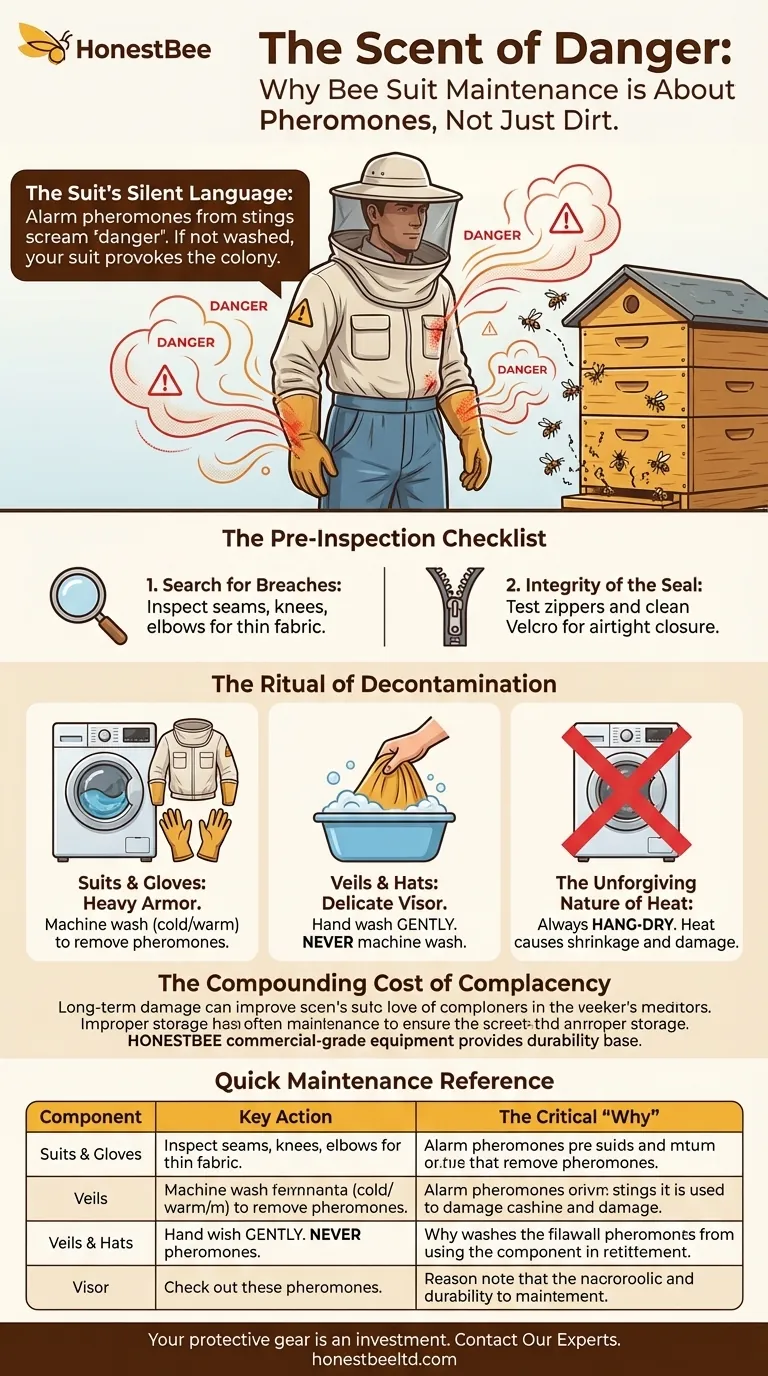
When a bee stings your suit, it releases a scent that screams "danger" to the rest of the colony. If not washed away, that scent lingers. The next time you approach a hive, your suit is already telling the bees you are a threat before you’ve even lifted the lid. Your presence alone becomes an act of provocation.
Effective maintenance, therefore, is not about housekeeping. It's about managing communication. It’s about washing away the memory of conflict to ensure each new inspection starts with a clean slate.
The Pre-Inspection Checklist
Before a pilot flies, they perform a walk-around. They don't assume the plane is safe; they verify it. Beekeepers must adopt the same disciplined mindset for their protective gear. A clean suit with a one-centimeter gap is a failed system.
1. A Search for Breaches
Methodically inspect every inch of the suit, jacket, and gloves. Pay special attention to high-stress areas like seams, knees, and elbows. Fabric wears thin over time, creating vulnerabilities that are easy to miss but disastrous to ignore.
2. The Integrity of the Seal
Zippers and Velcro closures are the airlocks of your suit. Test every zipper to ensure it closes fully and the teeth lock securely. Clean debris from Velcro strips so they form an impenetrable seal. A bee only needs a tiny gap to find its way in.
The Ritual of Decontamination
Different components of your gear are built for different purposes, and they demand different care. Treating them as a single unit is a common, and costly, mistake.
Suits and Gloves: The Heavy Armor
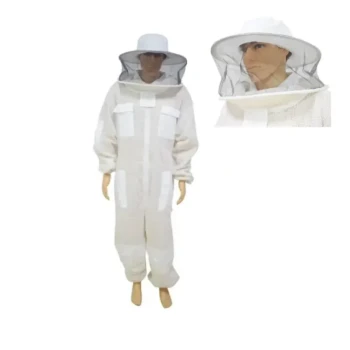
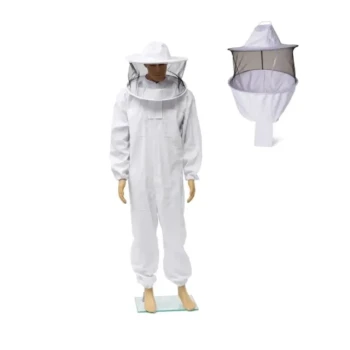
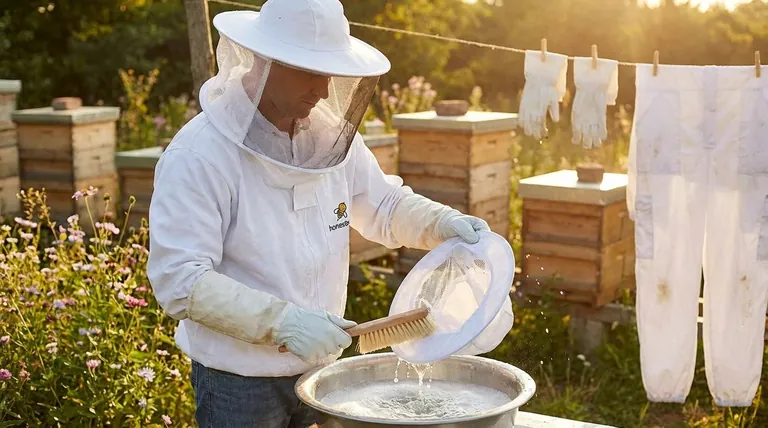
Most cotton or poly-cotton suits and leather gloves are built for durability. They can typically be machine-washed in cold or warm water. This is the crucial step for removing dirt, propolis, and the all-important alarm pheromones.
Veils and Hats: The Delicate Visor
Your veil is your window into the hive, but its fine mesh is fragile. Never machine wash a veil. The agitation will tear the mesh, rendering it useless. Instead, hand-wash it gently in a basin of warm, soapy water, rinse thoroughly, and let it air dry completely.
The Unforgiving Nature of Heat
Always hang-dry your equipment. A machine dryer is the fastest way to compromise your investment. The heat can cause significant shrinkage, turning a perfectly fitting suit into a restrictive and unsafe one. It also degrades zippers, elastic, and the fabric's integrity over time.
The Compounding Cost of Complacency
The small act of neglecting gear maintenance has compounding consequences. For commercial apiaries, where suits are worn daily and exposed to constant stress, this decay is accelerated.
Improper storage—leaving a suit in a sunny truck bed or a damp shed—degrades the fibers, making them brittle and prone to tearing. This is why starting with robust, commercial-grade equipment, like the gear HONESTBEE provides to apiaries and distributors, is a non-negotiable first step. Durability is the foundation upon which good maintenance builds, ensuring your equipment can withstand the rigors of professional use.
A well-maintained suit does more than just prevent stings. It fosters a state of focus, allowing the beekeeper to concentrate on the colony's health instead of their own safety. It is the most fundamental tool for effective, confident beekeeping.
Quick Maintenance Reference
| Component | Key Action | The Critical "Why" |
|---|---|---|
| Full Suit/Jacket | Machine wash, gentle cycle. | Removes alarm pheromones, propolis, and dirt. |
| Gloves | Machine wash with the suit. | Restores dexterity and removes sticky residues. |
| Veil/Hat | Hand wash only in soapy water. | Protects the delicate mesh from tearing. |
| Drying | Always hang-dry. | Prevents shrinkage and damage to zippers/elastic. |
| Storage | Cool, dry, dark location. | Avoids UV and moisture damage, preserving fabric life. |
Your protective gear is an investment in safety and productivity. Starting with equipment designed for the demands of commercial work provides a baseline of quality that makes meticulous maintenance worthwhile. To ensure your operation is built on a foundation of safety and durability, Contact Our Experts.
Visual Guide
Related Products
- Premium Three Layer Ventilated Bee Suit with Round Veil
- Professional Cotton Beekeeper Suit with Round Veil Design for Commercial Apiaries
- Professional Beekeeper Suit with Square Folding Cotton Veil
- Premium Cotton Beekeeper Suit with Reinforced Fencing Veil
- Professional Beekeeping Suit for Kids and Girls Childrens Bee Keeper Suit
Related Articles
- How to Choose Between Full and Partial Bee Suits: A Safety and Efficiency Guide
- The Physics of a Wasp Sting: Deconstructing Bee Suit Effectiveness
- How to Choose and Maintain a Bee Suit That Actually Prevents Stings
- The Confidence Barrier: Why Your First Bee Suit Is About Psychology, Not Just Protection
- The Geometry of Fear: Why Your First Bee Suit Is a Psychological Decision, Not a Practical One