The Most Important Tool is a Calm Mind
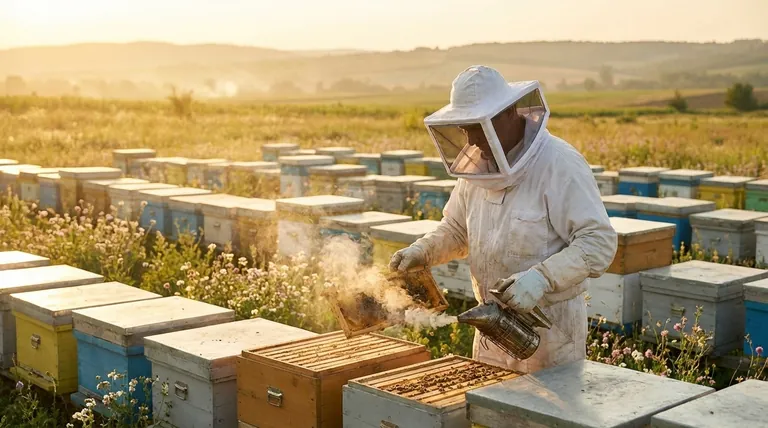
In beekeeping, your most valuable piece of equipment isn't the hive tool or the smoker. It's a calm, focused mind. A state of deliberate calm allows you to read the colony's mood, move with intention, and perform an inspection efficiently and safely.
But this mental state is fragile. It can be shattered by a moment of panic, distraction, or discomfort.
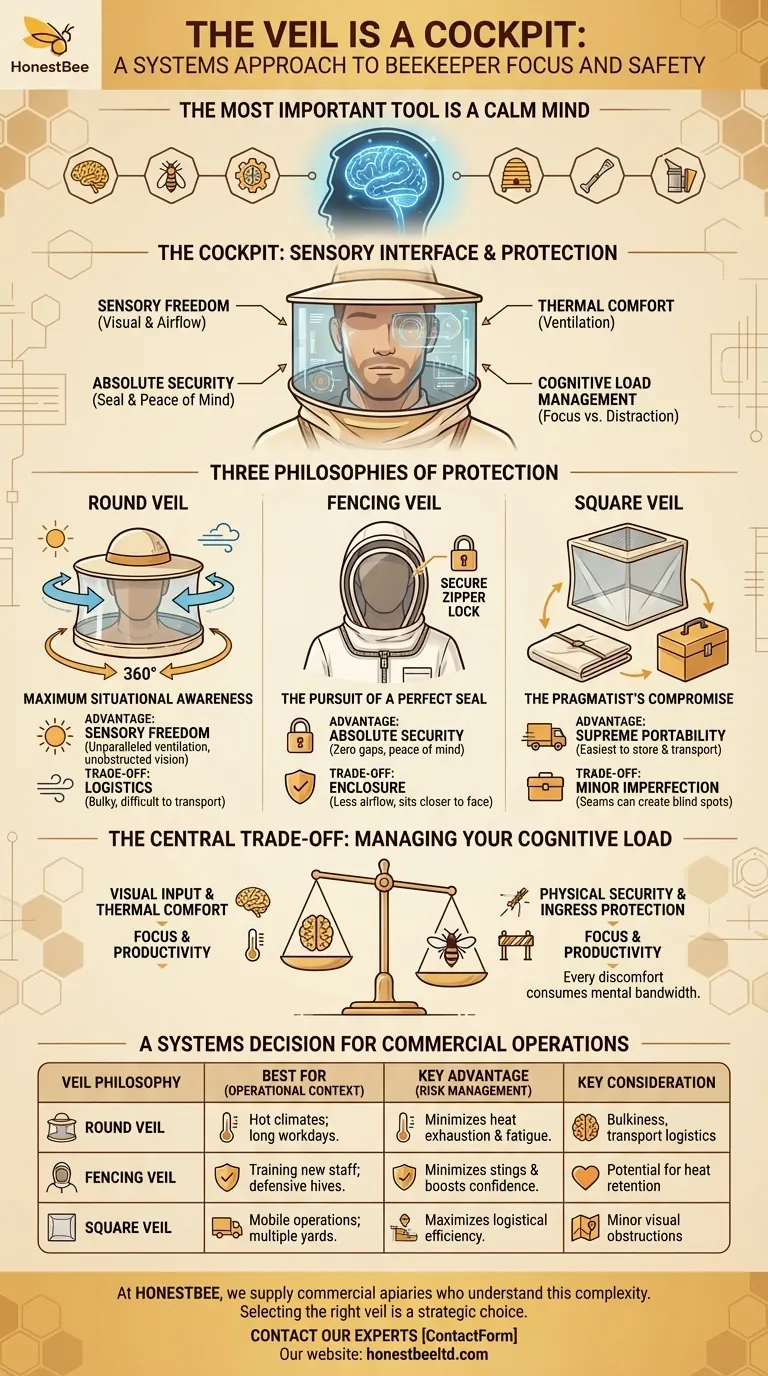
This is why the beekeeping veil is so much more than a simple screen. It is the cockpit from which you operate. It’s the critical interface between your senses and the complex world of the hive. Its design doesn't just protect you from stings; it fundamentally shapes your perception, comfort, and cognitive load.
Three Philosophies of Protection
Choosing a veil is not about picking a product; it’s about aligning with a design philosophy. Each of the three primary styles—Round, Fencing, and Square—represents a different solution to the core engineering problem: how to grant a human safe access to a bee colony without compromising their ability to work effectively.
The Round Veil: Maximum Situational Awareness
Imagine a sweltering August afternoon, with dozens of hives to inspect. The air is heavy. In this scenario, overheating and claustrophobia are enemies of focus.
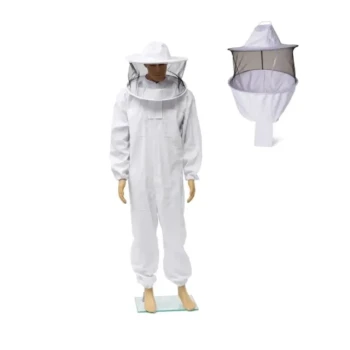
The Round Veil, built on a wide-brimmed hat, is the classic solution for this. It creates a 360-degree buffer of air and space around your head.
- Its advantage is sensory freedom. The unparalleled ventilation keeps you cool, while the distance of the mesh from your face minimizes any sense of confinement. It offers the purest, most unobstructed peripheral vision.
- Its trade-off is logistics. This design is bulky and doesn't pack down easily, a non-trivial consideration for operators managing multiple yards.
The Fencing Veil: The Pursuit of a Perfect Seal
Now, consider working with a notoriously defensive hive, or training a new beekeeper whose confidence is still developing. The slightest anxiety can be transmitted to the bees.
The Fencing Veil is engineered for this psychological reality. It zips directly to the suit or jacket, creating a hermetically sealed unit.
- Its advantage is absolute security. The knowledge that there are zero gaps for a rogue bee to exploit provides immense peace of mind. This frees up mental bandwidth, allowing you to focus entirely on the hive, not your gear.
- Its trade-off is enclosure. The structure sits closer to the face and offers less ambient airflow, which can be a factor in extreme heat.
The Square Veil: The Pragmatist's Compromise
For the beekeeper constantly on the move, whose equipment lives in the back of a truck, efficiency extends beyond the hive. Gear management is part of the job.
The Square Veil is the pragmatic choice. It offers a wide forward view and good ventilation but is designed to fold completely flat.
- Its advantage is supreme portability. It is the easiest to store and transport, making it the workhorse for those who value speed and logistical simplicity.
- Its trade-off is minor imperfection. The seams where the mesh panels meet can create small blind spots, a minor but real compromise compared to the seamless view of a Round Veil.
The Central Trade-Off: Managing Your Cognitive Load
Your brain has a finite capacity for attention. Every annoyance, every discomfort, and every worry consumes a piece of it. A well-chosen veil minimizes these cognitive costs.
-
Visual Input vs. Physical Security: A wide, clear field of view (Round Veil) reduces the mental effort of constantly turning your head. A perfectly sealed suit (Fencing Veil) eliminates the background anxiety of a facial sting. Which distraction is more costly to your focus?
-
Thermal Comfort vs. Ingress Protection: Overheating (a risk with less-ventilated veils) is a powerful inhibitor of clear thinking. But a single bee inside your veil is a guaranteed, instantaneous end to a productive inspection. You are constantly making a risk-management calculation.
For commercial apiaries, these individual calculations scale up to become a critical operational decision. The choice of veil impacts the entire team's efficiency, safety, and endurance through long workdays.
A Systems Decision for Commercial Operations
Outfitting a professional beekeeping crew isn't about buying "the best" veil. It's about implementing a system that maximizes productivity and safety for your specific climate and operational style.
| Veil Philosophy | Best For (Operational Context) | Key Advantage (Risk Management) | Key Consideration |
|---|---|---|---|
| Round Veil | Operations in hot climates; long workdays requiring max comfort. | Minimizes risk of heat exhaustion and cognitive fatigue. | Bulkiness, transport logistics |
| Fencing Veil | Training new staff; working with defensive genetics; high-density apiaries. | Minimizes risk of stings and boosts user confidence, reducing errors. | Potential for heat retention |
| Square Veil | Mobile operations; beekeepers managing multiple, distant yards. | Maximizes logistical efficiency and ease of deployment. | Minor visual obstructions |
At HONESTBEE, we supply commercial apiaries and distributors who understand this complexity. We know that protective gear is a component in the larger system of a productive, profitable apiary. Selecting the right veil is a strategic choice that pays dividends in performance and team morale.
We can help you analyze these trade-offs and equip your operation with the gear that best serves your goals. Contact Our Experts
Visual Guide
Related Products
- Beekeeper Cowboy Hat and Veil for Beekeeping
- White Cotton Beekeeping Jacket and Veil for Bee Keepers
- Professional Square Folding Wire Mesh Beekeeping Veil
- Premium Cotton Beekeeper Suit with Reinforced Fencing Veil
- Premium Cowboy Beekeeper Hat with Visibility Veil Outdoor Professional Beekeeping Protective Gear
Related Articles
- How to Choose the Best Beekeeping Headgear for Safety and Comfort
- The Beekeeper's Blind Spot: The Cognitive Ergonomics of a Veil
- Managing Volatility: The Veil as a Beekeeper's Most Critical Interface
- How to Clean Beekeeping Veils Without Damaging Mesh or Visibility
- How to Choose a Beekeeping Veil: Safety and Comfort for Beginners