Queen cell cups standardize the production test, while precision scales quantify the result. Beekeepers graft one-day-old larvae into plastic queen cell cups mounted on cell-bar strips, allow nurse bees to feed them for 72 hours, and then remove and weigh the royal jelly. Repeating this process across consecutive collection cycles—using a standardized 128-cup frame setup and a balance accurate to 0.001 g—provides an objective basis for comparing colony production capacity.
The reliable measurement is not simply the amount of royal jelly collected once. It is the yield per standardized cup set, per collection cycle, repeated under consistent colony-management conditions.
How the Evaluation System Works
Queen cell cups create a consistent production unit
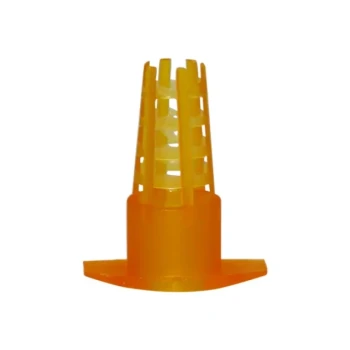
Plastic queen cell cups provide the artificial cells into which larvae are grafted. Because each test uses the same type and number of cups, the beekeeper can compare colonies using a consistent production opportunity.
Cell cups are normally installed on plastic cell-bar strips or frames. A standardized arrangement, such as 128 cups per frame setup, helps control for differences in available grafting sites.
One-day-old larvae are grafted into the cups
The evaluation begins by transferring one-day-old larvae into the prepared cups. The larvae must be comparable in age because larval age affects nurse-bee acceptance and royal jelly feeding behavior.
Using similar grafting technique, larval age, and cup arrangement reduces experimental variation that could otherwise be mistaken for a difference in colony productivity.
Nurse bees feed the larvae for 72 hours
After grafting, the cell-bar assembly is placed in a colony with suitable nurse bees. The workers feed the developing larvae with royal jelly for approximately 72 hours.
At the end of this period, the cups are removed for collection. The royal jelly is extracted from the cups, and the harvested material is prepared for weighing.
How Precision Scales Quantify Royal Jelly Yield
The balance measures the collected jelly by mass
A precision digital balance records the mass of royal jelly harvested from the cup set. Accuracy to 0.001 g is important because individual cup yields are small and differences between colonies may be difficult to detect with ordinary scales.
The operator should weigh the collection container before and after filling, or tare the container on the balance, so the reported value represents royal jelly rather than the container.
Repeated cycles produce a stronger capacity estimate
A single harvest can be affected by grafting success, nurse-bee strength, weather, colony condition, or handling. Royal jelly production capacity is therefore better represented by yields from multiple consecutive collection cycles.
For each cycle, record:
- Number of cups installed
- Number of accepted or usable cups
- Collection duration
- Gross royal jelly weight
- Net royal jelly weight after container subtraction
- Colony identification and management conditions
The average yield can then be calculated as:
Average cycle yield = total net royal jelly harvested ÷ number of collection cycles
Yield can be normalized per cup
Total yield is useful for commercial planning, but yield per cup improves comparisons when acceptance rates differ.
Yield per usable cup = net royal jelly weight ÷ number of usable cups
This distinction matters. A colony may produce a high total because more cups were successfully accepted, while another may produce more jelly per individual cup.
What the Results Reveal About Colony Performance
Standardized tools expose production differences
Under the referenced 128-cup setup, high-producing colonies achieved an average of approximately 145.75 g per collection cycle, with reported values ranging from 122 g to 177 g.
Lower-producing colonies averaged approximately 66.75 g per cycle under comparable conditions. The difference demonstrates why standardized cell cups and accurate weighing are essential for benchmarking apiary productivity.
The result is a comparative phenotype
The measured value describes how much royal jelly a colony produced under a defined protocol. It is a practical production phenotype that can support colony ranking, breeding decisions, and evaluation of management practices.
It should not be interpreted as an unconditional maximum for the colony. Production depends on the grafting protocol, nurse-bee population, season, nutrition, colony strength, and collection interval.
The data supports breeding and commercial planning
Repeated, comparable measurements can help identify colonies or bee strains with stronger royal jelly production. Precision weighing supplies the quantitative evidence needed to distinguish genuinely productive colonies from those that merely performed well in one variable harvest.
For commercial operations, the same records can support production forecasting, batch planning, and evaluation of whether additional equipment or colony resources are justified.
Designing a Reliable Royal Jelly Measurement Protocol
Standardize the consumables
Use the same cup type, cell-bar configuration, cup count, and preparation method across test colonies. Consistent consumables reduce variation caused by differences in cell geometry or installation.
For distributors and commercial apiaries, maintaining reliable availability of cell cup strips, replacement cups, grafting accessories, and compatible frames is important because interruptions can compromise consecutive-cycle comparisons.
Standardize colony conditions
Colony strength, nurse-bee availability, feeding, queen status, grafting time, and collection interval should be recorded and kept as consistent as practical.
The more closely these conditions are controlled, the more confidently yield differences can be attributed to colony production capacity rather than to management differences.
Standardize weighing procedure
The scale should be placed on a stable surface and checked or calibrated according to the manufacturer’s instructions. Use the same container type where possible, tare it before collection, and avoid weighing material contaminated with wax or other debris.
The balance should be suitable for the working environment. A laboratory-level resolution of 0.001 g is valuable for research and comparison, while the final equipment choice should also consider durability, portability, cleaning, and field conditions.
Maintain traceable records
Each result should be linked to a colony, frame setup, collection date, cycle number, and operator. This creates a usable production history rather than a collection of isolated weights.
Traceable records are particularly valuable when comparing feeding programs, bee strains, seasonal performance, or changes in apiary management.
Understanding the Trade-offs
Total yield versus yield per cup
Total cycle yield is the most direct measure for estimating commercial output. However, it can favor colonies that have more accepted cups rather than colonies that produce more jelly per cup.
Recording both total yield and per-cup yield provides a more complete picture.
Precision versus field practicality
A balance accurate to 0.001 g improves sensitivity, but highly precise equipment can be more vulnerable to vibration, wind, moisture, and rough handling. Portable equipment may be easier to deploy, but it still must provide sufficient resolution and repeatability for the intended comparison.
The correct choice is not simply the balance with the smallest displayed increment. It is the balance that delivers dependable measurements in the actual apiary workflow.
Standardization versus natural production conditions
A 128-cup setup makes colonies easier to compare, but it represents a defined test condition rather than every situation encountered in commercial production. A colony’s result may change with season, nectar availability, temperature, nutrition, or nurse-bee population.
Standardized testing should therefore be used for relative comparison, while commercial forecasts should incorporate actual operating conditions.
Consumable consistency versus supply cost
Cell cups and strips are consumables, so cost, availability, compatibility, and delivery time affect the practicality of repeated testing. Cheaper but inconsistent components can introduce more variation than they save in purchasing cost.
For larger operations, dependable one-stop sourcing can reduce downtime by consolidating compatible cups, strips, frames, extraction tools, and weighing equipment into a coordinated supply program.
Common Pitfalls to Avoid
Comparing different cup counts
A colony tested with 128 cups should not be directly compared with one tested using a substantially different number without normalization. Report both total yield and yield per usable cup.
Ignoring container weight
If the collection vessel is not tared, the result will overstate royal jelly production. Net mass must be calculated consistently for every colony and cycle.
Treating one cycle as definitive
One high or low collection may reflect temporary conditions. Consecutive cycles provide a more reliable estimate and help identify inconsistent performance.
Using ordinary scales for small samples
Scales designed for general household or rough field weighing may not resolve small differences in royal jelly mass. Insufficient resolution weakens comparisons between colonies.
Failing to record acceptance and contamination
Rejected cups, larvae loss, wax fragments, and other contaminants can distort the result. These factors should be recorded or excluded through a consistent procedure.
Making the Right Choice for Your Goal
The measurement system should be selected around the decision you need to make.
- If your primary focus is colony ranking: Use identical 128-cup cell-bar setups, repeated 72-hour collection cycles, and a 0.001 g balance to compare average cycle yield.
- If your primary focus is commercial production planning: Track total net grams per cycle together with accepted-cup counts, cycle frequency, and colony labor requirements.
- If your primary focus is breeding selection: Record repeated yield per colony and per usable cup under comparable conditions rather than relying on a single harvest.
- If your primary focus is equipment sourcing: Choose a supplier able to provide compatible cell cups, strips, frames, precision balances, and responsive fulfillment as one coordinated product portfolio.
- If your primary focus is field efficiency: Prioritize a portable, repeatable balance and standardized consumables that can be handled quickly without compromising measurement quality.
With standardized queen cell cups, disciplined collection procedures, and precision weighing, royal jelly production becomes measurable, comparable, and actionable for both beekeeping decisions and commercial supply planning.
Summary Table:
| Component | Purpose | Key Specification |
|---|---|---|
| Queen cell cups | Standardize larval rearing unit | 128 cups per frame setup |
| One-day-old larvae | Ensure uniform nurse bee feeding | Consistent age |
| 72-hour feeding period | Standardize jelly collection | 72 hours |
| Precision scale | Measure royal jelly mass accurately | 0.001 g resolution |
| Repeated cycles | Reduce variability in yield estimate | 3+ consecutive cycles |
| Yield per cup | Normalize for acceptance differences | Net weight / usable cups |
Discover how HONESTBEE’s full-spectrum beekeeping supplies can optimize your royal jelly production testing and commercial success.
For commercial apiaries and distributors, we provide a complete, one-stop sourcing solution that includes:
- High-quality queen cell cups, strips, and frames for standardized production testing
- Precision balances with the exact resolution you need
- Rapid response times and dedicated support to keep your operations running seamlessly
- OEM/ODM support and certified products to expand your market offerings
- Efficient order fulfillment with ultra-fast delivery to reduce downtime
Contact us today to discuss your royal jelly testing needs and discover how we can help you increase productivity, ensure supply reliability, and boost your profit margins.
Related Products
- JZBZ Type Wide Base Plastic Queen Cell Cups for Base Mounting and Queen Rearing
- Clear Black Plain Polystyrene Queen Bee Grafting Cell Cups No Lug for Bee Queen Cup
- Premium Nicot Style Cell Bar Holder and Queen Cell Cup Holder System
- Brown Nicot Queen Cell Cups for Breeding Queen Bees Beekeeping
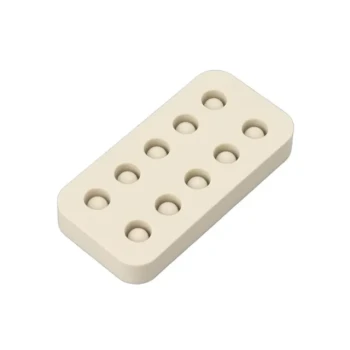
- 10-Cell Silicone Beeswax Bee Queen Cups Forming Mold
People Also Ask
- What are the primary advantages of using plastic queen cell cups? The Industrial Choice for High-Efficiency Apiaries
- What technical advantages do commercial plastic queen cell cups offer? Scale Your Queen Rearing for Maximum Efficiency
- What is the function of standardized plastic Queen Cell Cups? Boost Efficiency in Commercial Larval Grafting
- Why are standardized plastic queen cell cups preferred? Boost Commercial Queen Rearing Efficiency
- Why are standardized plastic queen cell cups typically used in large-scale queen bee production? Boosting Apiary Output