Commercial apiaries can develop heat-tolerant colonies by combining structured queen selection, precise queen rearing, controlled mating, and performance testing under local heat and drought conditions. Grafting tools, queen cell cups, mating nuclei, isolation cages, and instrumental insemination equipment help breeders control which queens and drones contribute to the next generation. The equipment improves genetic control; it does not replace field evaluation, biosecurity, or careful selection of locally suitable stock.
Core takeaway: Build a breeding program around measurable heat-related performance, then use specialized queen-rearing and instrumental-insemination tools to reproduce the best genetic combinations while limiting unwanted introgression. The strongest results come from pairing precision equipment with reliable records, disease screening, and testing across real commercial conditions.
Why Heat-Tolerant Breeding Requires a System
Climate pressure affects the entire colony
Rising temperatures, prolonged droughts, and changing nectar availability can reduce forage quality, disrupt brood rearing, and increase colony stress. Commercial operations therefore need colonies that remain productive and healthy under the environmental conditions where they are managed.
Heat tolerance should be treated as part of a broader breeding objective. Useful selection criteria may include colony productivity, brood continuity, disease resistance, reproductive capacity, docility, and adaptation to local conditions.
Genetic control is more reliable than uncontrolled mating
Open mating can introduce drones from poorly adapted or unwanted lines. This is especially important when colonies are moved between regions or when queens are exchanged commercially.
Controlled mating and instrumental insemination allow breeders to select the queen and drone genetics deliberately. This helps maintain line purity and makes it easier to evaluate whether improved performance is actually associated with the intended breeding line.
Local adaptation must remain central
A heat-adapted subspecies or line, such as Apis mellifera syriaca, may provide useful genetic material for breeding in hot environments. However, no bee line should be assumed to be universally superior; performance depends on local climate, forage, management, disease pressure, and regulatory requirements.
How Specialized Queen-Breeding Tools Support Selection
Precision grafting tools start with the right larvae
Grafting needles and related tools allow breeders to transfer selected young larvae into queen cell cups. This begins the production of queens from colonies that already demonstrate desirable characteristics.
The objective is not simply to produce more queens. It is to produce queens descended from colonies that have performed reliably under heat, drought, disease pressure, and the apiary’s normal production system.
Queen cell cups and rearing frames improve consistency
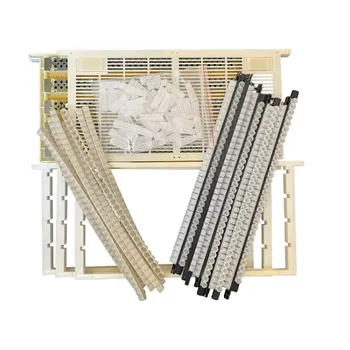
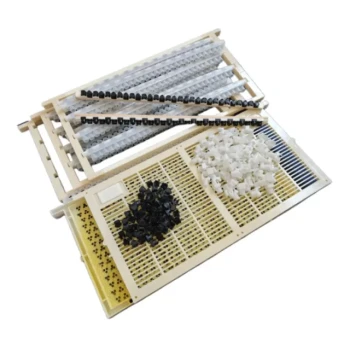
Queen cell cups and queen-rearing frames provide a standardized structure for developing replacement and breeding queens. Consistent equipment helps commercial operations organize larger batches and reduce variation caused by improvised methods.
For distributors and resellers, these products are most valuable when supplied as part of a compatible queen-rearing system rather than as isolated components. Grafting tools, cups, frames, cages, and mating units should work together operationally.
Isolation cages protect selected queens
Queen isolation cages help manage queen movement and prevent unintended mating or premature release. They can also support orderly handling during transfer, evaluation, and colony introduction.
Isolation is particularly important when maintaining valuable breeder lines or operating in areas where uncontrolled drones could compromise a breeding objective.
Mating nuclei support controlled field mating
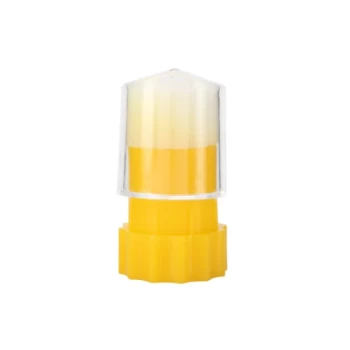
Mating nucs provide a practical environment for raising and evaluating virgin queens before they enter production colonies. They are useful for scaling queen production and for managing queens that are not inseminated instrumentally.
However, mating nuclei do not provide the same level of genetic control as instrumental insemination unless the surrounding drone population is also carefully managed.
How Instrumental Insemination Improves Heat-Tolerance Programs
Select both queen and drone parents
Instrumental insemination equipment enables breeders to collect and use selected drone genetic material with a chosen queen. This is central to controlled hybridization and to preventing unwanted genetic input from unadapted colonies.
A sound program should select parent colonies based on documented performance, not appearance alone. Heat survival, brood production, honey yield, disease response, and behavior should be recorded over time.
Build repeatable breeding combinations
Instrumental insemination makes it possible to reproduce specific queen–drone pairings or breeding lines more consistently than relying solely on open mating. This accelerates the process of comparing genetic combinations across multiple colonies.
The equipment therefore functions as a selection-control tool. It does not independently make a queen heat tolerant; it helps breeders reproduce and test genetics associated with that trait.
Protect line purity during expansion
When commercial apiaries expand colony numbers, uncontrolled mating can gradually dilute a selected line. Controlled insemination helps preserve the intended genetic direction while producing queens for replacement, increase colonies, or customer distribution.
This is particularly valuable for breeders supplying queens across regions, where the receiving apiary may have a different drone population and environmental profile.
A Practical Commercial Breeding Workflow
1. Define measurable breeding targets
Start with a clear trait profile rather than using “heat tolerant” as an undefined label. Relevant targets may include sustained brood production during hot periods, colony survival through heat and drought, stable honey production, disease resistance, and acceptable temperament.
The final criteria should reflect the customer’s operating environment and production model.
2. Identify and document breeder colonies
Select candidate colonies from stock that has demonstrated strong performance under relevant local conditions. Maintain records for parentage, queen age, colony strength, production, disease observations, and seasonal performance.
A single strong season is not enough to establish a reliable line. Repeated evaluation improves confidence in the selection decision.
3. Rear queens from selected mothers
Use grafting tools, queen cell cups, and queen-rearing frames to produce queens from the chosen maternal lines. Isolation cages and organized handling procedures help maintain traceability as queens move through the production process.
The same labeling and recordkeeping system should follow each queen from grafting through mating, insemination, testing, and sale.
4. Control the mating stage
Use mating nucs when field mating is appropriate and local drone control is adequate. Where precise parentage is required, use instrumental insemination equipment to pair selected queens with selected drones.
This two-path system allows an apiary to reserve instrumental insemination for high-value breeder lines while using mating nucs for larger-scale queen production.
5. Test progeny under commercial conditions
Introduce queens into test colonies and compare their performance with established controls. Evaluation should occur under the temperatures, drought conditions, forage patterns, and disease pressures that matter to the operation.
Testing should consider both heat resilience and commercial usefulness. A colony that tolerates heat but produces poorly, behaves aggressively, or lacks disease resistance may not be a suitable production line.
6. Expand only after verification
Once a breeding combination performs consistently, use controlled queen rearing and insemination to multiply the line. Maintain enough genetic diversity to avoid excessive narrowing of the breeding population.
For commercial buyers, this process creates a stronger basis for claims about adaptation and performance than equipment ownership alone.
Understanding the Trade-offs
Precision equipment requires technical skill
Instrumental insemination is not a plug-and-play process. It requires trained personnel, appropriate handling procedures, accurate records, and equipment that supports precise work.
Distributors should therefore evaluate not only product specifications but also training, technical support, replacement parts, and after-sales service.
Controlled breeding can narrow genetic diversity
Selecting strongly for one trait may unintentionally reduce variation or weaken other useful characteristics. A heat-tolerant line still needs adequate disease resistance, productivity, reproductive performance, and behavioral suitability.
Breeding objectives should remain balanced, with periodic review of colony health and field performance.
Equipment does not compensate for weak selection criteria
Queen cups, grafting needles, cages, and insemination devices can make a breeding process more organized and repeatable. They cannot turn poorly selected parent colonies into a reliable heat-adapted strain.
The quality of the breeding decisions remains more important than the number of tools purchased.
Biosecurity and regulatory controls remain essential
Moving queens, drones, or genetic material between regions can introduce unwanted pests, pathogens, or genetics. Commercial operations must follow applicable movement, quarantine, and breeding regulations.
Closed biosecurity systems, controlled exchanges, and clear traceability help protect both the apiary and its customers.
Supply reliability affects breeding continuity
Queen-rearing programs operate on biological schedules. Delays in receiving cell cups, grafting tools, cages, frames, or insemination components can disrupt production cycles.
For wholesalers, resellers, and commercial apiaries, a one-stop supplier with broad inventory, rapid response, and efficient order fulfillment can be operationally important—not merely convenient.
How to Apply This to Your Apiary or Product Portfolio
A practical purchasing strategy should match equipment capability to the apiary’s breeding scale, technical expertise, and level of genetic control required.
- If your primary focus is heat adaptation: Prioritize documented selection and field testing, then use grafting equipment and controlled insemination to reproduce queens from colonies that perform reliably in hot, dry conditions.
- If your primary focus is large-scale queen production: Build an integrated system around grafting tools, queen cell cups, rearing frames, mating nucs, and isolation cages to support consistent throughput and traceability.
- If your primary focus is maintaining premium genetic lines: Invest in instrumental insemination equipment, selected drone material, isolation procedures, and detailed parentage records to limit unwanted introgression.
- If your primary focus is distribution or resale: Source a compatible full-spectrum portfolio and emphasize dependable inventory, technical expertise, rapid customer service, and fast delivery for time-sensitive breeding operations.
- If your primary focus is long-term colony resilience: Select for heat tolerance alongside disease resistance, productivity, reproductive capacity, and suitability to the local environment rather than pursuing a single trait in isolation.
With disciplined selection, controlled mating, and dependable equipment support, commercial apiaries can develop heat-adapted colonies while building a more consistent and defensible breeding business.
Summary Table:
| Tool/Equipment | Role in Heat-Tolerant Breeding | Key Considerations |
|---|---|---|
| Grafting Needles & Tools | Transfer selected larvae from robust colonies into queen cups | Choose precise tools for minimal larval damage |
| Queen Cell Cups & Rearing Frames | Standardize queen rearing to improve consistency | Ensure compatibility with grafting tools and frames |
| Mating Nuclei | Evaluate virgin queens in field conditions | Require drone control for genetic purity |
| Isolation Cages | Protect selected queens and prevent unintended mating | Essential for maintaining line purity |
| Instrumental Insemination Equipment | Precisely control queen and drone genetics | Requires trained personnel and technical support |
Ready to strengthen your commercial apiary with heat-tolerant colonies? Explore HONESTBEE's comprehensive range of beekeeping tools and equipment—from grafting and rearing systems to instrumental insemination devices—designed for one-stop sourcing. As a trusted partner for commercial apiaries and distributors, we offer rapid response, dedicated service, expert advice, and ultra-fast delivery to keep your breeding programs on schedule. Contact us today for premium supply solutions that support your genetic goals and operational efficiency. Get in touch now!
Related Products
- Queen Bee Artificial Insemination Instrument Equipment for Instrumental Insemination
- Plastic Chinese Queen Grafting Tool for Bee Queen Rearing
- Stainless Steel Queen Grafting Tool for Beekeeping and Bee Queen Grafting
- Stainless Steel Beekeeping Queen Grafting Tool for Honey Bee Rearing
- Retractable Chinese Queen Rearing Grafting Tools Equipment
People Also Ask
- Why is maintaining sanitary conditions important during artificial insemination? Protect Your Queen from Fatal Infections
- Why are artificial insemination instruments critical in bee hybridization? Master Genetic Control & Pure Breeding
- What is the core value of bee artificial insemination instruments in breed improvement? Achieve Precise Genetic Control
- Why is professional bee artificial insemination equipment considered a core tool for genetic control in honeybee breeding? Ensure 100% Purity
- Why is high-purity CO2 used for queen bee artificial insemination? Unlock Precision Breeding & Faster Egg-Laying