Commercial apiaries can reduce pesticide spray damage by temporarily confining colonies inside the hive with screened entrances, supplying internal feed through frame feeders, and replacing solid covers with gauze ventilation covers. A frame feeder provides clean sugar syrup while foragers cannot leave, while gauze covers maintain airflow and reduce overheating during confinement. The setup should be installed before spraying, kept shaded and monitored, and removed promptly after the pesticide hazard has passed.
The central principle is controlled confinement: keep bees inside to prevent direct pesticide exposure, but provide enough food, space, ventilation, moisture, and shade to prevent a secondary loss from starvation or heat stress.
Prepare Colonies Before Spraying Begins
Confirm the spray window
Commercial apiaries should coordinate with nearby growers to confirm the application time, chemical type, expected duration, and re-entry interval. The product label and local agricultural regulations should determine when bees can safely resume normal flight.
If the timing is uncertain, moving colonies away from the spray zone is generally preferable to confinement. When relocation is impractical, temporary in-hive protection becomes the operational alternative.
Install entrance screens in advance
Fit breathable entrance screens or wire-mesh entrance gates before spraying begins, ideally after most foragers have returned the previous evening or early in the morning before application.
The screen must prevent bees from exiting while allowing continuous air movement. A solid entrance block can restrict ventilation and increase the risk of overheating.
Inspect the colony’s internal space
Confinement brings the entire foraging population back into the hive. Ensure there is sufficient internal volume, and consider adding an empty shallow hive body when the colony is crowded.
Extra space reduces congestion, agitation, and the likelihood that bees will cluster heavily around the entrance or ventilation openings.
Use Frame Feeders to Prevent Starvation
Install the feeder inside the brood box
A frame feeder occupies the position of a standard frame and provides syrup directly inside the colony. It is particularly useful during short spray-related confinement because bees can access nutrition without leaving the hive.
Install the feeder securely before closing the hive and verify that bees can reach the syrup safely. Follow the feeder manufacturer’s instructions regarding capacity, float systems, and leak prevention.
Supply clean sugar syrup
Use clean 1:1 sugar syrup for short-term support during confinement, unless local management conditions require a different feeding program. The objective is to provide immediate carbohydrate energy while bees are unable to forage.
Avoid placing potentially contaminated nectar, pollen, or field-collected forage inside the hive. Where confinement is extended, commercial operators may also need to provide an appropriate clean pollen supplement or pollen cake.
Prevent feeder-related problems
Check that the feeder does not leak, because spilled syrup can trigger robbing, drowning, or excessive colony disturbance. Internal feeders should be positioned and filled in a way that minimizes bee crowding and allows safe access.
For large-scale operations, standardizing feeder sizes and inspection procedures helps distributors and apiary managers reduce setup errors across many colonies.
Use Gauze Ventilation Covers to Control Heat
Replace solid covers with screened ventilation
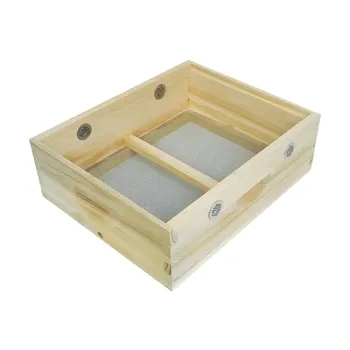
A gauze or mesh ventilation cover allows warm air and moisture to escape while preventing bees from flying out. It is especially important when entrance screens are closed and the normal airflow path is restricted.
The mesh should be sufficiently open to provide meaningful ventilation while remaining secure against escape. The cover must also fit tightly enough to prevent gaps where bees could exit.
Add shade and evaporative cooling
Keep confined hives in full shade during the spray period. Direct sunlight can raise internal temperatures rapidly, particularly when colonies contain large numbers of returning foragers.
Wet burlap, damp cloth, or water-saturated towels placed above the screened cover can provide evaporative cooling. The material should not block the mesh or collapse against the hive in a way that restricts airflow.
Provide controlled moisture
A damp sponge or similar moisture source placed above the top bars can help bees obtain water for cooling, provided it is clean, securely positioned, and replaced when necessary. Do not allow free water to pool inside the hive, where bees may drown or humidity may become excessive.
The goal is cooling without saturation: ventilation must continue while the colony receives enough moisture to regulate temperature.
Manage the Confinement Period
Monitor temperature and bee behavior
Inspect confined colonies for signs of heat stress, including heavy bearding, loud agitation, excessive fanning, or bees clustering densely around ventilation points. These symptoms indicate that shade, airflow, internal space, or cooling measures may be inadequate.
Where possible, use hive temperature monitoring or regular physical inspections during hot weather. Large commercial apiaries should prioritize colonies in direct sun, weakly ventilated locations, or areas with high ambient temperatures.
Keep the confinement as short as practical
Entrance screens should remain in place only for the period necessary to avoid the spray hazard. Prolonged confinement increases the risks of heat stress, nutritional shortages, moisture imbalance, and colony disruption.
Open the entrances and remove temporary covers once the spray operation is complete and the applicable safety interval has passed.
Restore normal ventilation promptly
After the hazard clears, remove wet coverings if they restrict airflow and return the hive to its normal lid and entrance configuration. Confirm that bees can resume flight and that the feeder or cooling materials do not interfere with ordinary colony operations.
A delayed reopening can cause more harm than the original exposure risk, particularly during warm weather.
Build a Repeatable Commercial Protection System
Standardize the accessory package
For distributors, wholesalers, and commercial apiaries, a practical pesticide-response package may include:
- Frame feeders for internal syrup supply.
- Gauze or mesh top covers for continuous ventilation.
- Breathable entrance screens to prevent flight.
- Empty shallow hive bodies for additional internal volume.
- Wettable burlap or hive covers for evaporative cooling.
- Moisture supplies such as clean sponges or water containers.
- Shade materials and temperature-monitoring tools.
A standardized package supports faster deployment when growers provide short notice of spraying.
Maintain inventory before the spray season
Accessory shortages are most damaging when pesticide applications are scheduled with little lead time. Stock replacement mesh, feeders, covers, fasteners, and cooling materials before the high-risk season begins.
For B2B buyers, one-stop sourcing can simplify compatibility management by ensuring that feeders, covers, and screens are available in matching hive dimensions.
Provide clear operating instructions
Every product shipment should be supported by concise guidance covering installation, ventilation clearance, cleaning, storage, and removal. Dedicated technical support is valuable when customers are managing hundreds or thousands of colonies under time pressure.
Rapid order fulfillment also matters because pesticide notifications may arrive only shortly before treatment.
Understanding the Trade-offs
Confinement prevents exposure but creates heat risk
Keeping bees inside reduces direct contact with airborne spray residues and contaminated flowers. However, a closed hive can overheat quickly if the entrance, top, and sides do not provide adequate airflow.
Entrance screens should therefore be paired with screened top ventilation, shade, and—when conditions require it—evaporative cooling.
Wet coverings cool but can restrict airflow
Wet burlap and similar materials can lower hive temperature through evaporation. If placed directly over ventilation openings or allowed to become heavy and compacted, they may reduce airflow instead.
Use damp materials as a cooling aid, not as a substitute for gauze ventilation covers.
Feeding supports colonies but increases management demands
Frame feeders help prevent starvation, but syrup leakage can create robbing, drowning, or sanitation problems. Feeders must be inspected, installed correctly, and cleaned between uses.
They also do not replace adequate pollen availability during longer confinement periods.
Screens are temporary safeguards, not permanent equipment
Entrance screens and gauze covers are designed for controlled, short-term protection. Leaving colonies sealed after the hazard has passed can produce heat stress, poor ventilation, and delayed foraging.
The reopening decision should be based on the actual spray hazard, weather, and applicable label or regulatory requirements.
How to Apply This to Your Apiary Program
Select the equipment package according to colony size, local temperature, hive design, and the expected duration of pesticide spraying.
- If your primary focus is pesticide exposure reduction: Install breathable entrance screens before spraying so returning foragers remain inside the hive during the active hazard period.
- If your primary focus is colony nutrition: Use frame feeders filled with clean sugar syrup to support confined bees without relying on potentially contaminated field forage.
- If your primary focus is heat management: Replace solid covers with gauze ventilation covers, add shade, and use damp cooling materials without blocking airflow.
- If your primary focus is large-scale operational efficiency: Standardize compatible feeders, screens, covers, and inspection procedures across the apiary and maintain seasonal inventory.
- If your primary focus is supply reliability: Work with a supplier able to provide a full accessory range, rapid response, technical assistance, and efficient order fulfillment.
With the right accessories and disciplined timing, commercial apiaries can turn temporary hive confinement into a controlled, repeatable defense against pesticide spray damage.
Summary Table:
| Accessory | Purpose | Key Benefit |
|---|---|---|
| Frame feeder | Internal syrup supply | Prevents starvation during confinement |
| Gauze ventilation cover | Airflow and heat escape | Reduces overheating risk |
| Breathable entrance screen | Prevents flight | Blocks pesticide exposure |
| Empty shallow hive body | Extra space | Reduces congestion and stress |
| Shade and cooling materials | Temperature control | Cools the hive during heat stress |
Protect your colonies with HONESTBEE's full line of hive accessories. From frame feeders to gauze covers, we offer wholesale solutions for commercial apiaries and distributors. Our one-stop sourcing, rapid delivery, and dedicated support ensure you're ready for any spraying event. Contact us today at #ContactForm. For distributors, we provide competitive margins, OEM/ODM support, and certified reliability. Don't wait until the spray warning—stock up and safeguard your bees now!
Related Products
- Inner Beehive Cover for Beekeeping Bee Hive Inner Cover
- Professional In-Hive Frame Bee Feeder by HONESTBEE
- In-Hive Dual Compartment Frame Bee Feeder for Targeted Colony Nutrition
- Heavy-Duty Stainless Steel Clip-On Frame Perch
- Stainless Steel Round Beehive Air Vents for Ventilation
People Also Ask
- What is the purpose of the inner cover in a beehive? A Key to Hive Health & Easy Management
- What is the function and placement of an inner cover in a beehive? Essential Hive Management Guide
- What is the purpose of the inner and outer covers in a beehive? Essential for Hive Health & Management
- What is a beehive's inner cover and how is it used? Essential Guide for Hive Insulation and Ventilation
- What are the functions of the inner and outer covers on a beehive? Essential Guide for Hive Protection and Management