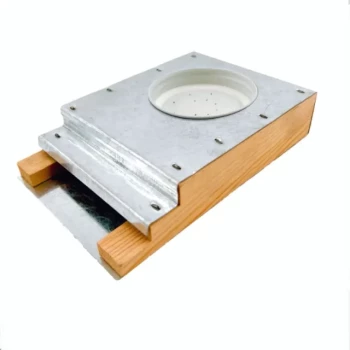
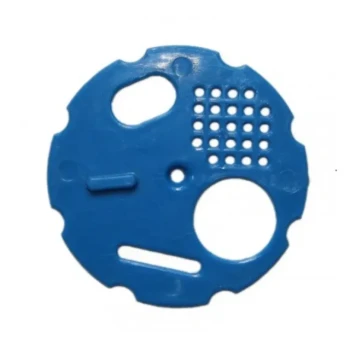
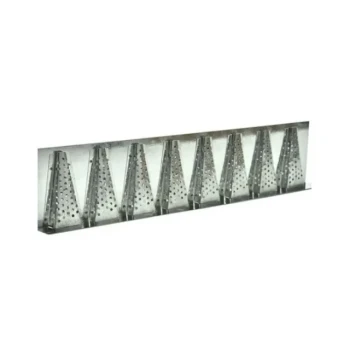
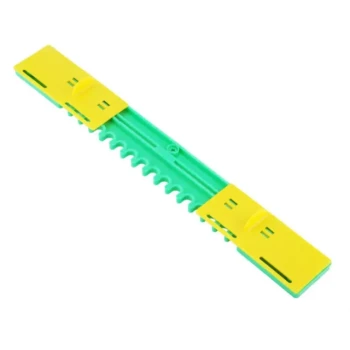
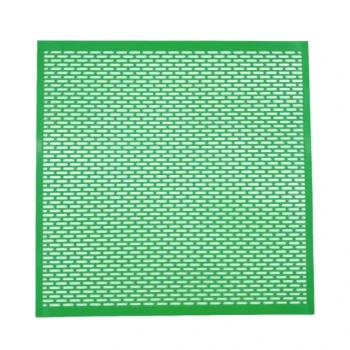
To effectively mitigate the disadvantages of a bottom entrance, you must implement physical barriers and elevation. The primary risks can be managed by installing entrance reducers to control the opening size, utilizing robbing screens and mouse guards to filter out intruders, and placing the hive on a stand to distance it from ground-level threats.
Core Takeaway A bottom entrance leaves a colony vulnerable to theft and predation if left wide open. By layering defenses—specifically size restriction, species-specific barriers, and elevation—you transform a defenseless gap into a secure, manageable gateway.
Controlling the Flow of Traffic
The most immediate method for securing a bottom entrance is controlling how wide the door is.
Using Entrance Reducers
An entrance reducer is your first line of defense. By physically shrinking the width of the opening, you drastically reduce the surface area the colony must defend.
This creates a "choke point." Instead of guarding the entire bottom board, guard bees can concentrate their forces in a small area, making the hive much more defensible against intruders.
Blocking Specific Threats
While a reducer limits general access, specific tools are required to stop determined pests and robbers.
Preventing Resource Theft
Robbing screens are essential for stopping other bees or wasps from stealing honey.
These devices confuse intruders who try to enter directly, while allowing resident bees—who know the specific detour required—to come and go freely. This is critical during nectar dearths when robbing pressure is high.
Excluding Rodents
Mouse guards are a necessity, particularly as the weather cools.
Mice view a warm hive with a bottom entrance as an ideal winter nest. A mouse guard places a grid over the entrance that is large enough for bees to pass through but too small for rodents to squeeze past.
Changing the Physical Environment
Sometimes the issue is not the entrance itself, but where the entrance sits relative to the ground.
Utilizing Hive Stands
Placing your apiary on a hive stand elevates the bottom entrance away from the soil.
This vertical separation acts as a barrier against dampness and ground-dwelling pests. It makes access significantly more difficult for predators like skunks, which rely on scratching at ground-level openings to lure bees out.
Understanding the Trade-offs
While restricting access is generally safer, there are operational balances to consider.
Ventilation and Congestion
Heavily restricting a bottom entrance improves defense but can reduce airflow.
In high heat, a small opening may lead to overheating or moisture buildup. Additionally, during peak nectar flow, a reduced entrance can cause "traffic jams," slowing down foragers and reducing overall efficiency.
Making the Right Choice for Your Goal
The specific mitigation you choose should depend on the immediate threat your apiary faces.
- If your primary focus is preventing colony collapse from robbing: Install a robbing screen immediately to baffle intruders while allowing your bees to forage.
- If your primary focus is winter protection: Install mouse guards to physically block rodents from nesting inside the warm hive box.
- If your primary focus is general defense for a weak colony: Use an entrance reducer to shrink the opening to the smallest setting, allowing a few guards to defend the hive effectively.
- If your primary focus is reducing ground pests: Place the hive on a sturdy stand to elevate the entrance out of easy reach.
Secure the perimeter effectively, and your colony can focus on production rather than survival.
Summary Table:
| Mitigation Method | Primary Threat Addressed | Key Benefit |
|---|---|---|
| Entrance Reducer | Intruders & Weak Defense | Concentrates guard bees at a defensible choke point |
| Robbing Screen | Wasps & Rival Bee Colonies | Baffles intruders while allowing resident foragers passage |
| Mouse Guard | Rodents & Winter Nesting | Physical grid blocks mice while permitting bee movement |
| Hive Stand | Skunks, Dampness & Soil Pests | Elevates entrance to deter ground-level predators |
| Elevation | Moisture & Cold Air | Improves drainage and reduces humidity near the entrance |
Scaling Your Apiary? Partner with HONESTBEE for Professional Solutions
Protecting your colonies is the first step toward a productive harvest. At HONESTBEE, we specialize in supporting commercial apiaries and distributors with high-quality, wholesale beekeeping equipment. From essential entrance reducers and mouse guards to industrial-grade hive-making and honey-filling machinery, our comprehensive portfolio ensures your operation runs at peak efficiency.
Whether you are expanding your commercial fleet or stocking a distribution network, we provide the tools, specialized hardware, and honey-themed cultural merchandise you need to succeed.
Ready to elevate your beekeeping business? Contact us today to discuss your wholesale requirements!
Related Products
- Steel Round Disc Entrance Reducer for Flexzion Bee Hive Nuc Box Gate
- Beehive Entrance Reducer Guardian Metal Hive Entrance for Bees
- HONESTBEE Entrance Bee Feeder Professional Hive Nutrition Solution for Beekeeping
- Beehive Entrance Discs Plastic Bee Entrance Disc for Bee Hives
- Professional Hive Front Entrance Bee Feeder
People Also Ask
- What is the purpose of an entrance reducer for a beehive? Strengthen Colony Defense and Prevent Robbery
- Why are entrance reducers used to counter hornet infestations? Protect Your Hive with Strategic Choke Points
- Why is it critical to maintain a smaller entrance for a newly established bee hive? Boost Colony Growth and Security
- What is the function of an entrance reducer on a beehive? Strengthen Colony Defense and Climate Control
- Under what conditions should a beekeeper adjust the size of a beehive entrance? Seasonal & Defense Management Tips