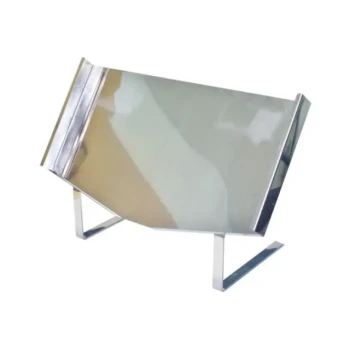
Elevated hive stands function as passive protective equipment: they raise the hive entrance above ground level, making it harder for skunks, mice, ants, and other small pests to reach or enter the colony. Against skunks specifically, the higher entrance forces the animal to reach upward, exposing its vulnerable underbelly to defensive bee stings and often discouraging further attacks.
The stand creates distance, delay, and defensive advantage. It does not make a hive completely predator-proof, but it removes the easy ground-level access that makes colonies vulnerable to nocturnal pests.
How Elevation Disrupts Predator Behavior
It removes easy access to the entrance
A hive placed directly on the ground is convenient for small mammals. Pests can approach the entrance, scratch at the landing area, and attempt to provoke or consume guard bees.
A robust stand raises the bottom board and entrance out of immediate paw or nose range. The added height forces pests to climb, stretch, or reposition themselves before reaching the colony.
It exposes skunks to defensive stings
Skunks commonly scratch near a low hive entrance to draw guard bees outside, where they can be eaten. When the entrance is elevated, the skunk must reach upward to continue the attack.
This posture exposes the animal’s less-protected underside to the bees. The resulting stings can deter the skunk from returning, making elevation a behavioral defense as well as a physical one.
It slows and discourages repeated attempts
Predators prefer easy access to food. An elevated entrance increases the effort required to reach bees or hive contents and prevents pests from immediately exploiting the hive opening.
That delay gives the colony more opportunity to defend itself and can cause the pest to abandon the attempt before gaining access.
How Stands Protect Against Crawling Pests
They separate the hive from the ground
Elevation creates a physical gap between the bottom board and ground-level vegetation, soil, and debris. This makes it more difficult for crawling pests to approach the hive directly or exploit gaps around the base.
The separation also reduces contact with damp ground, which helps protect wooden hive components from moisture-related deterioration.
They can support mechanical ant barriers
Legged stands can be combined with barriers around the legs, such as suitable oil-moat containers. Ants attempting to climb toward the hive encounter the barrier before reaching the hive body.
This approach can be especially useful for young or weak colonies, which may be less capable of defending themselves against large ant infestations.
They provide more pest-control options
A stand gives distributors and beekeepers a platform for integrating additional defenses, including leg barriers, cleared ground beneath the hive, and improved inspection access.
The stand is therefore not a single-purpose product. It forms part of a broader pest-management system.
Why Stand Design Matters
Stability must come before height
A stand is only protective if it keeps the hive level and stable. Excessive movement or an unstable base can stress the colony, damage equipment, or create new access points for pests.
For commercial supply and resale, robust construction, load capacity, weather resistance, and compatibility with common hive formats are key product considerations.
The entrance should be meaningfully elevated
A small increase in height may not provide enough disadvantage to a determined predator. The stand should raise the entrance sufficiently to make direct scratching and reaching difficult while remaining practical for hive handling.
The correct height depends on hive design, site conditions, beekeeper ergonomics, and local predator pressure.
The apiary site still affects performance
An elevated hive can remain vulnerable if branches, stacked materials, tall vegetation, or adjacent structures give pests an easy route upward.
Maintaining a clear area around the stand helps preserve the intended gap and makes pest activity easier to detect.
Understanding the Trade-offs
Elevation is a deterrent, not a complete barrier
A determined skunk or other mammal may still climb a suitable stand. Mice may also exploit small openings or climb if the hive design and surrounding conditions allow it.
Stands should therefore be paired with appropriate entrance protection, site management, and regular inspections rather than treated as a standalone solution.
Oil barriers require responsible handling
Oil moats can restrict ants, but they must be designed to prevent spills, contact with bees, soil contamination, and accidental access by children or animals. Water evaporates more quickly, while oil can create separate environmental and handling concerns.
Product selection should prioritize secure containers, stable leg placement, and safe maintenance procedures.
Greater height can complicate hive work
A higher hive improves working posture for some beekeepers, but it can also make lifting boxes, moving colonies, and managing heavy supers more difficult.
For wholesalers and resellers, offering multiple stand heights and load ratings is more useful than promoting one universal configuration.
Value for Commercial Sourcing and Apiary Operations
A stand adds functional value to a hive package
For distributors and B2B resellers, hive stands can be positioned as part of a complete protection and installation solution rather than as an isolated accessory.
A broader product portfolio may include compatible stands, entrance reducers, pest barriers, replacement bottom boards, and other apiary hardware.
Reliability affects the protection claim
A stand that bends, shifts, or deteriorates outdoors cannot consistently maintain the elevation needed for predator deterrence. Durable materials and dependable order fulfillment are therefore directly connected to the product’s practical value.
Suppliers should be prepared to provide clear specifications for dimensions, material, capacity, weather resistance, and compatibility.
Fast support helps resolve site-specific needs
Apiaries differ in terrain, colony size, hive configuration, and pest pressure. Responsive technical service helps customers select the correct stand rather than relying on a generic height or design.
For resellers, knowledgeable support and efficient fulfillment can be as important as the stand itself when customers need a complete, quickly deployable solution.
How to Apply This to Your Project
Choose the stand as part of a layered protection strategy, matching its design to the hive, terrain, pest pressure, and handling requirements.
- If your primary focus is deterring skunks and small mammals: Select a stable stand that raises the entrance sufficiently above ground level and keep surrounding vegetation and climbing routes clear.
- If your primary focus is controlling ants: Use a compatible legged stand with a carefully maintained, spill-resistant barrier system and inspect it regularly.
- If your primary focus is protecting hive equipment: Choose a durable, weather-resistant stand that keeps the bottom board away from damp soil and improves airflow beneath the hive.
- If your primary focus is commercial resale: Source multiple compatible models with clear load, dimension, and material specifications, supported by responsive service and reliable fulfillment.
- If your primary focus is beekeeper ergonomics: Balance working height against the effort required to lift, inspect, and move loaded hive components.
A well-designed elevated hive stand gives the colony distance from pests, time to respond, and a stronger defensive position.
Summary Table:
| Function | Description |
|---|---|
| Removes easy access | Raises entrance above ground, forcing pests to climb or stretch before reaching the colony. |
| Exposes skunks to stings | Height forces skunks to expose their vulnerable undersides, discouraging attacks. |
| Slows repeated attempts | Increases effort needed, giving bees more time to defend and often causing pests to abandon. |
| Separates from ground | Prevents crawling pests like ants from direct access and reduces moisture damage. |
| Supports barriers | Allows integration of oil moats and other mechanical barriers at legs. |
| Enables better ergonomics | Reduces back strain for beekeepers, provided height is balanced with handling practicality. |
Looking for reliable hive stands that deter pests and support your apiary? At HONESTBEE, we supply commercial-grade elevated hive stands and a complete range of beekeeping equipment. Our one-stop sourcing ensures durable, weather-resistant hardware, backed by fast delivery and expert support. Whether you're a distributor seeking OEM/ODM options or a beekeeper needing dependable protection, we've got you covered. Contact us today to discuss your requirements and get a tailored quote!
Related Products
- Metal Hive Feet Bee Hive Stand for Ant Protection
- Professional Ant-Proof Beehive Stand with Integrated Moat for Beekeeping
- Metal Bee Hive Stand Bee Box Stand for Beekeeping
- Plastic Bee Hive Stand for Beekeeping
- Professional Galvanized Steel Frame Rest for Beehives
People Also Ask
- What are the benefits of elevating a bee hive with a stand or base? Protect Your Colony and Your Back
- How does a beehive stand protect against predators and pests? Essential Strategies for Colony Security
- How should the height of a beehive stand be determined? Find Your Ergonomic Sweet Spot
- What to stand a beehive on? The Best Foundation for a Healthy, Manageable Apiary
- What is the best base for a beehive? Choose the Right Stand for Colony Health