At sub-zero extremes, commercial apiaries must shift from simple hive insulation to controlled overwintering. When temperatures reach approximately –30°C to –55°C, colonies generally cannot remain outdoors safely and should be moved into temperature-regulated wintering houses or climate-controlled sheds. At less extreme—but still severe—temperatures, properly configured wraps, moisture control, feeding systems, wind barriers, and restricted inspections can reduce heat loss and winter mortality.
The central issue is not simply keeping hives warm. Successful overwintering depends on balancing colony heat retention, moisture removal, ventilation, food reserves, pest exclusion, and timely access to equipment.
How Extreme Cold Changes Hive Management
Outdoor overwintering becomes unreliable
Honey bees survive winter by forming a cluster and generating heat through food consumption and movement. At exceptionally low temperatures, prolonged cold can prevent the cluster from relocating to food stores, increase energy consumption, and raise the risk of starvation even when honey remains elsewhere in the hive.
In regions reaching –30°C to –55°C, commercial operators should treat outdoor overwintering as unsuitable and plan for indoor wintering infrastructure instead.
Short seasons compress the entire operating cycle
Severe continental climates often combine extreme winter cold with short summer seasons. Colonies have less time to expand, replace winter losses, build stores, and produce a marketable honey surplus.
This makes winter preparation an asset-protection process, not merely a seasonal maintenance task. A lost colony represents lost bees, equipment utilization, labor, and spring production capacity.
Hive inspections must become minimal and purposeful
Opening a hive in very cold conditions can disrupt the cluster and expose brood to chilling. Beekeepers should avoid routine internal work when ambient temperatures are below approximately 15.5°C (60°F), except where an urgent, well-defined intervention is necessary.
Winter management should rely on preparation, external observation, weight checks where practical, and carefully planned emergency feeding rather than frequent inspections.
Equipment That Protects Colonies in Extreme Winter
Climate-controlled wintering houses
For the most severe environments, the primary equipment solution is a temperature-regulated overwintering facility. The reference range for indoor wintering is approximately 4°C to 7°C (38°F to 45°F) with active air exchange.
The facility should prevent severe heat loss while avoiding excessive warmth, stagnant air, and condensation. Climate control is therefore more than a heater: it includes temperature regulation, ventilation, humidity management, monitoring, and reliable power or backup planning.
Heavy-duty hive wraps and wind barriers
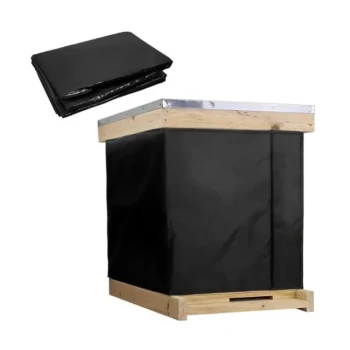
Where outdoor wintering remains appropriate, insulated hive wraps can reduce exposure to freezing winds. Foam-board insulation and dark-colored tar paper can help limit heat loss and absorb solar warmth.
Wraps must not seal the hive completely. Small, correctly positioned ventilation openings are necessary, and the entrance must remain functional so that moisture and gases can escape.
Moisture-control covers and quilt boxes
A winter cluster produces moisture as it consumes food and generates heat. If that moisture condenses on the inner cover and falls back onto the bees, the colony can become chilled even when the hive is insulated.
Top moisture pads, quilt boxes, or other absorbent inner-cover systems help manage condensation. These components should work with ventilation rather than replace it.
Entrance reducers, mouse guards, and bottom boards
Entrance reducers limit drafts and help conserve the colony’s energy. Mouse guards prevent rodents from entering during the period when bees are clustered and less able to defend the entrance.
Bottom-board configuration also affects airflow and pest protection. Reversible solid bottom boards set to their winter position can support controlled lower ventilation, provided the overall system does not trap moisture.
Feeding and Food-Reserve Management
Preserve sufficient honey stores
Honey is the colony’s primary winter energy source. Over-harvesting at the end of the season is a direct winter-survival risk because bees need those stores to maintain cluster heat and move through the hive.
Commercial operators should inspect and balance food reserves across colonies, ensuring adequate honey-filled frames remain in the upper hive bodies where the winter cluster can reach them.
Use feeders before winter stores become critical
When natural stores are inadequate, top feeders, frame feeders, division-board feeders, or rapid liquid-feeding systems can deliver heavy syrup during the autumn build-up period. Feeding should be completed early enough for the colony to process and store the syrup before sustained cold prevents normal activity.
Feeders are a reserve-management tool, not a substitute for proper honey reserves. They are also less useful once bees are tightly clustered and cannot safely access liquid feed.
Keep emergency carbohydrate available
Candy boards or hard sugar placed above the cluster provide an emergency carbohydrate source during late winter. They are particularly valuable when stored honey is nearly depleted or when cold prevents the colony from taking liquid feed.
Because candy boards occupy space above the hive, they should be installed as part of a planned inner-cover and moisture-control arrangement rather than added in a way that creates air leaks or condensation problems.
Protect against chilled brood
Underfeeding and inadequate adult bee coverage can cause chilled brood. Dead larvae may appear grey and resemble other brood disorders, making prevention preferable to late diagnosis.
Maintaining adequate food reserves, avoiding unnecessary cold-weather disturbance, and using nutritional support when appropriate help protect brood during unstable spring or late-winter conditions.
Managing Stored Equipment During Winter
Inspect hive bodies and frames
Winter is an efficient period for inspecting stored hive bodies, comb frames, bottom boards, and covers. Damaged components should be repaired or removed before the spring workload begins.
Frame standardization simplifies food-reserve assessment, repairs, replacement, and future hive assembly across a commercial operation.
Control wax moth damage
Stored comb and hive components should be checked and treated using the apiary’s approved wax moth management process. Poorly protected comb can become unusable before the next production season, creating avoidable replacement costs and procurement delays.
Complete repairs and beeswax processing
Rendering beeswax, repairing boxes and frames, and preparing replacement components during winter reduces pressure during the short spring build-up period. This is especially important where a delayed shipment can affect colony expansion or the honey-production window.
Audit spring inventory early
Commercial apiaries should review projected needs for replacement frames, foundation sheets, queen-rearing nucleus hives, honey supers, feeders, wraps, moisture covers, and pest-control hardware.
For distributors and B2B resellers, this seasonal pattern favors a full-spectrum sourcing model: customers often need complete winterization and spring-readiness packages rather than one isolated component.
Understanding the Trade-offs
More insulation is not always better
Over-insulating an outdoor hive can trap heat and moisture. Excessive warmth may increase food consumption and interfere with the colony’s natural seasonal rhythm, while trapped moisture can encourage mold and disease.
The practical objective is controlled protection, not maximum thermal enclosure. Wind protection, moisture ventilation, and correct hive configuration should be evaluated together.
Artificial heat can create new risks
Supplemental heat may appear to solve cold exposure, but indiscriminate heating can increase food consumption and disrupt normal colony behavior. It can also create uneven temperature zones and moisture problems if the hive is not designed for heated overwintering.
In extreme climates, a properly managed wintering house is generally a more coherent solution than attaching improvised heat sources to outdoor hives.
Indoor wintering requires operational discipline
Moving colonies indoors reduces exposure to extreme cold, but it introduces facility-management requirements. Temperature, air exchange, humidity, access, monitoring, and equipment reliability all become part of the overwintering system.
A poorly ventilated or excessively warm shed can be more damaging than a correctly prepared outdoor hive. Indoor storage must therefore be treated as a controlled environment, not simply a sheltered building.
Emergency feeding is not a substitute for planning
Candy boards and in-hive feeders can prevent starvation, but they do not correct poor autumn food management. Feeding too late, removing too much honey, or failing to balance stores across colonies can leave operators dependent on interventions during the least accessible part of the season.
The strongest strategy combines accurate frame assessment, timely feeding, and reserve equipment staged before cold weather arrives.
Making the Right Choice for Your Goal
Select the winterization strategy according to climate severity, colony scale, facility capability, and the cost of winter losses.
- If your primary focus is survival in –30°C to –55°C conditions: Move colonies into temperature-regulated wintering houses maintained around 4°C to 7°C, with active air exchange and reliable environmental monitoring.
- If your primary focus is outdoor overwintering in severe but manageable cold: Combine wind barriers, fitted hive wraps, moisture-control covers, controlled ventilation, entrance reducers, mouse guards, and appropriate bottom-board settings.
- If your primary focus is preventing starvation: Preserve sufficient honey-filled frames, complete autumn feeding early, and stage candy boards or other emergency carbohydrate systems for late winter.
- If your primary focus is commercial continuity: Audit frames, foundation, feeders, wraps, moisture pads, supers, and replacement hive components before spring demand peaks.
- If your primary focus is reliable procurement: Work with suppliers able to provide the full winterization range, respond quickly to seasonal requirements, and consolidate equipment orders for efficient fulfillment.
Extreme winter survival is achieved through an integrated system that manages temperature, moisture, food, ventilation, pests, facilities, and supply readiness together.
Summary Table:
| Factor | Impact | Recommended Strategy |
|---|---|---|
| Temperature Extremes | Outdoor wintering becomes unreliable below -30°C | Use climate-controlled wintering houses (4–7°C) |
| Moisture Control | Condensation can chill clusters | Use moisture-control covers or quilt boxes |
| Ventilation | Excess heat/moisture can harm colonies | Ensure proper ventilation with wraps, not sealed |
| Food Reserves | Starvation risk increases in cold | Preserve honey, feed early, store candy boards |
| Inspections | Routine checks disrupt clusters | Minimal, purposeful inspections (above 15.5°C) |
| Equipment Preparedness | Poor equipment causes spring delays | Audit and repair frames, foundation, and wraps |
Equip your apiary for extreme winter conditions with HONESTBEE's comprehensive range of overwintering solutions. From climate-controlled hive wraps and moisture-control systems to feeding equipment and durable hive components, we supply everything commercial beekeepers and distributors need to protect colonies and ensure spring readiness. Our full-spectrum product portfolio, rapid response times, and dedicated customer service guarantee reliable supply and efficient order fulfillment. For exclusive wholesale pricing, OEM/ODM support, and expert guidance, contact us today and secure your colonies' survival. Get in touch now to strengthen your winter management strategy.
Related Products
- White Cotton Beekeeping Jacket and Veil for Bee Keepers
- Economy Polyester Beekeeping Jacket with Veil and Hat
- Professional Insulated Winter Hive Wrap for Beekeeping
- Premium Cotton Beekeeper Suit with Reinforced Fencing Veil
- Beekeeping Jacket with Hood and Veil for Beekeepers
People Also Ask
- What are the features of an economical beekeeping jacket? Essential Protection for Budget-Conscious Beekeepers
- What are the pros of using a beekeeping jacket? Unlock Superior Comfort and Mobility for Your Apiary
- What factors should a new beekeeper consider when choosing between a jacket and a full suit? Security vs. Comfort
- What are the advantages of a beekeeping jacket? Superior Mobility & Comfort for Routine Hive Inspections
- When is a beekeeping jacket considered a more suitable choice than a full suit? Optimize Your Apiary Mobility