Hive sealing materials determine the success or failure of vaporization treatments. By deploying specialized tools like sealing cloths and corrugated plastic boards, you physically trap oxalic acid vapors within the hive, preventing immediate dissipation. This containment is essential to maintain the high gaseous concentration required to effectively penetrate the colony and neutralize parasites.
The effectiveness of vaporization relies entirely on "residence time." Sealing materials block leakage points to sustain a lethal concentration of oxalic acid for at least 10 minutes, ensuring the vapor contacts every adult bee and maximizes the Varroa mite kill rate.
The Mechanics of Vapor Retention
Blocking Critical Escape Routes
The primary function of sealing materials is to hermetically close the hive's natural ventilation points.
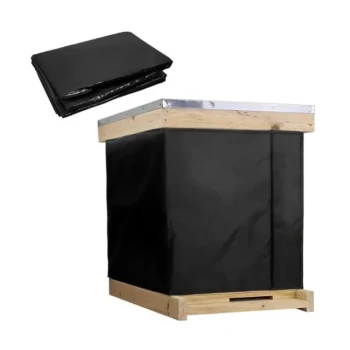
Specialized sealing cloths are typically used to block the main entrance, while corrugated plastic boards are essential for sealing screen bottom boards. Without these barriers, the volatile gas would escape immediately upon generation.
Sustaining Gas Concentration
Vaporization is not an instantaneous event; it is a process of exposure.
By preventing the leakage of evaporated oxalic acid, these materials turn the hive body into a closed fumigation chamber. This ensures the agent maintains a sufficient density throughout the interior space rather than drifting away harmlessly.
The Impact on Treatment Efficacy
The Ten-Minute Threshold
The references indicate a specific operational standard for success: a duration of at least 10 minutes.
Sealing materials allow the beekeeper to control this variable precisely. If the hive is not sealed, the vapor concentration drops below effective levels long before this critical exposure window is closed.
Maximizing Contact Area
For the treatment to work, the vapor must physically touch the mites phoretic on adult bees.
A sealed environment forces the gas to circulate and permeate the entire cluster. This ensures that even bees deep within the colony are fully exposed to the treatment.
Optimizing the Kill Rate
The ultimate result of proper sealing is a maximized contact-killing effect.
When high concentration meets sufficient residence time, the mortality rate of Varroa mites increases significantly. Loose or improper sealing directly correlates to lower mite mortality and ineffective treatment.
Understanding the Trade-offs
The Risk of Partial Sealing
A common pitfall is assuming that "mostly sealed" is sufficient.
Even small gaps can lead to a rapid pressure drop and gas escape. If the concentration falls too quickly, the treatment becomes a sublethal irritant to the mites rather than a lethal control measure.
Operational Time vs. Efficacy
Using sealing materials adds a step to the workflow and requires waiting the full 10 minutes per hive (or batch of hives).
While this increases the time spent in the apiary compared to faster methods, it is a necessary trade-off. Rushing this step by removing seals too early negates the benefit of the vapor application.
Making the Right Choice for Your Goal
- If your primary focus is Maximum Efficacy: Prioritize air-tight seals using both entrance cloths and bottom board inserts to ensure the vapor concentration remains high for the full 10-minute duration.
- If your primary focus is Workflow Efficiency: Prepare your sealing materials (boards and towels) in advance so they can be applied and removed rapidly without compromising the 10-minute exposure window.
Proper sealing transforms vaporization from a passive application into a controlled, high-impact fumigation.
Summary Table:
| Feature | Specialized Sealing Cloths | Corrugated Plastic Boards |
|---|---|---|
| Primary Function | Blocks main hive entrances | Seals screen bottom boards |
| Benefit | Prevents vapor escape from the front | Stops downward gas dissipation |
| Target Goal | Maintains internal gas pressure | Creates a closed fumigation chamber |
| Impact | Increases adult bee contact area | Ensures consistent 10-minute residence time |
Maximize Your Colony Health with HONESTBEE Precision Equipment
At HONESTBEE, we understand that professional beekeepers and distributors require more than just tools—they need results. As a leading global supplier for commercial apiaries, we provide the full spectrum of beekeeping hardware, from hive-making machinery to specialized sealing components and high-performance honey-filling lines.
Whether you are looking to optimize your vaporization treatments or scale your wholesale operations with industry-essential consumables, our portfolio is designed to deliver maximum efficiency and durability. Partner with the experts to elevate your apiary's productivity.
Contact HONESTBEE Today to Discuss Your Wholesale Requirements
References
- Jennifer A. Berry, Lewis J. Bartlett. Inducing a summer brood break increases the efficacy of oxalic acid vaporization for <i>Varroa destructor</i> (Mesostigmata: Varroidae) control in <i>Apis mellifera</i> (Hymenoptera: Apidae) colonies. DOI: 10.1093/jisesa/iead085
This article is also based on technical information from HonestBee Knowledge Base .
Related Products
- Professional Insulated Winter Hive Wrap for Beekeeping
- Inner Beehive Cover for Beekeeping Bee Hive Inner Cover
- Professional 600D Oxford Cloth Beekeeping Tool Bag with 8 Pockets and Elastic Loops
- Professional Insulated Plastic Bee Hives
- Heavy-Duty Nylon Beehive Hive Strap with Stainless Steel Cinch Buckle
People Also Ask
- What are the steps to properly wrap a beehive for winter? Ensure Your Colony Survives the Cold
- When is the best time to wrap a beehive for winter? A Guide to Perfect Winterization Timing
- How do professional insulation wraps provide protection for bee colonies? Optimize Winter Survival & Energy Efficiency
- What are the technical benefits of using winter wraps for beehive insulation? Boost Colony Survival & Hive Health
- What are the benefits of using insulated covers for hives? Ensure Colony Survival and Health