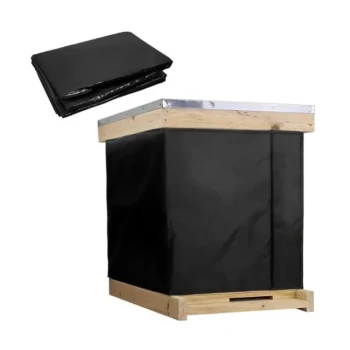
Industrial-grade supplemental feeding and hive insulation serve as critical buffers against environmental stress. By providing consistent nutrition and thermal stability, these technologies ensure that honeybee colonies with valuable genetic traits survive harsh conditions. This prevents the loss of potential breeding stock due to starvation or freezing, allowing breeders to maintain a robust gene pool for future selection.
The primary function of this equipment is to neutralize survival pressures caused by extreme environments. By guaranteeing the survival of colonies with potential breeding value, these systems preserve genetic diversity and provide a wider array of germplasm materials for subsequent vitality trait screening.
Preserving the Genetic Pool
Mitigating Environmental Pressure
In extreme climates, survival often comes down to raw endurance rather than desirable traits like honey production or gentleness. Without intervention, a harsh winter could wipe out colonies that possess valuable genetics simply because they lacked immediate resources.
Supplemental feeding and insulation decouple the colony's survival from the immediate environment. This ensures that the breeding pool remains diverse, rather than being narrowed down only to those bees capable of surviving the most extreme neglect.
Expanding Screening Opportunities
When survival rates are stabilized, breeders have a larger population to analyze. This allows for vitality trait screening to be conducted on a broader range of germplasm.
Instead of losing candidates to environmental attrition, breeders can evaluate them based on their genetic potential. This is essential for long-term genetic improvement programs.
Optimizing Colony Physiology
Redirection of Metabolic Energy
The impact of insulation extends beyond simple survival; it fundamentally changes how bees utilize energy.
Bees in poorly insulated hives must burn significant calories solely to maintain a nest temperature of 35°C. High-quality insulation drastically reduces this thermal load.
Improving Feed Conversion
When thermal loss is minimized, the energy provided by supplemental syrups and cakes is not wasted on heating.
Instead, this energy is redirected toward brood development and the secretion of royal jelly. This improves feed conversion efficiency, allowing the colony to express its full biological potential rather than remaining in survival mode.
The Role of Precision Equipment
Aligning with Biological Characteristics
Industrial-grade manufacturing allows for the creation of hives that precisely match the biological needs of specific honeybee species, such as the Caucasian Gray Bee.
Standardized structures ensure that the physical environment is consistent across all test subjects. This eliminates variables caused by poor equipment, ensuring that performance differences are due to genetics, not housing quality.
Facilitating Large-Scale Management
Standardized tools—such as uniform frames and supers—streamline the workflow. This consistency allows apiaries to transition to high-efficiency management models.
By simplifying routine maintenance, breeders can manage larger populations with greater precision, ensuring a stable environment for evaluating colony performance.
Understanding the Trade-offs
The Risk of Masking Weakness
While these systems protect valuable genetics, there is a nuance to consider regarding natural hardiness.
By heavily subsidizing a colony's energy needs and thermal regulation, you may inadvertently mask genetic weaknesses related to foraging efficiency or cold tolerance.
Balancing Protection and Selection
The goal is to use these tools to preserve diversity before screening, not to permanently prop up weak colonies.
Breeders must differentiate between supporting a colony through an extreme weather event and permanently supporting a colony that cannot sustain itself under normal conditions.
Strategic Implementation for Breeding Programs
If your primary focus is Genetic Conservation:
- Utilize maximum insulation and supplemental feeding to ensure 100% survival of rare germplasm, regardless of current vigor.
If your primary focus is Commercial Production:
- Use standardized equipment to streamline management, but carefully monitor feed conversion to identify colonies that thrive efficiently without excessive intervention.
If your primary focus is Vitality Screening:
- Use these systems to establish a baseline of survival, then gradually reduce support to identify strains that maintain performance with lower inputs.
By stabilizing the environment, you transform the selection process from a game of chance into a controlled, scientific evaluation of genetic potential.
Summary Table:
| Feature | Impact on Selection & Physiology | Key Benefit for Breeders |
|---|---|---|
| Supplemental Feeding | Decouples survival from immediate floral resources | Preserves rare germplasm from starvation |
| Hive Insulation | Reduces metabolic load for thermoregulation | Redirects energy to brood development |
| Precision Equipment | Standardizes the physical environment | Eliminates equipment variables in genetic trials |
| Scale Management | Enables high-efficiency industrial workflows | Allows for larger population screening |
| Strategic Buffering | Neutralizes extreme environmental stressors | Prevents loss of valuable genetic traits |
Elevate Your Apiary’s Genetic Potential with HONESTBEE
Maximize the productivity and survival of your colonies with professional-grade solutions. HONESTBEE caters to commercial apiaries and distributors with a comprehensive wholesale offering, providing everything from specialized hive-making and honey-filling machines to essential beekeeping tools and consumables.
Whether you are looking to preserve rare genetic traits or scale your commercial production, our high-precision equipment ensures your bees operate at their biological peak. Partner with us to access the hardware and industry expertise needed for high-efficiency management.
Contact HONESTBEE Today to Explore Wholesale Solutions
References
- Marina D. Meixner, Ralph Büchler. Conserving diversity and vitality for honey bee breeding. DOI: 10.3896/ibra.1.49.1.12
This article is also based on technical information from HonestBee Knowledge Base .
Related Products
- 3.5L Plastic Beehive Frame Feeder Deep Frame Water Feeder for In Hive Use
- Professional In-Hive Bee Feeder HONESTBEE Frame for Beekeeping
- Professional Insulated Winter Hive Wrap for Beekeeping
- Professional Insulated Plastic Bee Hives
- HONESTBEE Professional Hive Top Bee Feeder Feeding Solution
People Also Ask
- What are the technical advantages of using frame feeders for beehives? Maximize Efficiency and Colony Survival
- Can plastic frames be used in any type of beehive? Maximize Your Apiary Efficiency with Durable Solutions
- What are the technical functions and design requirements of plastic feeders? High-Performance Sourcing for Distributors
- What are the advantages of feeding bees inside the hive? Top Benefits for Colony Security and Health
- Are plastic bee hive frames good? A Guide to Modern Durability vs. Natural Appeal