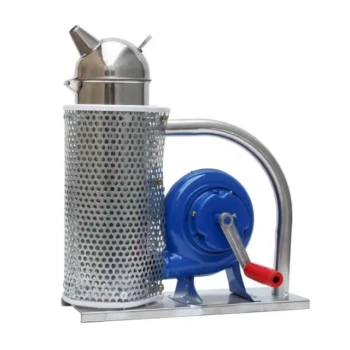
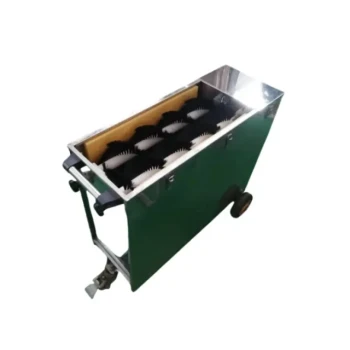
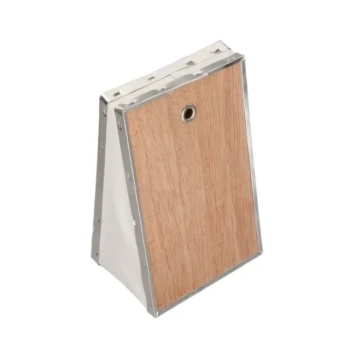
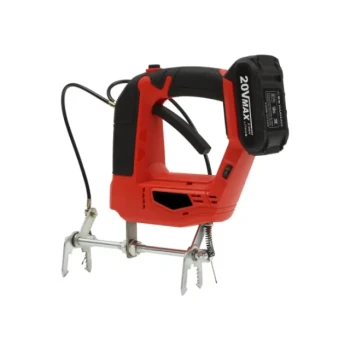
For commercial honey harvesting, motorized bee blowers are generally the fastest and most scalable option. They clear bees from honey supers in seconds or minutes by directing forced air across the frames, especially when each super is placed on a stand in front of the hive entrance. Fume boards can also work rapidly, while bee brushes are usually the slowest and most labor-intensive choice.
The core difference is operational scale: blowers prioritize speed and repeatability, fume boards prioritize rapid chemical-assisted clearing, and brushes provide low-equipment flexibility at the cost of labor, mess, and slower throughput.
How the Three Methods Work
Motorized bee blowers
A blower uses an electric or gasoline-powered motor to force bees out of a removed honey super. In commercial operations, the super is commonly placed on a stand near the hive entrance so displaced bees can return to the colony.
This approach clears multiple frames in sequence without requiring workers to brush bees individually. It is particularly suited to high-volume harvesting where labor time and handling speed directly affect daily output.
Fume boards
A fume board is a fitted frame with an absorbent lining treated with an approved bee-repellent product. The board is placed above the honey supers, typically after the inner and outer covers are removed.
The repellent vapor drives bees downward into the lower hive bodies. Under favorable warm, sunny conditions, a fume board can clear supers within minutes.
Bee brushes
A bee brush removes bees manually from each frame. The operator lifts a frame, brushes the bees away, and repeats the process until the super is clear.
This method requires relatively little equipment, but it depends heavily on operator speed and technique. It is better suited to occasional harvesting, small apiaries, or situations where powered equipment or repellents are unsuitable.
Which Method Is Fastest in Commercial Operations?
Blowers deliver the highest harvesting throughput
A motorized blower can clear an entire super rapidly without stopping to apply a product or wait for vapor to work. This makes it easier for crews to process large numbers of hives during a narrow weather or harvesting window.
The time savings become more significant as apiary size increases. A method that adds only a small delay per hive can create substantial labor costs across hundreds or thousands of colonies.
Fume boards are fast but condition-dependent
Fume boards can clear bees quickly, particularly when sunlight and warmth help vaporize the repellent. They are useful when a crew needs to clear multiple hives efficiently during one visit.
Their performance depends on correct application, temperature, exposure time, and the condition of the hive. The operator must use the appropriate dosage and avoid leaving the board in place longer than necessary.
Brushes have the lowest throughput
Brushing requires direct handling of every frame and repeated movement between the hive and harvesting area. This makes the process difficult to scale economically in a commercial apiary.
Brushes also become less effective when coated with honey or propolis. That can increase handling time and create additional cleanup requirements.
How They Affect Bees and Honey Handling
Blowers reduce prolonged frame-by-frame contact
A blower allows workers to remove bees without repeatedly sweeping across the comb. When used correctly, this can reduce the duration of handling and avoid the sticky contact associated with brushes.
However, forced air disorients bees and can increase defensive behavior if the operator works too aggressively or places the equipment poorly. Correct positioning, controlled airflow, and a suitable super stand are important for orderly clearing.
Fume boards can alter bee behavior
Fume boards force bees downward through a repellent odor rather than physically removing them. Excessive application may drive bees out of the hive or cause them to cling to the comb instead of moving smoothly downward.
The product must also be suitable for the intended use. Incorrect dosage, poor timing, or excessive exposure can create concerns about odor, honey quality, and colony disturbance.
Brushes can agitate bees
Manual brushing may irritate bees, especially when frames are crowded or the brush becomes sticky. Repeated contact can also increase the chance of crushed bees and defensive responses.
For a commercial crew, these effects can slow the operation and increase the need for protective handling and smoke management.
Comparing Labor and Operational Control
Blowers reduce repetitive labor
A blower shifts the task from individual frame handling to controlled equipment operation. One trained operator can process supers quickly, while additional workers can focus on transport, uncapping, extraction, and quality control.
This can improve labor allocation throughout the harvest workflow rather than simply speeding up one isolated task.
Fume boards require preparation and timing
Fume-board operations involve applying the product, positioning the board correctly, waiting for the bees to clear, and removing the board before harvesting. The process is still efficient, but it introduces another preparation and monitoring step.
Crews must maintain consistent application procedures across the apiary. This is especially important when different operators are working across many sites.
Brushes require the most direct labor
Brushes are simple to deploy but expensive in labor at scale. Their low equipment cost can be outweighed by slower harvesting, higher bee agitation, and increased operator fatigue.
They remain useful as a backup tool for isolated frames or supers where a mechanical or repellent-based method is impractical.
Equipment and Supply Considerations for Commercial Buyers
Blower programs require durable support equipment
A commercial blower strategy depends on reliable motors, airflow components, power sources, stands, and replacement parts. Electric models require access to charged batteries or suitable power infrastructure, while gasoline models add fuel and engine-maintenance requirements.
For distributors and B2B resellers, the product opportunity is therefore broader than the blower itself. A dependable portfolio should support the full workflow with compatible stands, protective equipment, maintenance parts, and efficient replenishment.
Fume-board programs require consumable availability
Fume boards create continuing demand for fitted boards, absorbent pads, and approved repellents. Buyers also need clear usage guidance to help crews apply consistent amounts and avoid unnecessary exposure.
Reliable supply is particularly important during harvest season, when a missing consumable can delay an otherwise fully staffed operation.
Brushes are easy to stock but limited in value
Bee brushes are inexpensive, compact, and simple to include in general apiary supply programs. They are useful as supplementary tools, but they are unlikely to solve the main throughput problem for a large commercial customer.
They are best positioned as backup or precision tools rather than the primary clearing system.
Understanding the Trade-offs
Blowers: speed versus power and handling requirements
Blowers offer excellent throughput, but they require an equipment investment and trained operation. Motor reliability, fuel or battery management, noise, and airflow control all affect field performance.
They also do not eliminate the need for good hive handling. Bees must still be directed toward the colony, and supers should be positioned so displaced bees are not scattered unnecessarily.
Fume boards: rapid clearing versus chemical and weather variables
Fume boards can be highly efficient, but their effectiveness depends on correct dosage and environmental conditions. Warm, sunny weather generally supports faster vapor action, while unsuitable conditions may produce inconsistent results.
Chemical use also introduces product-handling, odor, and honey-quality considerations. Commercial users should follow applicable product labels and local requirements rather than relying on informal dosing practices.
Brushes: low entry cost versus high labor cost
Brushes require little capital and can be used almost anywhere. Their disadvantage is that every frame demands manual attention, making them slow and more tiring for crews.
They also offer limited consistency between operators. One worker may clear a frame quickly, while another may require more brushing and cause greater agitation.
Method selection depends on the harvest system
There is no universal best method for every apiary. Commercial operations may combine tools according to weather, colony behavior, labor availability, equipment access, and the desired harvest schedule.
Bee escapes are another option when advance planning is possible. They clear bees passively through a one-way mechanism, but typically require a prior installation period rather than same-visit speed.
Making the Right Choice for Your Goal
Select the primary method according to the operational constraint you need to solve.
- If your primary focus is maximum commercial throughput: Choose a motorized bee blower supported by suitable super stands and a reliable power or fuel program.
- If your primary focus is rapid clearing with minimal powered equipment: Use fume boards, with disciplined dosage, timing, and approved products.
- If your primary focus is low initial equipment cost: Keep bee brushes available, but account for substantially higher labor and slower processing.
- If your primary focus is chemical-free, planned hive clearing: Consider bee escapes where a 24–48-hour advance setup is practical.
- If your primary focus is dependable procurement: Source the clearing method together with consumables, accessories, replacement parts, and responsive seasonal fulfillment.
For most large commercial apiaries, a blower-centered system with fume boards or brushes retained as complementary tools provides the best balance of speed, flexibility, and operational resilience.
Summary Table:
| Method | Speed | Throughput | Labor | Equipment Cost | Condition Dependence | Best For |
|---|---|---|---|---|---|---|
| Motorized Bee Blower | Fast (seconds/minutes) | High | Low | Medium-High | Low | Large commercial operations |
| Fume Board | Fast (minutes) | Medium-High | Medium | Low-Medium | High (weather, dosage) | Rapid clearing with minimal powered equipment |
| Bee Brush | Slow | Low | High | Low | Medium | Small apiaries, occasional harvesting, or backup |
Ready to boost your commercial harvesting efficiency? HONESTBEE offers a comprehensive range of motorized bee blowers, fume boards, and beekeeping supplies for commercial apiaries and distributors. We provide one-stop sourcing, rapid response, dedicated service, and ultra-fast delivery. Whether you need high-throughput blowers, consumable fume boards, or dependable supply for your resale business, we have the expertise and product portfolio to support your growth. Contact us today to discuss your needs and get a tailored quote—experience the HONESTBEE advantage
Related Products
- Heavy Duty Manual Bee Smoker Blower for Beekeeping
- Commercial Grade Vertical Electric Bee Sweeper for Bee Removal
- Professional Replacement Bee Smoker Bellows for Beekeeping Equipment
- Electric Bee Smoker European Style Bee Hive Smoker for Beekeeping
- High Performance Cordless Electric Bee Shaker for Beekeeping
People Also Ask
- What are bee smokers made out of? Choose the Right Material for Your Apiary
- What are the advantages of a manual bee smoker? Enhance Hive Safety with Controlled Cool Smoke Technology
- What is the primary function of a manual bee smoker? Master Hive Control for Safe Inspections
- What is the proper technique for applying smoke to a beehive? Master Calm and Effective Hive Management
- What is the purpose of using a bee smoker for Small Hive Beetle inspections? Master Chemical Control & Hive Safety