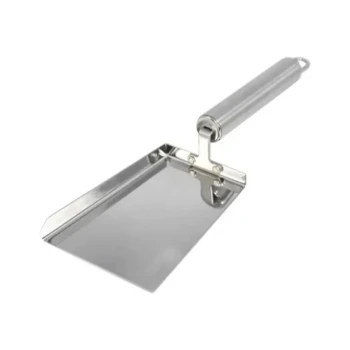
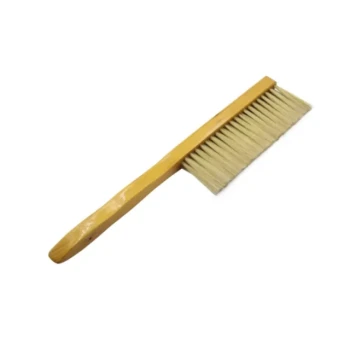
Pollen analysis laboratory tools provide the definitive scientific evidence needed to authenticate the geographical and botanical origins of honey. By utilizing optical microscopes and counting equipment to identify specific pollen grains, these tools create an immutable link between the final product and the unique vegetation of a specific region.
By anchoring honey to specific foraging landscapes through microscopic verification, these tools validate product uniqueness, support origin-protected certifications, and justify premium market positioning.
The Science of Origin Verification
Microscopic Identification
The core function of these tools is the morphological identification of pollen grains found within honey samples. Technicians use optical microscopes to examine specific physical features of the pollen, such as size, shape, aperture characteristics, and exine ornamentation.
Quantitative Classification
Beyond simple observation, laboratory equipment allows for the classification of pollen at the genus or species level, identifying plants like Brassicaceae or Trifolium. This process converts biological characteristics into quantitative data, providing a precise "fingerprint" of the honey's composition.
Anchoring Foraging Behavior
This analysis effectively maps the foraging behavior of honey bees to specific regional ecosystems. Whether the bees foraged in scrublands or chestnut forests, the laboratory tools detect the corresponding pollen, proving the honey was produced in that specific environment.
Translating Data into Market Value
Supporting Official Certifications
For honey to carry prestigious labels such as "origin-protected," producers must provide material evidence of uniqueness. Pollen analysis provides the traceable quality assurance required by regulatory bodies to grant these certifications.
Justifying Premium Pricing
Data generated by these tools serves as physical proof for entry into high-end markets. By scientifically verifying a product's rarity or specific botanical source, producers can confidently command premium pricing that reflects the product's verified quality.
Monitoring Agricultural Impact
These tools also offer insight into the broader environment. The data derived from pollen counts is essential for evaluating how changes in agricultural areas affect the beekeeping industry, helping producers adapt to shifting vegetation patterns.
Understanding the Trade-offs
Specificity vs. Breadth
While pollen analysis is superior for determining where honey comes from (geographical origin), it is not a catch-all solution for quality. It must often be paired with chemical component testing to detect other issues, such as pesticide residues, antibiotic contamination, or sugar adulteration.
The Need for Complementary Analysis
Pollen tools verify identity, but they do not inherently verify safety. To ensure a product meets full organic certification standards, pollen analysis should be viewed as one part of a broader laboratory testing ecosystem that includes chemical analysis equipment.
Making the Right Choice for Your Goal
To leverage pollen analysis effectively, align your testing strategy with your commercial objectives:
- If your primary focus is Regional Certification: Prioritize morphological identification to prove your honey contains the specific pollen spectrum required for Protected Designation of Origin (PDO) status.
- If your primary focus is Premium Market Positioning: Use the quantitative data from pollen counts to market the purity and specific botanical source of your single-origin honey to discerning consumers.
- If your primary focus is Organic Compliance: Combine pollen analysis for origin verification with chemical testing to ensure freedom from pesticides and antibiotics.
Microscopic accuracy is the bridge between a generic natural product and a high-value, certified regional asset.
Summary Table:
| Feature | Function in Authentication | Business Value |
|---|---|---|
| Morphological ID | Identifies specific pollen size, shape, and exine patterns | Establishes definitive botanical & geographical origin |
| Quantitative Counts | Classifies pollen at genus/species level (e.g., Trifolium) | Provides scientific "fingerprint" for purity claims |
| Foraging Mapping | Links samples to specific regional ecosystems/landscapes | Supports PDO and origin-protected certifications |
| Data Comparison | Monitors shifts in agricultural vegetation over time | Enables adaptation to changing honey production trends |
Elevate Your Honey Quality with HONESTBEE Professional Solutions
At HONESTBEE, we empower commercial apiaries and distributors with the tools needed to turn raw products into premium, certified assets. Our comprehensive wholesale catalog includes specialized laboratory hardware and equipment designed to ensure the highest standards of honey authentication and production.
Whether you are scaling your operation with honey-filling machines or seeking to validate regional uniqueness through scientific precision, HONESTBEE provides the full spectrum of beekeeping tools, machinery, and industry consumables. Partner with us to enhance your market value and secure your product's legacy.
Ready to scale your commercial apiary? Contact us today to explore our wholesale equipment solutions!
References
- Anne Lauvie, Geneviève Michon. La gestion des populations d’abeilles inscrite dans des milieux. L’exemple de l’abeille corse. DOI: 10.1051/nss/2020018
This article is also based on technical information from HonestBee Knowledge Base .
Related Products
- Stainless Steel Pollen Shovel with Wooden Handle
- Heavy-Duty Ergonomic Stainless Steel Pollen Shovel
- Heavy-Duty Ergonomic Grip Galvanized Pollen Shovel
- 30 cm Plastic Entrance Hole Bee Pollen Trap and Collector
- Plastic Bee Pollen Trap Strips Comb Catcher Collector
People Also Ask
- How do bee pollen collection tools affect the quality of bee pollen used in functional dairy ice cream production?
- Why should commercial apiaries focus on the collection of diversified bee products? Maximize Your Hive’s Profit Potential
- How does a specialized pollen collector facilitate the harvesting of diverse bee products? Automate High-Value Yields
- What is the impact of pollen collectors and associated equipment on the cost structure of pollen production? Maximize ROI
- What is the technical significance of using specialized cutting tools for propolis? Master Precision Pollen Harvesting