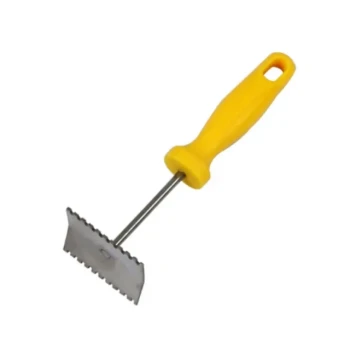
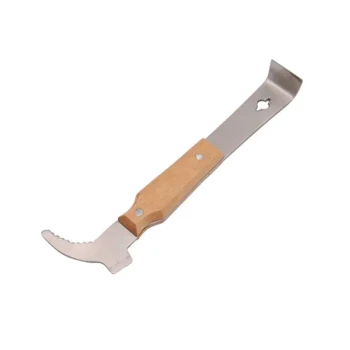
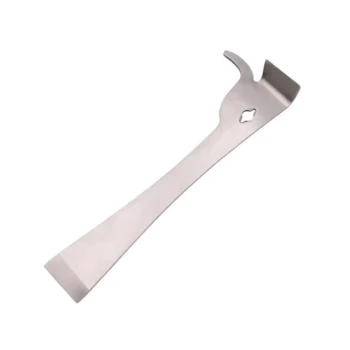
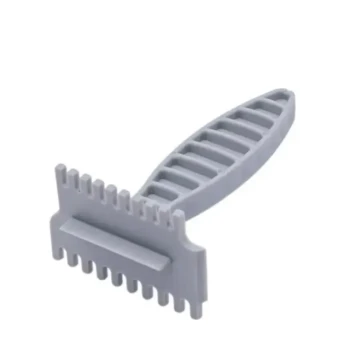
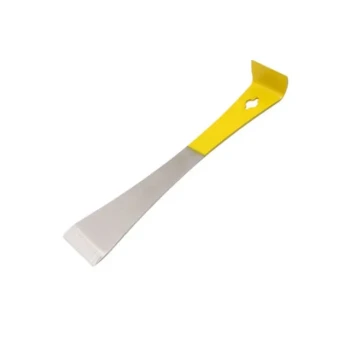
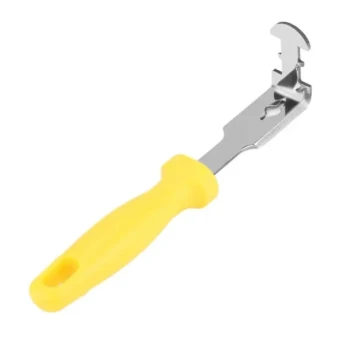
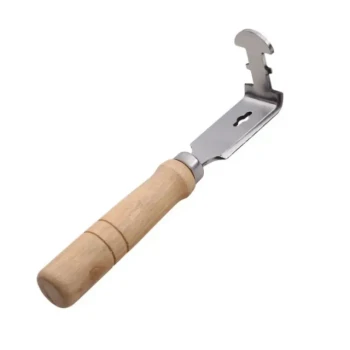
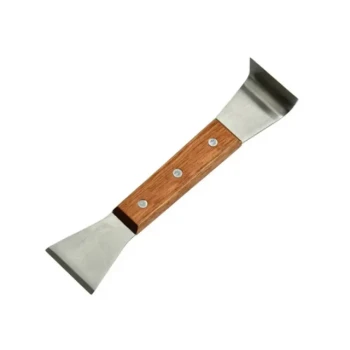
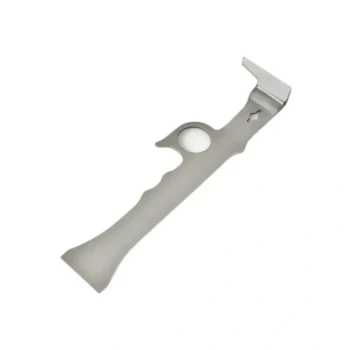
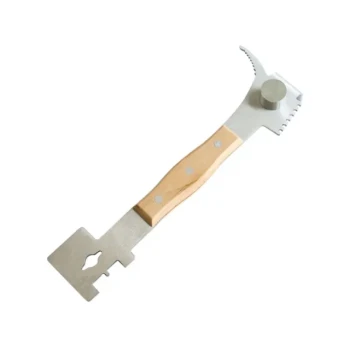
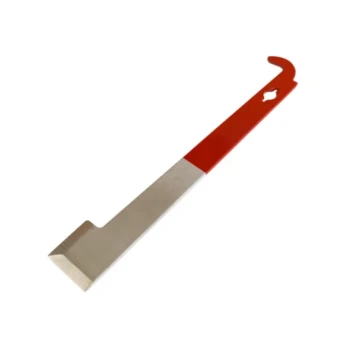
Professional hive scrapers and fine precision tweezers function as a complementary system to access and retrieve biological samples from within honeybee colonies. The hive scraper is utilized to efficiently uncap and open sealed brood cells, creating access to the developing bees inside. Once opened, fine precision tweezers are employed to delicately extract the bee larvae or pupae, exposing parasites located at the bottom of the cell or attached to the host.
Core Takeaway The primary objective of using these specific tools is to navigate the trade-off between structural access and biological preservation. By carefully uncapping cells and extracting hosts, researchers can obtain active parasites with their anatomical structures intact, which is a prerequisite for accurate laboratory analysis.
The Mechanics of Extraction
The Role of the Hive Scraper
The process begins with the professional hive scraper. Its primary function is to break the physical seal of the colony.
Operators use the scraper to slice through or lift the wax cappings that cover the brood cells. This tool provides the necessary force and leverage to open multiple cells efficiently without destroying the structural integrity of the surrounding comb.
The Role of Fine Precision Tweezers
Once the cells are uncapped, the workflow shifts to microscopic delicacy using fine precision tweezers.
These tweezers are designed to grip the soft tissue of the bee larvae or pupae. The operator uses them to carefully pull the developing bee out of the cell, serving as the vehicle to reveal the target parasites.
Locating the Target Parasite
The extraction of the larvae is not the end goal, but rather the method of exposure.
Parasites are often found hiding at the very bottom of the hive cells or clinging to the surface of the larvae. The removal of the host creates the visibility and access needed to collect these active specimens.
Preserving Sample Integrity for Analysis
Preventing Physical Damage
The specific methodology described relies on the dexterity allowed by precision tools.
Rough handling during extraction can crush or tear the parasite. Using fine tweezers ensures that the collection process retrieves the parasite without inflicting mechanical damage that would render it useless for study.
Ensuring Anatomical Accuracy
For a laboratory analysis to be valid, the specimen must be anatomically complete.
By avoiding damage during the collection phase, researchers ensure that the anatomical structures of the parasite remain intact. This allows for precise identification and detailed study of the organism's biology once it reaches the lab.
Operational Trade-offs
Efficiency vs. Precision
While the hive scraper allows for rapid opening of cells, the extraction phase cannot be rushed.
There is an inherent trade-off between the speed of uncapping and the patience required for extraction. Rushing the tweezer work increases the risk of crushing the specimen, negating the value of the sample collection.
Host Disruption
To access the parasite, the host (the bee larva or pupa) is inevitably disturbed or removed.
This method sacrifices individual brood members to gain critical data on colony health. The operator must balance the need for data against the disruption caused to the developing colony.
Making the Right Choice for Your Goal
To ensure your sampling yields usable data, apply the tools according to your specific analytical needs:
- If your primary focus is volume: Prioritize the efficient use of the hive scraper to expose a large number of potential hosts quickly.
- If your primary focus is anatomical study: Slow down the extraction phase with precision tweezers to guarantee the parasite structure is preserved for the lab.
Successful parasitology depends not just on finding the pest, but on recovering it in a state that tells the whole story.
Summary Table:
| Tool Type | Primary Function in Sampling | Key Benefit |
|---|---|---|
| Professional Hive Scraper | Uncapping and opening sealed brood cells | Efficient access to multiple cells without comb damage |
| Fine Precision Tweezers | Delicate extraction of larvae and pupae | Preserves anatomical integrity of parasites for study |
| Combined System | Systematic host removal and parasite exposure | Ensures high-quality, undamaged biological specimens |
Elevate Your Apiary Management with HONESTBEE
At HONESTBEE, we understand that precision is the foundation of a healthy and productive colony. As a dedicated partner to commercial apiaries and global distributors, we provide more than just tools—we provide the specialized infrastructure your business needs to thrive.
From high-durability hive scrapers and precision laboratory tools to industrial honey-filling machines and comprehensive wholesale consumables, our portfolio is designed to meet the rigorous demands of large-scale beekeeping operations. Whether you are scaling your honey production or equipping a regional distribution network, our expertise in beekeeping hardware and machinery ensures you have a competitive edge.
Ready to streamline your wholesale supply chain?
Contact HONESTBEE today to discuss our bulk solutions and machinery offerings.
References
- Marija Manić, Z. Raicevic. Tropilaelaps of bees - epizootiological picture with special emphasis on the first description of the parasite in bumblebees and bees in Serbia. DOI: 10.2298/vetgl1406371m
This article is also based on technical information from HonestBee Knowledge Base .
Related Products
- HONESTBEE Professional Long Handled Hive Tool with Precision Cutting Blade
- Precision Stainless Steel Frame Cleaner for Hive Grooves and Corners
- Professional Dual Action Queen Excluder Scraper for Beekeeping
- Stainless Steel Scraper for Metal Queen Bee Excluders
- HONESTBEE Professional Multi-Functional Hive Tool with Ergonomic Wood Handle
People Also Ask
- Why are professional hive tools considered indispensable? Master Beekeeping Maintenance with Precision Leverage
- What is the role of professional hive tools in routine apiary maintenance? Expert Tips for Hive Health and Longevity
- What is a bee hive tool? Discover Why It’s the Most Essential Hand Tool for Every Beekeeper
- How do hive tools and queen rearing equipment facilitate the bee colony splitting process? Restore Your Apiary Faster
- Why are professional hive tools & observation equipment necessary for queen rearing evaluation? Master Your Quality