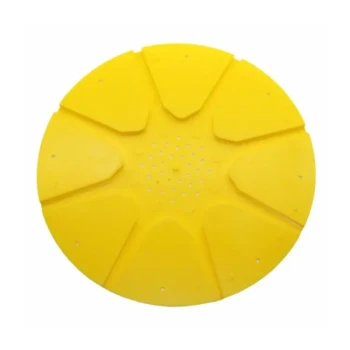
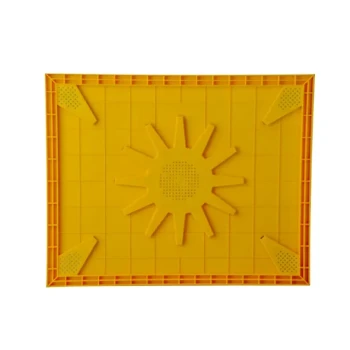
Professional beehives utilize integrated, standardized landing boards to function as precise data collection surfaces rather than simple entryways. These boards capture the physical residues left by honeybees during defensive "smearing" events, allowing researchers to systematically scrape and harvest raw material for subsequent molecular analysis.
By transforming the hive entrance into a standardized sampling interface, this equipment converts transient defensive behaviors into tangible, quantifiable samples. This ensures that data collected after predator events, such as hornet attacks, is consistent and scientifically valid.
The Mechanics of Sample Collection
The Landing Board as a Substrate
In the context of research, the integrated landing board serves as a physical substrate. When honeybees perceive a threat, such as a predatory hornet, they engage in specific "smearing behaviors" on this surface.
Converting Behavior to Raw Material
The primary function of the equipment is to capture these chemical or physical secretions. Researchers can physically scrape the landing boards at specific intervals to collect the material deposited by the bees.
Enabling Molecular Analysis
The ultimate goal of using this specific hardware is to gather sufficient raw material for laboratory work. The collected samples undergo molecular analysis, bridging the gap between field observation and chemical profiling.
The Importance of Standardization
Eliminating Environmental Variables
Using professional, standardized beehives ensures that the surface texture and material of the landing board remain constant. This allows researchers to attribute variations in the sample solely to the bees' behavior, rather than the equipment.
Consistent Observation Platforms
Beyond material collection, these standardized structures provide a consistent micro-environment. This enables the objective evaluation of traits such as docility and orientation ability across different colonies.
Facilitating Systematic Study
The equipment allows for rigorous scheduling. Researchers can trigger a defensive event (or wait for natural predation), wait a set duration, and then perform the collection, ensuring a repeatable scientific process.
Understanding the Limits of Sampling
Specificity of Defense
While landing boards are excellent for studying surface-based defenses like smearing, they do not capture airborne defensive traits or direct attack behaviors. Researchers must understand that board scraping only represents one dimension of the colony's defense profile.
Potential for Contamination
Because the landing board is an external component, samples collected via scraping may contain environmental debris. Researchers must account for dust, pollen, or other non-defensive particulate matter during the molecular analysis phase.
Disturbance Management
While less invasive than opening the hive body, working at the entrance to scrape boards still requires proximity to an agitated colony. Standardized tools and protective measures, such as beehive muzzles, are often necessary to manage the stress on the colony and the safety of the researcher.
Optimizing Your Experimental Setup
To select the right equipment configuration for your research goals, consider the following distinctions:
- If your primary focus is molecular analysis of defense: Prioritize hives with wide, standardized landing boards that offer maximum surface area for smearing and scraping.
- If your primary focus is behavioral observation (e.g., docility): Focus on the internal standardization of the nest frame structure to ensure consistent responses to hive opening disturbances.
- If your primary focus is colony survival during predation: Implement beehive muzzles to guide hornets away from the entrance, noting that this is a protective measure rather than a sampling tool.
Standardized equipment transforms the chaotic reality of a beehive into a controlled laboratory environment, ensuring your data reflects biological reality rather than environmental noise.
Summary Table:
| Feature | Research Benefit | Application in Study |
|---|---|---|
| Integrated Landing Board | Standardized sampling substrate | Capturing smearing residues for molecular analysis |
| Standardized Hive Body | Eliminates environmental variables | Comparative studies of docility and orientation |
| Scrapable Surfaces | Reliable raw material harvest | Chemical profiling of defensive secretions |
| Beehive Muzzles | Predation management | Protecting colonies during long-term behavioral observation |
Elevate Your Apiary Operations with HONESTBEE
At HONESTBEE, we understand that whether you are a researcher, a commercial apiary, or a distributor, precision and reliability are paramount. Our comprehensive wholesale portfolio provides the high-quality equipment needed to turn biological observations into actionable data.
Our Value to You:
- Commercial-Grade Equipment: From specialized hive-making machinery to honey-filling systems, we supply tools built for scale.
- Essential Consumables: A one-stop shop for all industry-standard beekeeping tools and equipment required for colony management.
- Standardized Solutions: We cater to distributors with products that ensure consistency across large-scale operations.
Ready to upgrade your equipment or stock your inventory? Contact us today to discuss your wholesale needs and see how HONESTBEE can support your growth in the beekeeping industry.
References
- Kiyohito Morii, Yoshiko Sakamoto. The origin of materials deposited by Japanese honey bees at their hive entrances as a defense against giant hornets. DOI: 10.1080/00218839.2024.2343977
This article is also based on technical information from HonestBee Knowledge Base .
Related Products
- Professional In-Hive Frame Bee Feeder by HONESTBEE
- HONESTBEE Entrance Bee Feeder Professional Hive Nutrition Solution for Beekeeping
- HONESTBEE Professional Hive Top Bee Feeder Feeding Solution
- Langstroth Solid Bottom Board for Beekeeping
- HONESTBEE Professional Entrance Bee Feeder Hive Nutrition Solution
People Also Ask
- What precautions should be taken when feeding bees inside the hive? Safeguard Your Colony from Robbing and Leaks
- Why should sugar syrup or dry sugar not be left out in the open when feeding bees? Avoid a Dangerous Feeding Frenzy
- What is a bee frame feeder and what are its disadvantages? Choose the Best Feeding Strategy for Your Apiary
- Why are professional bee feeders necessary for the stable development of bee colonies in commercial apiaries?
- How is sugary syrup fed to bees inside the hive? A Guide to Safe & Efficient In-Hive Feeders