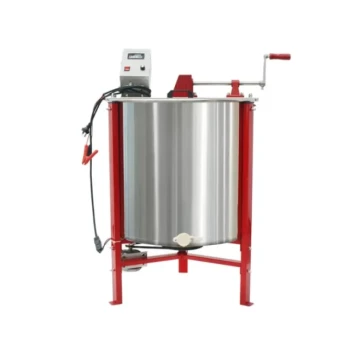
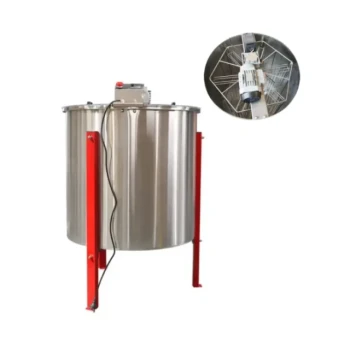
Professional beeswax extraction machinery maximizes profitability by transforming hive waste into high-purity, industrial-grade raw material. By utilizing advanced heat treatment and physical pressing, these tools minimize labor costs and raw material loss while ensuring the specific color and purity standards required for high-value markets. This shift from manual processing to mechanical precision directly increases the market value of what was once considered a low-value byproduct.
Core Takeaway: Professional extraction and refining machinery transition beeswax from a variable byproduct to a standardized commodity. This consistency unlocks premium revenue streams in the pharmaceutical and cosmetic sectors while significantly reducing operational overhead.
Maximizing Yield and Reducing Operational Costs
Efficient Recovery through Advanced Pressing
Professional machinery utilizes integrated heat treatment and physical pressing technologies to extract the maximum amount of wax from old combs and foundations. Manual methods often leave significant amounts of wax trapped in the residue, whereas professional systems minimize this waste to ensure every gram of raw material is recovered.
Drastic Reduction in Labor Overhead
Automated extraction significantly reduces the man-hours required to process bulk quantities of hive materials. By replacing labor-intensive manual scraping and melting with high-capacity machinery, operations can scale their output without a proportional increase in staffing costs.
Preserving Raw Material Integrity
Precise temperature control prevents the overheating that can darken wax or degrade its chemical properties. By maintaining the natural biological activity and physical characteristics of the beeswax, the machinery ensures the end product remains viable for high-tier applications.
Elevating Market Value through Industrial Standardization
Meeting Global Pharmaceutical and Cosmetic Standards
Professional refining equipment employs multi-stage filtration and purification to remove pigments and impurities. This process produces high-purity beeswax blocks that meet the rigorous raw material standards for over 300 industrial applications, including skincare, soaps, and medical coatings.
Ensuring Stability and Consistency
Industrial buyers require a standardized physical form and consistent chemical profile for their manufacturing lines. Professional wax melters and sheet pressing equipment provide this uniformity, making the beeswax a reliable component for large-scale cosmetic creams and pharmaceutical products.
Unlocking Export Potential
Crude wax often lacks the purity required for international trade. By refining wax to a professional grade, beekeeping organizations can transform a local byproduct into a high-value export commodity, strengthening their economic resilience and market reach.
Creating a Circular Economic Model
Resource Utilization of Beekeeping Waste
Specialized machinery allows for the deep processing of post-harvest residues and old honeycombs that would otherwise be discarded. This resource utilization creates a secondary revenue stream that complements honey sales and cushions the impact of fluctuating honey market prices.
The Closed-Loop Material Cycle
Refining and molding equipment enables the production of new foundations from recovered wax for reuse within the same colony. This closed-loop system reduces the need for external sourcing, lowering the operational costs of the apiary while maintaining high hygiene standards.
Extending the Industrial Value Chain
By moving beyond simple extraction into molding and deep purification, beekeeping enterprises can extend their industrial chain. This allows them to capture more value internally rather than selling crude materials to third-party processors at a lower margin.
Understanding the Trade-offs
Initial Capital Expenditure vs. Long-term ROI
The primary hurdle for many distributors and beekeepers is the initial investment cost of high-end machinery. While the equipment significantly increases margins over time, it requires a clear volume of raw material to justify the upfront expenditure.
Technical Expertise and Maintenance
Professional machinery requires a higher level of technical skill to operate and maintain than traditional tools. Distributors must ensure they provide the necessary after-sales support and technical training to help clients avoid downtime and maximize the lifespan of the equipment.
How to Apply This to Your Portfolio
As a distributor or B2B reseller, your strategy should focus on matching the specific machinery to your client’s target market and operational scale.
- If your primary focus is High-Volume Industrial Supply: Prioritize high-capacity constant-temperature melting kettles and physical pressing systems that emphasize throughput and labor reduction.
- If your primary focus is Premium Cosmetic or Medical Markets: Focus on sourcing fine filtration and purification systems that guarantee the highest levels of decolorization and impurity removal.
- If your primary focus is Supporting Small-to-Mid Scale Apiaries: Offer a one-stop sourcing solution that includes molding equipment for foundation production, enabling them to achieve a closed-loop material cycle.
By providing professional-grade extraction tools, you empower your clients to turn residues into a high-purity commodity, ensuring long-term profitability and industry competitiveness.
Summary Table:
| Benefit Category | Professional Mechanism | Economic Impact |
|---|---|---|
| Production Yield | Integrated heat & physical pressing | Minimizes waste; recovers maximum raw material |
| Labor Efficiency | Automated high-capacity processing | Drastic reduction in man-hours and scaling costs |
| Product Quality | Precise temp control & multi-stage filtration | Achieves pharma/cosmetic grade for premium pricing |
| Circular Economy | In-house foundation molding & refining | Reduces external sourcing costs and adds revenue streams |
Scale Your Distribution Success with HONESTBEE
As a dedicated partner to commercial apiaries and B2B resellers, HONESTBEE provides the full spectrum of professional beekeeping machinery and essential consumables. We specialize in helping distributors maximize their profit margins through high-performance equipment and reliable supply chains.
Why Partner with HONESTBEE?
- One-Stop Sourcing: Access a comprehensive portfolio, from specialized hive-making and honey-filling machines to premium beeswax processing tools.
- Built for Business: We support your growth with OEM/ODM capabilities, deep industry expertise, and industrial-grade certifications.
- Efficient Fulfillment: Benefit from our ultra-fast delivery times and responsive customer service designed for high-volume trade.
- Market Advantage: Supply your clients with tools that meet rigorous pharmaceutical and cosmetic standards, ensuring long-term competitiveness.
Ready to elevate your wholesale offering? Contact Our Expert Team Today to discuss custom solutions and wholesale pricing.
References
- Nikola Puvača, Ivana Brkić. The role of bees in green agriculture. DOI: 10.5937/etp243-2082p
This article is also based on technical information from HonestBee Knowledge Base .
Related Products
- Fully Automatic Beeswax Embossing Machine Foundation Mill
- Electric Beeswax Flat Sheet Machine with Operating Tray for Wax Processing
- Electric Beeswax Foundation Machine With Operating Tray and Wax Foundation Roller
- Manual Beeswax Comb Foundation Machine Wax Foundation Mill Embossing Machine
- Economy Manual Beeswax Embossing Mill Wax Foundation Machine Roller
People Also Ask
- What are the primary technical challenges faced by beeswax foundation production machinery? Tackling Lipophilic Residues
- What are the advantages of implementing a pulley and belt drive system in beeswax foundation machinery? Master Quality.
- What are the castings of the beeswax foundation machine made of? Precision Engineering for Efficient Beekeeping
- What types of beeswax foundation machines are available? Choose the Best Model for Your Production Scaling
- What are the main components of a beeswax foundation sheet machine? A Guide to Efficient Production