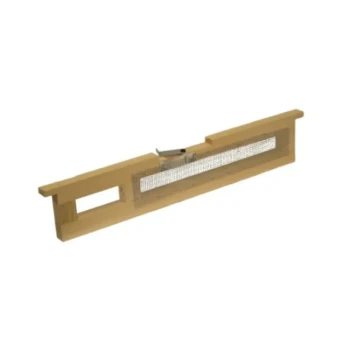
Professional queen rearing tools and mating hives function as the primary levers for genetic control and operational consistency within an apiary. By moving beyond natural, chance-based reproduction, these tools allow beekeepers to implement directional selection for desirable traits and ensure a continuous supply of vigorous queens to maximize colony output.
The Core Value While basic beekeeping relies on natural colony reproduction, professional rearing equipment shifts the focus to systematic optimization. By actively selecting for disease resistance and high honey yields, and establishing a stable rotation of young, productive queens, you ensure uniform productivity and prevent the boom-and-bust cycles typical of unmanaged colonies.
Driving Productivity Through Genetic Selection
Directional Trait Selection
The primary mechanism for increasing productivity is directional selection. Tools like grafting needles and queen cell bars allow you to manually select larvae from your best-performing colonies.
Instead of relying on random genetics, you can propagate specific traits such as strong disease resistance or exceptional honey production. This elevates the genetic baseline of the entire apiary over time.
Preventing Breed Degradation
Without intervention, local honeybee populations can suffer from breed degradation or poor adaptation to local climate extremes.
Rearing tools enable you to standardize your stock, ensuring every colony possesses the genetic capability to thrive in your specific geographic environment. This reduces colony losses due to environmental stress.
Ensuring Operational Stability and Scale
Maintaining Peak Colony Vigor
A colony's productivity is directly tied to the queen's egg-laying rate. As queens age, their pheromone production and laying capacity decline, leading to weaker colonies.
Mating hives and rearing equipment ensure you always have a "bench" of high-quality, mated replacement queens. This allows for the immediate replacement of aging queens, maintaining high brood levels without interruption.
Timing the Worker Population
Honey production depends on having a maximum population of forager bees exactly when the nectar flow begins.
By using artificial rearing techniques to schedule queen emergence and egg-laying cycles, you ensure a sufficient worker bee population aligns with local bloom periods. This coordination directly increases the honey yield per hive.
Reducing Swarming and Absconding
Old queens or overcrowded hives often lead to natural swarming, which cuts a colony's population in half and ruins honey production for the season.
Systematic queen replacement using professional tools suppresses the swarming impulse. By introducing young, productive queens, you maintain colony cohesion and prevent the weakening caused by natural swarming or absconding.
The Role of Specialized Equipment
Precision with Grafting Tools
Grafting needles and cell cups provide the precision required to transfer larvae without injury.
This equipment allows for the mass production of queen cells in a standardized format, transforming queen rearing from a biological accident into a scalable manufacturing process.
Optimization with Mating Hives
Mating hives (or nucs) provide a resource-efficient environment for new queens to mate and begin laying.
These smaller hives simulate optimal conditions for the queen's crucial first weeks. They increase the success rate of queen establishment, ensuring that valuable genetic resources are not lost during the mating phase.
Understanding the Trade-offs
The Skill Barrier
While these tools enhance productivity, they require a higher degree of technical skill. Successful grafting and mating management demand precise timing, steady hands, and a deep understanding of bee biology. Poor technique can lead to high failure rates during the rearing process.
Resource Allocation
Establishing a queen rearing operation requires an initial investment in equipment and, more importantly, biological resources. You must dedicate strong colonies to act as "cell builders" rather than honey producers, which temporarily diverts resources away from immediate honey harvesting to secure long-term genetic gain.
Making the Right Choice for Your Goal
To determine how to integrate these tools into your operation, consider your primary objective:
- If your primary focus is Maximum Honey Yield: Focus on using these tools to schedule queen replacements right before the major nectar flow to prevent swarming and ensure peak population.
- If your primary focus is Colony Health: Use grafting tools to aggressively propagate genetics from your most disease-resistant and hygienic colonies to reduce reliance on treatments.
- If your primary focus is Commercial Expansion: Invest heavily in mating hives to mass-produce queens, allowing you to split hives rapidly and sell surplus queens as a secondary revenue stream.
By mastering these tools, you transition from simply keeping bees to engineering a high-performance, genetically superior apiary.
Summary Table:
| Feature | Impact on Productivity | Primary Benefit |
|---|---|---|
| Grafting Tools | Enables directional genetic selection | Propagation of high-yield & disease-resistant traits |
| Queen Cell Bars | Facilitates mass production of queens | Scalable colony expansion and uniform stock quality |
| Mating Hives | Resource-efficient queen establishment | Higher success rates for queen mating and early laying |
| Systematic Replacement | Maintains peak colony vigor | Prevents population decline and suppresses swarming impulses |
| Scheduled Rearing | Synchronizes bee population with bloom | Maximizes honey yield by timing worker peaks with nectar flows |
Elevate Your Apiary’s Performance with HONESTBEE
Transition from basic beekeeping to a high-performance commercial operation with professional-grade equipment. At HONESTBEE, we empower commercial apiaries and distributors by providing a comprehensive wholesale range of beekeeping tools, machinery, and essentials.
Whether you are looking to scale your genetic program with precision grafting tools or optimize your honey processing with industrial-grade filling machines, our portfolio is designed to meet the rigorous demands of large-scale beekeeping. We offer everything from specialized hive-making hardware to honey-themed cultural merchandise to support every facet of your business.
Ready to scale your production? Contact HONESTBEE today to discuss our wholesale solutions and discover how our expertise can drive your long-term success.
References
- Yusuf Çelik. Konya İlinde Aricilik İşletmelerinin Yapisal Özellikleri. DOI: 10.31467/uluaricilik.376715
This article is also based on technical information from HonestBee Knowledge Base .
Related Products
- Portable Bee Mating Hive Boxes Mini Mating Nucs 8 Frames for Queen Rearing
- Plastic Chinese Queen Grafting Tool for Bee Queen Rearing
- Stainless Steel Beekeeping Queen Grafting Tool for Honey Bee Rearing
- Stainless Steel Queen Grafting Tool for Beekeeping and Bee Queen Grafting
- Retractable Chinese Queen Rearing Grafting Tools Equipment
People Also Ask
- How do specialized queen-rearing frames and mating boxes boost off-season bee production? Optimize Your Apiary's Output
- What are the approximate weights of different types of 8-frame beehive boxes? Lift Smarter for Your Apiary
- What role does the structural configuration of beekeeping mating boxes play? Optimize Queen Mating Success
- What is an 8 frame box and why is it popular? A Lighter, More Ergonomic Hive Solution
- What role do portable mating nucs play in geographic isolation breeding? Secure Genetic Purity in Remote Locations