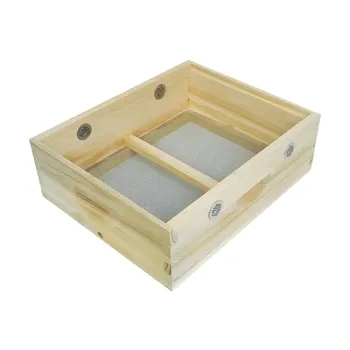
Proper ventilation and apiary environmental management directly protect colony productivity during high summer temperatures. They reduce the energy bees must spend on fanning, water collection, cooling, and crowding control, allowing more workers to forage, process nectar, feed brood, and maintain honey production. The most effective approach combines ventilated hive components with shade, reliable water access, sufficient internal space, suitable forage, and careful hot-weather handling.
Heat management is a productivity strategy, not merely a survival measure. When hive equipment and apiary conditions stabilize the colony’s internal microclimate, workers can devote more of their available energy to foraging, brood rearing, and honey processing.
How Heat Stress Reduces Colony Productivity
Thermoregulation Diverts Worker Labor
Honey bees regulate excessive heat by collecting water and fanning their wings to create evaporative cooling. When ventilation is poor or temperatures rise sharply, more workers remain inside the hive managing heat instead of collecting nectar and pollen.
This reduces the colony’s effective foraging force and can slow honey processing, brood care, and comb construction.
Brood Development Depends on Stable Conditions
Eggs and larvae require a relatively stable brood-chamber environment. Excessive heat and humidity can disrupt brood-rearing conditions, forcing workers to spend additional effort cooling and ventilating the nest.
A stable microclimate helps the colony maintain brood development while avoiding unnecessary thermal stress.
Overcrowding Increases Swarming Pressure
A cramped hive with insufficient airflow allows heat to accumulate and limits the colony’s ability to distribute itself effectively. This can increase congestion, encourage bearding and swarming behavior, and destabilize honey production.
Hive capacity, frame spacing, and ventilation must therefore be considered together rather than treated as separate equipment decisions.
The Role of Proper Hive Ventilation Equipment
Ventilated Covers Improve Air Exchange
Ventilated inner covers, screened top boards, and suitable entrance screens can improve airflow through the hive while keeping bees contained. This helps remove excess heat and humidity from the brood and honey-storage areas.
For commercial operations, precision-built components with consistent fit are important because poorly fitted equipment can create uncontrolled gaps, complicate handling, or reduce protection from weather.
Ventilation Must Work With Hive Insulation
Ventilation and insulation serve different purposes. Ventilation supports air exchange, while insulation helps moderate temperature changes and protects the colony from external heat gain.
Insulated outer covers combined with ventilated internal components can help maintain more stable hive conditions, particularly in semi-arid and arid environments.
Additional Space Supports Airflow
During hot weather, beekeepers may maintain a configuration with slightly more comb capacity than the current bee population strictly requires. This “combs more than bees” arrangement increases internal space and can improve airflow.
The objective is not to create unnecessary empty volume, but to prevent excessive crowding while preserving efficient access to brood, nectar, and honey stores.
Apiary Environmental Management That Supports Productivity
Partial Shading Reduces Heat Load
Partial shade lowers the amount of direct solar radiation absorbed by hive bodies and covers. Shaded hive stands or carefully positioned shade structures can reduce heat accumulation while preserving adequate airflow around the equipment.
Shade should not block ventilation or create persistently damp conditions. The best placement balances solar protection with exposure to moving air.
Water Stations Reduce Cooling Costs
Honey bees collect water to dilute stored honey for brood feeding and to cool the hive through evaporation when temperatures exceed approximately 35°C. A dedicated watering station near the apiary reduces the distance and energy required for water collection.
Watering equipment should be stable, clean, and designed to provide safe access. Reliable water availability also helps reduce dependence on less controlled water sources near the apiary.
Continuous Forage Protects the Colony’s Energy Budget
High temperatures often coincide with increased evapotranspiration and less reliable nectar availability. If forage is interrupted, colonies may spend more energy searching for resources while also managing internal heat.
Planting or maintaining continuous-blooming, single-flowered pollinator flora helps keep foragers productive. A dependable forage plan allows the colony to direct more effort toward nectar and pollen collection rather than compensating for environmental scarcity.
Wet Covers Can Provide Temporary Evaporative Cooling
Applying a wet cover can reduce hive temperatures through evaporation and may provide short-term relief during severe heat. This method should be treated as a temporary management technique rather than a substitute for properly ventilated equipment, shade, and water access.
Its effectiveness depends on environmental conditions and requires practical monitoring to avoid creating excessive moisture or operational problems.
Protecting Colonies During Hot-Weather Transport
Transit Creates a Separate Heat Risk
A hive that performs adequately in a stationary apiary can overheat rapidly during daytime transportation. Restricted airflow, heat from the vehicle, and direct sun exposure can cause dangerous heat buildup.
Commercial operators should use top screen covers or equivalent ventilation solutions and appropriate entrance screens to maximize airflow while keeping colonies contained.
Timing and Parking Matter
For long-distance transport during severe heat, vehicles should be parked in shaded locations whenever possible. Hive entrances should be opened when safe and appropriate, and water should be available to the bees.
In extreme conditions, moving colonies during cooler nighttime hours can reduce thermal stress. Transport planning is therefore part of hive environmental management, not merely a logistics concern.
Understanding the Trade-offs
Too Little Ventilation Causes Heat and Humidity Accumulation
Insufficient ventilation forces bees to spend more labor on fanning and evaporative cooling. It can also allow humidity to build up, destabilizing brood conditions and increasing stress.
Unventilated or poorly designed equipment is especially problematic when combined with high colony density, direct sun, or long-distance transport.
Excessive or Uncontrolled Ventilation Can Create Management Problems
More airflow is not automatically better. Poorly controlled openings can expose colonies to weather, disrupt equipment handling, or reduce protection during cooler periods.
Ventilation should be intentional, integrated with the hive design, and appropriate for the local climate and operating conditions.
Extra Space Must Be Properly Managed
Additional frames and internal volume can reduce crowding, but excessive unused space may make colony management less efficient. Space should match colony strength, brood capacity, and seasonal development.
The goal is a well-balanced hive that gives bees room to regulate temperature without creating unnecessary management complexity.
Equipment Quality Affects Commercial Consistency
Inconsistent dimensions, poor seals, weak screens, or unreliable covers can undermine an otherwise sound environmental strategy. These issues become more costly across commercial apiaries because they increase inspection time, replacement rates, and the risk of colony losses during heat events.
Distributors and resellers should therefore evaluate ventilation products as part of a complete hive-equipment portfolio, including covers, screens, stands, insulation, frames, and transport accessories.
Building a Reliable Summer Management Program
Combine Hardware With Routine Monitoring
Ventilated covers or screened boards are most effective when used with shade, water, adequate internal capacity, and regular inspection. Managers should monitor signs of overheating, crowding, excessive bearding, reduced foraging activity, and unstable brood conditions.
A single product rarely solves a thermal-management problem when the surrounding apiary conditions remain unfavorable.
Standardize Equipment Across the Operation
Commercial beekeepers benefit from compatible, precision-built components that can be deployed consistently across colonies and locations. Standardization simplifies purchasing, maintenance, replacement, transport preparation, and staff training.
For wholesalers and B2B resellers, offering a full-spectrum product range can reduce sourcing delays and help customers implement complete rather than fragmented heat-management systems.
Prioritize Responsive Supply and Fulfillment
Summer heat events can develop quickly, creating urgent demand for ventilated covers, screens, shade-related equipment, watering solutions, and replacement hive components. Rapid response times and efficient order fulfillment are operational advantages during these periods.
A capable supplier should combine product breadth with technical product knowledge and dependable customer service, allowing buyers to select compatible equipment without unnecessary procurement delays.
Making the Right Choice for Your Goal
The best solution depends on whether the priority is colony output, operational resilience, or equipment supply performance.
- If your primary focus is honey yield: Prioritize ventilated hive components, partial shade, reliable water stations, sufficient internal space, and continuous forage so workers can remain focused on foraging and honey processing.
- If your primary focus is brood health: Select equipment that stabilizes brood-chamber temperature and humidity through coordinated ventilation, insulation, and protection from direct heat.
- If your primary focus is commercial apiary efficiency: Standardize compatible hive hardware, frame spacing, covers, screens, and transport equipment across the operation.
- If your primary focus is distribution or resale: Build a one-stop summer-management portfolio supported by rapid response, technical guidance, dependable quality, and fast order fulfillment.
- If your primary focus is hot-weather transport: Use screened ventilation solutions, shaded parking, safe water access, and cooler-period movement procedures to reduce transit-related heat buildup.
Well-managed ventilation and environmental conditions allow colonies to spend less energy surviving the heat and more energy producing honey, raising brood, and sustaining long-term productivity.
Summary Table:
| Factor | Impact on Colony Productivity | Best Practice |
|---|---|---|
| Hive Ventilation | Reduces energy spent on fanning/cooling, frees workers for foraging/honey production | Use ventilated covers, screened boards, and adequate space |
| Shading | Lowers heat absorption, stabilizes hive temperature | Place hives in partial shade with good airflow |
| Water Access | Reduces energy/distance for water collection, supports cooling and brood care | Provide clean, stable watering stations near apiary |
| Forage Availability | Maintains energy intake and foraging efficiency | Plant continuous-blooming, single-flowered flora |
| Hive Space | Prevents overcrowding, improves airflow, reduces swarming pressure | Maintain "combs more than bees" arrangement during heat |
| Transport Management | Prevents overheating during transit, reduces colony stress | Use screened ventilation, shade, and nighttime movement when possible |
| Equipment Quality | Ensures consistent performance, reduces inspection/replacement time | Use precision-built, standardized equipment from reliable suppliers |
| Monitoring | Detects early signs of stress, allows timely intervention | Regularly inspect for bearding, reduced foraging, and brood conditions |
Optimize Your Apiary for Summer Success with HONESTBEE
At HONESTBEE, we understand that effective heat management is key to maintaining colony productivity and profitability. Our comprehensive wholesale offering includes everything you need for proper hive ventilation and apiary management: from ventilated covers, screens, and stands to full-spectrum beekeeping tools, machinery, and honey-processing equipment. Whether you're a commercial beekeeper looking to maximize yields, a distributor seeking reliable supply chain partners, or a B2B reseller wanting to offer complete solutions, HONESTBEE provides one-stop sourcing with premium trading services.
Why partner with HONESTBEE?
- Full-spectrum product portfolio: All equipment and consumables for hive ventilation, environmental control, and honey production.
- Rapid response times and dedicated customer service: Get the support you need when heat emergencies arise.
- Deep professional expertise: Our team offers technical guidance to ensure you select compatible, effective solutions.
- Ultra-fast delivery with efficient order fulfillment: Minimize downtime and keep your colonies productive.
Ready to enhance your summer management strategy? Contact us today to discuss your needs and discover how HONESTBEE can help you achieve higher productivity and operational efficiency.
Related Products
- Stainless Steel Round Beehive Air Vents for Ventilation
- Steel Round Disc Entrance Reducer for Flexzion Bee Hive Nuc Box Gate
- Professional Reversible Beehive Hive Entrance
- Professional Beekeeping Quilt Box with Multi Vent Moisture Control
- Ergonomic Two Person Foldable Hive Lifter
People Also Ask
- How does ventilation affect colony health, and how should it be managed seasonally? A Guide to Preventing Moisture & Overheating
- Why is proper ventilation important in a beehive? Prevent Mold, Regulate Temperature, and Boost Colony Health
- How can a beekeeper provide proper ventilation for a beehive throughout the year? Seasonal Strategies for Bee Health
- How can ventilation be added to a beehive without using an inner cover? Simple, Effective Solutions for Healthy Hives
- Why is good ventilation crucial when transporting beehives? Protect Your Colony from Lethal Overheating