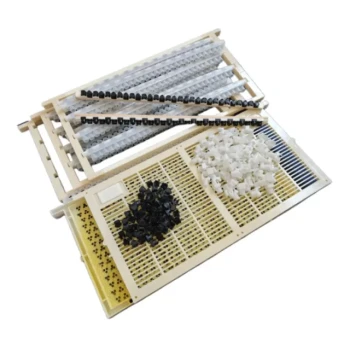
Specialized queen rearing and introduction hardware serves as the primary mechanism for mitigating the risks associated with queen failure in commercial operations. By employing tools such as grafting needles and queen cell bars for cultivation, alongside protective cages for safe introduction, apiaries can rapidly replace failing or drone-laying queens to maintain the continuity of egg-laying and overall colony productivity.
The loss of a queen represents a critical production halt in any commercial apiary. High-quality rearing and introduction hardware transforms this biological crisis into a manageable operational procedure, stabilizing the colony and preventing abnormal loss rates during high-risk periods.
Cultivating Replacements with Precision
To address queen failure effectively, an apiary must have the capacity to generate its own high-quality replacements. Specialized rearing tools are the foundation of this process.
The Role of Grafting Needles
Grafting needles are essential for the delicate transfer of young larvae into queen cups.
This precision tool allows beekeepers to select larvae from the strongest colonies, ensuring that the new queens possess superior genetic traits.
Scaling Production with Queen Cell Bars
Queen cell bars allow for the mass cultivation of queen cells within a single colony.
This hardware enables the apiary to produce queens in bulk, creating a ready supply of replacements to address failures across a large number of hives simultaneously.
Ensuring High-Quality Stock
In commercial management, including specific sectors like Apis cerana apiaries, the goal is not just replacement, but improvement.
Using specialized rearing equipment ensures the cultivation of high-quality new queens, which is vital for maintaining colony strength over time.
Managing the Introduction Transition
Once a replacement queen is reared or purchased, the critical challenge is introducing her to a colony that may be hostile.
The Function of Queen Cages
Queen cages are the primary hardware used to facilitate the physical introduction of a new queen.
They create a physical barrier between the new queen and the colony's workers, allowing the bees to become accustomed to her pheromones without physical contact.
Protecting Against Rejection
Without protection, worker bees often reject and kill a strange queen immediately.
Introduction hardware protects the new queen during this volatile acclimatization period, ensuring she survives to begin egg-laying.
Replacing Failing Queens
An adequate stock of introduction tools is vital for the immediate replacement of aging or drone-laying queens.
Regular replacement using these tools is a primary strategy for reducing colony loss rates and maintaining consistent population growth.
Understanding the Operational Trade-offs
While these tools are essential, they introduce specific operational requirements that must be managed.
The Necessity of Adequate Inventory
Effectiveness depends entirely on readiness; an apiary must maintain an adequate stock of cages and rearing supplies.
If a queen fails and the necessary hardware is not immediately at hand, the delay can lead to a break in the brood cycle and a weakened colony.
Hardware as a Foundation, Not a Guarantee
Standardized tools provide a controlled environment, but they do not replace biological nuance.
While hardware ensures safety and efficiency, the operational efficiency of the beekeeper in recognizing the timing for replacement remains the deciding factor in success.
Making the Right Choice for Your Apiary
To effectively leverage these tools, assess your current operational bottlenecks.
- If your primary focus is reducing immediate colony loss: Prioritize a robust inventory of queen cages to facilitate the rapid, safe introduction of replacement queens as soon as failure is detected.
- If your primary focus is long-term genetic stability: Invest in high-quality grafting needles and cell bars to cultivate your own stock of superior queens, reducing reliance on external sources.
By integrating standardized hardware into your management strategy, you transition from reactive beekeeping to a stable, industrial-scale production model.
Summary Table:
| Hardware Type | Core Function | Impact on Commercial Success |
|---|---|---|
| Grafting Needles | Precise larval transfer | Ensures superior genetics and queen quality |
| Queen Cell Bars | Mass queen cultivation | Enables bulk production for large-scale operations |
| Queen Cages | Protected introduction | Minimizes rejection rates and colony volatility |
| Rearing Supplies | Stock management | Prevents production halts during queen failure |
Maximize Your Apiary's Productivity with HONESTBEE
Queen failure is a risk you can't afford. HONESTBEE specializes in supporting commercial apiaries and distributors with a comprehensive range of high-quality beekeeping tools and machinery. From precision grafting needles and queen cages to industrial-scale honey-filling machines, we provide the hardware you need to eliminate production halts.
Why Partner with HONESTBEE?
- Wholesale Excellence: Full spectrum of tools and industry consumables for large-scale operations.
- Industrial Efficiency: Specialized hardware for hive-making and honey processing.
- Proven Reliability: Trusted solutions designed to reduce colony loss and improve genetic stock.
Ready to scale your beekeeping business? Contact HONESTBEE today to discover our full wholesale portfolio!
References
- Nicola Seitz, Dennis vanEngelsdorp. A national survey of managed honey bee 2014–2015 annual colony losses in the USA. DOI: 10.1080/00218839.2016.1153294
This article is also based on technical information from HonestBee Knowledge Base .
Related Products
- Retractable Chinese Queen Rearing Grafting Tools Equipment
- Plastic Chinese Queen Grafting Tool for Bee Queen Rearing
- Stainless Steel Beekeeping Queen Grafting Tool for Honey Bee Rearing
- Stainless Steel Queen Grafting Tool for Beekeeping and Bee Queen Grafting
- Plastic Beekeeping Honey Bee Larvae Grafting Tools for Queen Rearing and Chinese Grafting
People Also Ask
- Which specialized tools are necessary for implementing standardized queen rearing? Scale Your High-Yield Apiary
- Why are specialized queen rearing tools necessary to mitigate winter hive losses? Boost Apiary Survival and Recovery
- How do queen-rearing tools facilitate the sustainability and expansion of a commercial apiary? Drive Scalable Growth
- In what ways do modern queen rearing equipment and grafting tools improve competitiveness? Boost Breeding Success Rate
- What role do specialized queen rearing tools and consumables play in modern large-scale apiculture? Drive Production & Scale