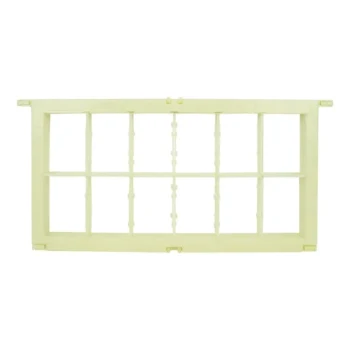
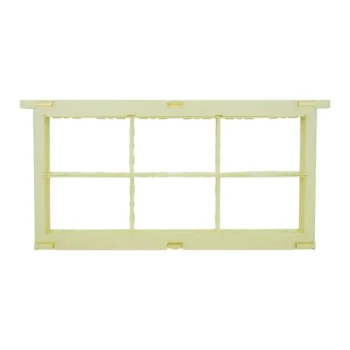
Specialized grafting frames act as the architectural backbone of industrial royal jelly production, transforming a biological process into a scalable workflow. By utilizing removable bars that secure rows of artificial queen cups, these frames allow technicians to perform high-precision larval grafting in a controlled laboratory environment before integrating the larvae into the hive's breeding zone.
The core advantage of this system is modular decoupling. By separating the delicate grafting phase from the chaotic hive environment, producers can ensure higher larval survival rates and achieve synchronized, mass-scale royal jelly secretion that would be impossible with traditional methods.
The Mechanics of Modular Efficiency
Decoupling Grafting from the Hive
The defining feature of these frames is the inclusion of removable bars. This design allows the grafting process—transferring microscopic larvae into artificial cups—to occur away from the apiary.
Technicians can remove the bars and transport them to a laboratory setting. This offers a stable, well-lit environment essential for handling larvae that are often less than 36 hours old.
Protecting Delicate Larvae
Larval transfer is the most critical point of failure in production. The modular bars serve as stable carriers during this fragile stage.
By manipulating only the lightweight bars rather than the entire heavy frame, technicians minimize vibrations and physical shocks. This significantly reduces the risk of damaging the larval respiratory systems, ensuring higher acceptance rates once placed in the colony.
Streamlining Batch Operations
The frame structure supports synchronous mass rearing. Instead of managing individual cells, producers manage "batches" of dozens of cups at once.
Once grafting is complete, the bars are slotted back into the frame. This allows the colony to begin nursing all larvae simultaneously, creating a uniform production timeline that simplifies the eventual harvest.
Biological Optimization and Standardization
Standardized Spatial Intervals
The physical layout of the grafting frame is not arbitrary; it enforces specific spacing between queen cups.
This standardized interval ensures that nurse bees have adequate physical space to enter and exit the cells. Unrestricted access is vital for the intense feeding behavior required to stimulate maximum royal jelly secretion.
Uniform Microclimate Control
The frame acts as a centralized support structure that positions the cell cups at specific coordinates within the hive.
This rigid arrangement ensures that all cups are maintained at uniform temperatures and humidity levels. By preventing cups from drifting into cooler or less accessible parts of the hive, the frame guarantees statistical consistency in queen cell acceptance.
Leveraging Hive Dynamics
The multi-bar design allows producers to exploit the hive's internal behavior patterns.
Research indicates that the position of the bar—front, middle, or rear—impacts yield. Specialized frames allow producers to prioritize middle-bar placement, where nurse bee density is highest and temperature fluctuations are lowest, resulting in heavier royal jelly yields.
Understanding the Trade-offs
While specialized grafting frames offer high efficiency, they introduce specific operational challenges that must be managed.
The Risk of Mass Rejection
Because the system relies on batch processing (often 60 cups per frame), a failure in technique affects the entire batch. If the transfer tool damages larvae or if the bars are handled roughly during insertion, the colony may reject the entire row of cups simultaneously.
Equipment Dependency
The system requires high-precision standardization. The removable bars must fit perfectly into the frames to prevent shifting.
If the fit is too loose, vibration increases; if too tight, the jarring motion required to insert the bar can injure the larvae. Success depends heavily on the manufacturing quality of the hardware.
Making the Right Choice for Your Goal
To maximize the potential of specialized grafting frames, tailor your usage to your specific production objectives.
- If your primary focus is Volume: Prioritize the use of the middle-tier bars within the frame, as this zone consistently yields the heaviest royal jelly deposits due to nurse bee density.
- If your primary focus is Acceptance Rate: Leverage the removable nature of the bars to perform grafting in a climate-controlled lab, strictly limiting larval exposure to open air and temperature variances.
- If your primary focus is Workflow Speed: Utilize frames with standardized 60-cup layouts to synchronize the harvest cycle, allowing for rapid extraction of jelly from the entire batch at once.
Successful royal jelly production relies less on the bees' willingness to produce and more on the operator's ability to provide a stable, standardized architecture for them to work within.
Summary Table:
| Feature | Function in Production | Impact on Efficiency |
|---|---|---|
| Removable Bars | Allows grafting in climate-controlled labs | Increases larval survival & precision |
| Modular Design | Separates grafting from the hive environment | Reduces vibration & physical shocks |
| Standardized Spacing | Ensures nurse bee access & airflow | Maximizes royal jelly secretion per cell |
| Batch Processing | Synchronizes larval development cycles | Simplifies harvesting & labor workflow |
| Tiered Placement | Optimizes middle-bar positioning | Leverages peak nurse bee density for higher yields |
Scale Your Royal Jelly Production with HONESTBEE
As a commercial apiary or distributor, your success depends on high-precision equipment that delivers consistent results. HONESTBEE specializes in professional-grade beekeeping tools and machinery designed for industrial-scale efficiency. From specialized grafting frames and hive-making machines to advanced honey-filling systems, we provide the full spectrum of hardware and consumables required to dominate the market.
Why Partner with HONESTBEE?
- Wholesale Excellence: Comprehensive inventory tailored for large-scale operations.
- Technical Precision: Equipment engineered to minimize larval rejection and maximize yield.
- Industry Expertise: We support your workflow from hive management to honey-themed cultural merchandise.
Ready to upgrade your apiary’s performance? Contact us today to discuss your wholesale needs!
References
- Vagner de Alencar Arnaut de Toledo, Fabiana Martins Costa-Maia. Viabilidade financeira da produção de geleia real com abelhas africanizadas suplementadas com diferentes nutrientes. DOI: 10.4025/actascianimsci.v32i4.7895
This article is also based on technical information from HonestBee Knowledge Base .
Related Products
- Plastic Chinese Queen Grafting Tool for Bee Queen Rearing
- No Grafting Queen Rearing Kit: System for Royal Jelly Production and Queen Rearing
- JZBZ Langstroth Queen Rearing Frame for Beekeeping
- Professional Wooden Requeening Frame for Beekeeping
- Professional Sectional Comb Honey Frame with 250g Cassette System for Beekeeping
People Also Ask
- Why is it necessary for migratory beekeeping enterprises to utilize professional queen bee rearing tools? Boost Resilience
- What specialized tools and frame configurations are needed for larval grafting during queen rearing, and how are queen cells properly spaced? Master the essentials for efficient queen production
- What are the benefits of using a queen grafting tool for queen rearing? Master Precision for Superior Bee Genetics
- What is grafting in queen rearing? Take Control of Your Apiary's Genetics
- What are the steps involved in using a queen grafting tool? A Guide to Successful Queen Rearing