Specialized Pollen Traps function by forcing returning foraging bees to navigate specific, calibrated filter grids installed at the hive entrance. As the bees pass through these apertures to enter the hive, the physical friction mechanically dislodges pollen pellets from their hind legs, allowing the samples to fall into a dedicated collection box below without harming the insect.
Core Takeaway: By utilizing precise mechanical friction rather than invasive biological sampling, Pollen Traps enable the continuous, systematic collection of environmental bioindicators. This allows researchers and apiarists to analyze local plant diversity and pollen supply without sacrificing individual colony members.
The Mechanics of Non-Destructive Interception
To understand how these devices achieve sampling without injury, one must look at the specific engineering of the aperture structures.
Calibrated Filter Grids
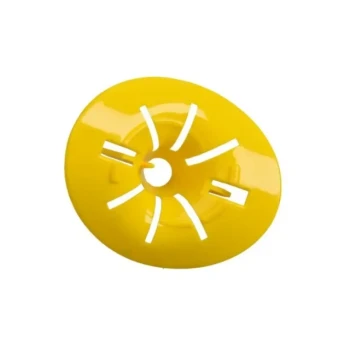
The core mechanism relies on calibrated filter grids or screens placed directly at the hive entrance.
These grids are designed with specific dimensions that are just large enough for a worker bee to pass through, but too narrow to accommodate the additional width of the pollen pellets packed onto their hind legs.
Mechanical Dislodgement
The process is purely physical. As the bee pushes through the grid, the edges of the aperture create friction against the pollen baskets (corbiculae) on the bee's legs.
This contact effectively scrapes or strips the pollen pellets off the bee. The bee continues into the hive, while the pollen is separated at the threshold.
Passive Collection Systems
Once dislodged, gravity takes over. The stripped pollen pellets fall immediately into a collection box or tray situated beneath the grid.
This design ensures the samples are kept hygienic and separate from the colony's internal environment, making them suitable for analysis or use as high-protein supplements.
Applications and Utility
The value of non-destructive sampling lies in its ability to provide data on the environment and the colony's resources over time.
Environmental Bioindicators
Because the bees remain alive to continue foraging, the collected pollen serves as a continuous environmental bioindicator.
Technicians can analyze these samples to determine local nectar plant diversity and monitor changes in the surrounding ecosystem without disrupting the colony's workforce.
Seasonal Resource Assessment
Regular collection allows apiarists to track pollen supply across different flowering periods.
This data provides a scientific basis for decision-making, such as determining the necessity of seasonal supplemental feeding or deciding when to migrate an apiary to a location with better resources.
Understanding the Trade-offs
While the method is non-destructive to the bee's life, the physical intervention involved is not without consequence.
Colony Health Implications
The use of Pollen Traps involves physical intervention and high-frequency contact at the hive entrance.
Research suggests that these devices are utilized to evaluate how such physical barriers might affect overall colony health.
Pathogen Transmission Risks
There is a potential correlation between the mechanical restriction of the trap and the transmission of pathogens.
Specifically, researchers use these devices to study how the physical stress or congestion at the entrance might influence the spread of ailments like Chronic Bee Paralysis Virus.
Making the Right Choice for Your Goal
The utility of a specialized Pollen Trap depends heavily on whether your objective is production, research, or colony management.
- If your primary focus is Environmental Analysis: Utilize the trap to collect bioindicators that reveal local plant diversity and foraging trends without depleting the colony's workforce.
- If your primary focus is Apiary Management: Use the sampling data to accurately time seasonal migrations or nutritional supplementation based on actual pollen inflow.
- If your primary focus is Colony Health Research: Deploy these traps to monitor how physical entrance interventions correlate with pathogen transmission rates.
Effective pollen trapping balances the need for data and resources with the necessity of minimizing physical stress on the colony.
Summary Table:
| Feature | Mechanical Mechanism | Benefit to Apiary |
|---|---|---|
| Aperture Design | Calibrated filter grids | Permits bee entry while stripping pollen pellets |
| Collection Method | Passive gravity drop | Collects hygienic samples in a dedicated tray |
| Bee Safety | Friction-based (Non-invasive) | Zero mortality; foraging cycle remains uninterrupted |
| Data Application | Environmental Bioindicators | Monitors local flora and resource availability |
| Management | Resource Assessment | Informs decisions on migration and supplemental feeding |
Elevate Your Apiary Management with HONESTBEE
At HONESTBEE, we understand that precision and colony health are the pillars of a successful commercial operation. As a premier provider for commercial apiaries and distributors, we offer a comprehensive wholesale range of professional beekeeping tools, specialized hardware, and essential consumables.
Whether you need advanced pollen collection systems, hive-making machinery, or honey-filling solutions, our equipment is engineered to optimize your yield while protecting your workforce. From heavy-duty machinery to honey-themed cultural merchandise, we provide the full spectrum of products to help your business thrive.
Ready to scale your production? Contact us today to explore our wholesale solutions and see how our expertise can streamline your beekeeping operations.
References
- Mai Awad, Randall B. Boone. Assessment of Spatial Variations in Pesticide, Heavy Metal, and Selenium Residues in Honey Bee (Apis mellifera L.) Products. DOI: 10.3390/sci5020024
This article is also based on technical information from HonestBee Knowledge Base .
Related Products
- Removable Plastic Pollen Trap With Ventilated Tray for Bees Pollen Collector
- 30 cm Plastic Entrance Hole Bee Pollen Trap and Collector
- Plastic Bee Pollen Trap Strips Comb Catcher Collector
- High-Efficiency Diamond Maze Bee Escape for Clearing Supers
- Professional Bucket Style Wasp and Moth Pheromone Trap
People Also Ask
- What are the design principles and advantages of pollen traps in the collection of bee pollen? Boost Your Apiary Yield
- What is the function of professional pollen traps in evaluating honey plants? Quantifying Pollination and Crop Potential
- What functions do pollen traps serve for bee bread production? Optimize Your Raw Material Collection
- What maintenance and pest prevention measures should be taken for pollen traps? Protect Your Hive and Harvest Quality
- How does the use of pollen traps in honeybee hives enhance crop fertilization? Boost Your Yield Through Induced Activity