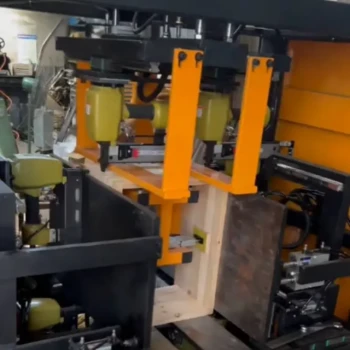
Standardized hive box dimensions serve as the fundamental logistical unit of industrial beekeeping. By adhering to uniform formats, such as the 40x30x26 cm specification, operators ensure stability and optimal space utilization during long-distance transport. This physical uniformity allows for secure stacking on vehicles and guarantees compatibility with automated honey extraction machinery, significantly lowering operational costs.
Standardization transforms the beehive from a biological container into an interoperable industrial asset. By unifying dimensions, apiaries achieve frictionless logistics, seamless hardware integration, and the ability to apply consistent management protocols across thousands of colonies.
Optimizing Logistics and Transport
Maximizing Shipping Efficiency
Standardized dimensions are critical for secure stacking on transport vehicles. Uniform boxes eliminate gaps and irregularities that cause load shifts, ensuring hives remain stable during regional transport. This precise fit optimizes the cargo volume, allowing operators to move the maximum number of colonies per trip.
Enabling Mechanized Handling
The uniformity of hive boxes facilitates the use of mobile pallet systems. By grouping 4 to 6 hives onto a single standard pallet, operators can utilize forklifts for rapid loading and unloading. This mechanization is essential for the timely deployment of colonies to diverse crop regions, such as almond orchards or blueberry fields, during pollination seasons.
Ensuring Hardware and Treatment Compatibility
Streamlined Extraction Processes
Industrial-scale honey production relies on automation. Standardized boxes are designed to fit directly into standard honey extraction machinery. This compatibility eliminates the need for custom equipment modifications or manual adjustments, thereby reducing maintenance costs and processing downtime.
Consistent Colony Management
A uniform physical platform simplifies the application of treatments and supplements. Standard dimensions facilitate the installation of essential oil paper strips and the feeding of protein supplements. Because every hive has the same internal volume and configuration, management practices can be replicated exactly across the entire operation.
Creating a Platform for Standardized Data
Bridging Research and Industry
Using standard hardware, such as Langstroth dimensions, ensures that experimental environments mirror commercial beekeeping operations. This alignment means that biological data collected by researchers—such as colony weight or frame coverage—is directly applicable to large-scale apiaries.
Precision Monitoring and Metrics
Standard frames allow for the integration of precision measurement tools, such as wire grid frames or 3-inch PVC cylinders. These tools allow technicians to quantify brood areas or conduct hygienic testing (like freeze-killed brood assays) using standardized units. This converts subjective observations into objective data regarding colony vitality and disease resistance.
Understanding the Trade-offs
Logistics vs. Biological Needs
While a specific standard dimension (like 40x30x26 cm) optimizes transport, it may not always provide the ideal thermal environment for every climate. For example, larger capacity configurations like the Dadant 12 offer improved stability of the internal microclimate during cold periods compared to smaller standard models.
Balancing Efficiency and Winter Survival
The drive for transport efficiency must be weighed against biological resilience. Smaller standardized hives are easier to move and stack but may result in higher winter colony loss rates compared to larger, more thermally stable hive designs. Operators must assess whether their priority is migratory flexibility or stationary overwintering success.
Making the Right Choice for Your Goal
To select the appropriate equipment strategy for your apiary, consider your primary operational objectives:
- If your primary focus is migratory pollination: Prioritize standard dimensions compatible with pallet systems to maximize mechanized handling speed and transport volume.
- If your primary focus is operational cost reduction: Adhere to dimensions that fit standard extraction machinery to minimize hardware customization and maintenance expenses.
- If your primary focus is research and breeding: Use standard frames to utilize grid tools and assays, ensuring your data is quantifiable and comparable to industry benchmarks.
Standardization is the key that unlocks the ability to manage biology at an industrial scale.
Summary Table:
| Feature | Industrial Benefit | Key Advantage |
|---|---|---|
| Logistics | Uniform stacking & palletization | Maximizes transport volume and speed |
| Automation | Extraction machinery compatibility | Reduces labor costs and downtime |
| Management | Replicable treatment protocols | Ensures consistent colony health at scale |
| Research | Standardized data collection | Accurate benchmarking and performance tracking |
Scale Your Apiary with HONESTBEE Precision Equipment
Maximize your operational efficiency and logistical throughput with HONESTBEE. As a premier partner for commercial apiaries and distributors, we provide the full spectrum of standardized beekeeping tools and industrial machinery designed for high-volume success.
From automated honey-filling machines and hive-making hardware to a comprehensive range of industry consumables and honey-themed merchandise, our wholesale solutions are built to streamline your workflow and reduce overhead.
Ready to upgrade your industrial beekeeping infrastructure? Contact HONESTBEE today to discuss our wholesale offerings and see how our hardware can transform your apiary management.
References
- Andhika Silva Yunianto, Michael Daru Enggar Wiratmoko. Small and Medium Scales Business Development Model and Value Chain of Apis mellifera L. Bee Cultivation in Riau Province. DOI: 10.22146/jik.v18i1.6560
This article is also based on technical information from HonestBee Knowledge Base .
Related Products
- Portable Bee Mating Hive Boxes Mini Mating Nucs 8 Frames for Queen Rearing
- Langstroth Honey Bee Box Hive Boxes for Different Depths
- Metal Bee Hive Stand Bee Box Stand for Beekeeping
- Automatic High-Speed Bee Hive Box Stapling Machine
- Australian Langstroth Beehive Boxes for Beekeeping Wholesales
People Also Ask
- How do specialized queen-rearing frames and mating boxes boost off-season bee production? Optimize Your Apiary's Output
- What are the approximate weights of different types of 8-frame beehive boxes? Lift Smarter for Your Apiary
- What role does the structural configuration of beekeeping mating boxes play? Optimize Queen Mating Success
- What is an 8 frame box and why is it popular? A Lighter, More Ergonomic Hive Solution
- What role do portable mating nucs play in geographic isolation breeding? Secure Genetic Purity in Remote Locations